Error Codes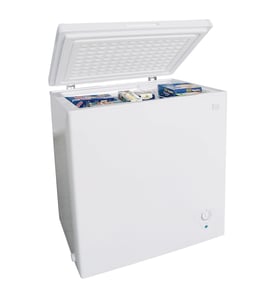



Where is the model number on a Kenmore chest freezer?
On a Kenmore chest freezer like model 25311711102, the model number is printed on a rating label that’s usually inside the cabinet near the top edge, or on an exterior surface such as a side panel or the back. We use that number to match the correct parts.
Common places to check first
- Inside the freezer on an inner side wall (often near the top rim)
- Around the lid opening (upper edge of the cabinet)
- On the back of the freezer cabinet
- On an exterior side panel near the rear
- Near the compressor area access panel (if your unit has one)
What the label looks like
Most Kenmore freezer ID labels include:
- Model number (for example, 25311711102)
- Serial number
- Electrical ratings (volts/amps)
- Refrigerant information
Quick tips to find it faster
- Use a flashlight and look along the upper rim just under the lid.
- Wipe frost, dust, or condensation off the surface; labels can be hard to read.
- If the label is damaged, use the serial number and compare it to your parts list for model 25311711102.
Why it matters
Kenmore model numbers that start with 253 often share similar-looking cabinets, but parts like the thermostat, wiring, or indicator light can differ. Using the exact model number helps us match the right replacement part the first time.
Examples of model-matched parts for 25311711102
| Part type | Example part name | Part ID |
|---|---|---|
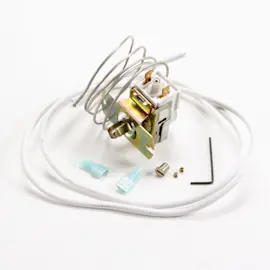
| Temperature control | Freezer temperature control thermostat | 5304496559 |
| Indicator | Indicator light | 216738400 |
| Storage | Basket | 216848200 |
If you’re ordering a control part, match the model number first, then confirm the part by ID, such as the freezer temperature control thermostat 5304496559.
Last updated: February 2026
How long does a Kenmore upright freezer last?
A Kenmore upright freezer typically lasts 10 to 15 years with normal use and basic maintenance. For your Kenmore model 25311711102, keeping the temperature steady, the lid seal tight, and frost under control helps you reach that full lifespan.
Typical lifespan and what affects it
- Usage patterns: frequent openings and warm food loads increase run time
- Room conditions: hot garages and poor airflow shorten compressor life
- Maintenance: heavy frost and dirty condenser areas reduce efficiency
- Power quality: outages and surges stress the start components
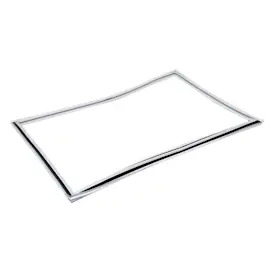
- Seal condition: air leaks force longer run cycles
Quick care checklist to help it last 10 to 15 years
- Keep the freezer near 0°F for safe long-term storage
- Leave a few inches of clearance around the cabinet for airflow
- Defrost when frost buildup reaches about 1/4 inch
- Avoid overpacking; allow air space for even temperatures
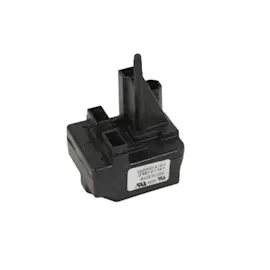
- If the unit struggles to start or clicks, inspect the start components (a common fix is the upright freezer start relay 5304492198)
What “end of life” usually looks like
| Symptom | Most common cause | What we recommend |
|---|---|---|
| Runs constantly, warms up | Air leak or heavy frost | Check gasket fit, defrost, improve airflow |
| Clicking, won’t start | Start device issue | Test/replace start relay |
| Warm temps with normal run sound | Sealed system problem | Service technician diagnosis |
Why it matters
A freezer that is nearing the end of its service life often uses more electricity and has wider temperature swings, which increases the risk of freezer burn and food loss. Following a simple defrost and airflow routine keeps performance stable and extends the life of key parts like the compressor.
Last updated: February 2026
Why is my chest freezer leaking water from the bottom?
Water under a Kenmore 25311711102 chest freezer is usually caused by warm, humid air getting inside and turning into condensation, or by meltwater from interior frost that has nowhere to go. Fixes typically involve improving the lid seal, reducing frost buildup, and leveling the cabinet.
Quick checks that solve most leaks
- Confirm the freezer is level (slightly higher in back is fine); an out-of-level cabinet can let water collect and drip out.
- Inspect the lid gasket area for gaps, tears, or food packaging preventing a full seal.
- Limit lid-open time and avoid frequent openings; humid air creates condensation that can run down and exit at the bottom.
- Check for heavy frost on the inner walls; frost melt during warm periods can create puddles.
- Verify the room conditions; high humidity (garage, basement) increases sweating and water under the unit.
What to do based on what you see
| What you notice | Most likely cause | What to do next |
|---|---|---|
| Clear water, no unusual noise | Condensation from humid air leaks | Clean sealing surfaces; reduce openings; check lid alignment |
| Water appears after a warm day or power outage | Frost meltwater | Defrost and dry interior; restart and monitor |
| Heavy frost buildup inside | Lid not sealing well or frequent openings | Improve seal habits; defrost; reorganize for faster access |
| Water plus poor cooling | Refrigeration system issue | Have a technician check sealed system components like the filter drier 5303305677 |
Defrost and dry-out steps (safe DIY)
- Move food to coolers.
- Unplug the freezer.
- Let ice melt naturally; wipe up water as it melts.
- Dry the interior completely, then restart.
- Use a thermometer and aim for 0°F once stabilized.
Why it matters
Water leaks are often the first sign of excess moisture getting into the freezer. That moisture creates frost, reduces efficiency, and can lead to temperature swings that cause freezer burn.
For organization that reduces lid-open time (and condensation), use tips for finding food in the freezer faster.
Last updated: February 2026
How do I reset a chest freezer?
To reset your Kenmore chest freezer model 25311711102, unplug it (or switch off the breaker) for 30 seconds, then restore power. This clears minor control glitches and blinking lights; if the problem returns right away, focus on the control and temperature components.
Quick reset steps (safe and effective)
- Move the temperature control to a mid setting.
- Unplug the freezer (or turn the circuit breaker off).
- Wait 30 seconds.
- Plug back in (or turn breaker on).
- Wait 10 to 15 minutes to see if the compressor starts and the indicator behavior stabilizes.
What to check if the reset does not fix it
A reset will not correct a failed part or a wiring issue. These are the most common next checks:
- Power supply: confirm the outlet has steady power and the cord is fully seated.
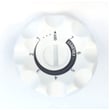
- Temperature control: if the dial feels loose, cracked, or will not turn smoothly, replace the freezer temperature control knob 216707200.
- Thermostat/control: if the freezer will not cycle on or off correctly, test/replace the freezer temperature control thermostat 5304496559.
- Indicator behavior: if lights keep blinking or the unit acts like it is in an error state, use Kenmore electronic control module freezer error codes to identify the pattern.
- Wiring: inspect for loose connectors or damaged insulation; a failed harness can cause intermittent operation.
Symptom guide (after you restore power)
| What you see | What it usually means | What we recommend |
|---|---|---|
| Runs normally after reset | Temporary control glitch | Monitor for 24 hours |
| Lights blink again quickly | Ongoing fault condition | Check error code info and controls |
| No cooling, no sound | Power issue or control not calling for cooling | Verify outlet, then thermostat/knob |
| Clicking near compressor | Start device issue | Consider start relay diagnostics |
Why it matters
A proper power reset is the fastest way to clear minor electronic or control hiccups without replacing parts. If symptoms return immediately, the freezer is signaling a repeatable problem, so targeted troubleshooting saves time and prevents food loss.
Last updated: February 2026
What can cause a chest freezer to stop working?
A Kenmore chest freezer model 25311711102 can stop working because it is not getting power, the temperature control is not calling for cooling, the compressor cannot start, or airflow and heat removal are restricted by frost or poor ventilation. Start with power and control checks before replacing parts.
Quick checks we recommend first
- Confirm the outlet has power (try a lamp) and reset the breaker or GFCI.
- Make sure the temperature control is not set to OFF or the warmest setting.
- Listen for a click every few minutes (often points to a start relay or compressor start issue).
- Check the lid is closing fully and the gasket area is clean and sealing.
- Look for heavy frost buildup on interior walls that can block cooling.
- Verify there is clearance around the cabinet for ventilation and heat to escape.
Common causes and what they look like
| Symptom | Likely cause | What to do next |
|---|---|---|
| Completely dead (no light, no sound) | No power, failed wiring connection | Check outlet, cord, and connections; inspect freezer wire harness 216738600 if wiring looks damaged |
| Runs but not cold | Control not regulating, frost/airflow issue | Adjust control, defrost if iced up; consider freezer temperature control thermostat 5304496559 if it never cycles |
| Clicking, hums briefly, then stops | Start relay problem or compressor struggling | Test/replace upright freezer start relay 5304492198; if problem persists, compressor diagnosis is next |
| Warm with control set colder | Knob broken or slipping | Replace freezer temperature control knob 216707200 if it will not turn or does not engage the shaft |
Why it matters
A “stopped working” freezer can be a simple power or control setting issue, but repeated clicking or short cycling can overheat the compressor and lead to bigger failures. Fast troubleshooting protects food and prevents avoidable part damage.
Helpful DIY resources
- Use Kenmore electronic control module freezer error codes if your freezer has a display or is showing an error.
- Follow how to replace a freezer compressor start relay when the compressor clicks and will not stay running.
Last updated: February 2026
How many cubic feet is a Kenmore freezer model 25311711102?
The Kenmore chest freezer model 25311711102 has a 14.1 cubic feet storage capacity. This is the capacity used for planning food storage, choosing baskets/organizers, and comparing chest freezer sizes.
What “14.1 cu. ft.” means for everyday use
Capacity is the interior volume; usable space depends on baskets, packages, and how you stack items.
- Expect slightly less usable space once you add baskets and bulky packaging
- Keep air space around large items so temperatures stay even
- Use bins or a hanging basket to prevent “lost” items at the bottom
- If you need more organization, add or replace the basket 216848200
Quick capacity check on the freezer label
If you want to verify the rating on your specific unit, check the model and rating label (commonly on the cabinet wall near the top edge or on an exterior side panel).
- Look for “Capacity” or “cu. ft.” on the label
- Confirm the full model number is 25311711102
- Record the serial number for parts matching
Planning guide for a 14.1 cu. ft. chest freezer
| Capacity | Best for | Typical organization tip |
|---|---|---|
| 14.1 cu. ft. | Family bulk buys, meal prep, seasonal storage | Use 1–2 baskets plus labeled bins |
Why it matters
Knowing the exact cubic feet helps you estimate how much food you can store and how to organize it so the freezer cools evenly and runs efficiently.
Last updated: February 2026