 Error Codes



What is the most expensive part to replace on a refrigerator?
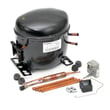
For an Amana top-mount refrigerator like model ATB2135HRW, the most expensive repair is typically the compressor or another sealed-system component (refrigerant leak repair, evaporator, condenser). These repairs usually cost the most because they require specialized tools, refrigerant handling, and more labor time.
Most expensive refrigerator repairs (what they are)
In real-world service, the highest-cost items usually fall into the sealed system category:
- Compressor replacement (the pump that circulates refrigerant)
- Sealed-system leak repair and recharge (finding a leak, repairing it, evacuating, recharging)
- Evaporator or condenser replacement (often tied to sealed-system work)
- Main control board replacement (can be pricey, but usually less than sealed-system work)
- Ice maker and water system repairs (typically mid-range, depending on what failed)
Typical cost ranking (parts + labor)
Costs vary by region and technician, but this ranking is consistent for most top-mount refrigerators.
| Repair type | Typical cost level | Why it runs high |
|---|---|---|
| Compressor / sealed system | Highest | Specialized labor, refrigerant work, longer service time |
| Control board | High | Expensive electronics, diagnosis time |
| Fan motor / thermistor / defrost parts | Medium | Moderate parts cost, straightforward access |
| Door gasket / shelves / bins | Low to medium | Mostly parts cost, minimal labor |
How we decide whether a big repair is worth it
Before investing in a compressor or sealed-system repair on an Amana ATB2135HRW, we recommend weighing:
- Age of the refrigerator (older units are less cost-effective to rebuild)
- Symptoms (warm fridge/freezer, clicking, no cooling, frost patterns)
- Energy efficiency (newer units often cost less to run)
- Food-loss risk (cooling failures can be sudden)
- Whether the issue could be simpler (fan, defrost, airflow, dirty condenser)
Why it matters
Sealed-system repairs are expensive because they are not just a part swap; they involve diagnosing the cooling system, opening the sealed refrigerant circuit, and restoring it to the correct charge and pressures. When the problem is actually airflow or defrost related, the fix is usually far less costly.
For cooling-symptom troubleshooting that can help rule out simpler causes first, use our DIY guide: how to fix your evaporator cooling fan.
Last updated: February 2026
Why is the water dispenser not working on my Amana side by side refrigerator?
If the water dispenser is not working, the most common causes are a mis-seated water filter, a closed or kinked water supply line, or trapped air after a filter change. On Amana refrigerators like model ATB2135HRW, start by confirming the filter is fully locked in and the household water supply is turned on.
Quick checks that fix most “no water” complaints
- Make sure the shutoff valve (under the sink or behind the refrigerator) is fully open.
- Check the water line for kinks, pinches, or freezing where it enters the cabinet.
- Reseat the water filter: remove it, then reinstall it until it fully locks and seals.
- Test dispense with the filter removed (if your housing allows bypass). If water flows, the filter was not seated correctly or is restricted.
- Purge air after any filter change by dispensing several cups of water.
Step-by-step: reseat the filter and purge air
- Remove the water filter.
- Inspect the filter head and O-ring area for debris; wipe with a clean cloth.
- Reinstall the filter and rotate or push (depending on style) until it locks firmly.
- Dispense water for 2 to 5 minutes total (in short bursts) to clear air.
For detailed filter handling and replacement tips, use our guide: how to replace the water filter in an Amana refrigerator.
What to check next if the dispenser still does not work
| Symptom | Most likely cause | What we do next |
|---|---|---|
| No sound, no water | Dispenser switch or control issue | Check for door switch engagement; listen for clicks |
| Hums but no water | Frozen reservoir line or restricted filter | Thaw line; retest with filter removed |
| Slow flow | Clogged filter or low supply pressure | Replace filter; verify strong flow at supply valve |
| Ice maker also not filling | Water inlet valve or supply problem | Inspect supply line; test inlet valve |
Why it matters
A dispenser that is starved for water (kinked line, clogged filter, low pressure) can also cause weak ice production and can make the inlet valve run longer than normal. Fixing the supply and filter seating restores normal flow and helps prevent repeat dispenser and ice maker problems.
Last updated: February 2026
What are the main 5 parts of a refrigerator?
The main 5 parts of a refrigerator (including your Amana ATB2135HRW top-mount) are the compressor, condenser coil, evaporator coil, expansion device (capillary tube or valve), and a temperature control (thermostat or electronic control). Together, they move heat out of the cabinet to keep food cold.
The “big 5” and what each one does
- Compressor: Pumps refrigerant through the sealed system; it is the workhorse that keeps refrigerant moving.
- Condenser coil: Releases heat to the room air (often underneath or behind the refrigerator).
- Evaporator coil: Absorbs heat from inside the freezer or fresh-food section.
- Expansion device: Drops refrigerant pressure so it can get cold before entering the evaporator.
- Temperature control (thermostat/control board): Senses temperature and cycles cooling on and off.
Common “supporting parts” people also think of as main parts
These are not part of the sealed refrigeration loop, but they are critical to day-to-day performance:
| Part | What it affects | Common symptom when it fails |
|---|---|---|
| Evaporator fan motor | Moves cold air through the freezer and into the refrigerator section | Fridge warm but freezer cold, weak airflow |
| Condenser fan motor (if equipped) | Helps cool the condenser and compressor area | Poor cooling, hot cabinet sides |
| Defrost system (heater, thermostat, timer/control) | Prevents frost buildup on the evaporator | Frost wall, warming temps over time |
| Door gasket | Keeps warm, humid air out | Sweating, frost, temperature swings |
Why it matters
When you know which “main part” matches the symptom, troubleshooting gets faster. For example, airflow issues often point to the evaporator fan or frost buildup, not the compressor.
Helpful DIY guidance
- For airflow and fan-related cooling problems, use how to fix your evaporator cooling fan.
- If you are working on water and filtration maintenance, use how to replace the water filter in an Amana refrigerator.
Last updated: February 2026
How to fix Amana refrigerator not cooling?
If your Amana ATB2135HRW top-mount refrigerator is not cooling, restore airflow and heat removal first: verify temperature settings, clear blocked vents, clean the condenser area, and confirm the evaporator fan runs. These steps resolve the most common cooling failures.
Quick checks (10 minutes)
- Set freezer to about 0°F and refrigerator to about 37°F; wait 24 hours after changes.
- Make sure doors close fully and gaskets seal all the way around.
- Move food away from air vents between freezer and fresh-food sections.
- Listen for the evaporator fan in the freezer (hold the door switch closed to test).
- Check the freezer back wall for heavy frost, which points to a defrost problem.
Step-by-step troubleshooting
1) Clean condenser coils and confirm condenser airflow
- Unplug the refrigerator.
- Vacuum and brush the condenser coil area (rear or toe-kick, depending on configuration).
- If there is a condenser fan, confirm it spins freely and runs when the compressor runs.
2) Check the evaporator fan and airflow
A failed evaporator fan can leave the freezer cold-ish while the refrigerator warms.
- If the fan is noisy, intermittent, or not running, troubleshoot the fan motor and wiring.
- If airflow is weak, look for ice blocking vents or frost buildup behind the freezer panel.
Helpful DIY: how to fix your evaporator cooling fan
3) Identify defrost-related symptoms
| Symptom | Likely issue | Next step |
|---|---|---|
| Solid frost sheet on freezer back wall | Defrost system failure | Defrost and test heater, defrost thermostat, control/timer |
| Freezer cold, fridge warm | Airflow/evaporator fan/vent blockage | Clear vents, check fan operation |
| Both sections warm | Heat removal or compressor/start issue | Clean condenser area, check fans and start components |
Why it matters
Cooling depends on removing heat at the condenser and moving cold air from the evaporator through the vents. When either airflow path is restricted, temperatures rise quickly and food can spoil.
Last updated: February 2026





