Installation guide
 Owner’s manual
 Error Codes


How to remove the top of a Frigidaire gas range?
On the Frigidaire FCRG3051ASA free standing gas range, the cooktop is not removable, so we do not remove the top for service. For access, we typically remove surface parts (grates, burner caps, burner heads) and service components from the front, rear, or inside the oven as outlined in the FCRG3051ASA installation guide.
What to do instead (safe access steps)
- Turn all burner knobs to OFF and let the range cool completely.
- Shut off the gas supply at the manual shut-off valve.
- Unplug the range (or switch off the circuit breaker).
- Remove the burner grates.
- Lift off the burner caps and remove the burner heads (if your repair requires it).
- If you must move the range for access, pull it out only as far as needed to disconnect gas and power, then level it again after reinstalling.
When you might need parts instead of removing the cooktop
Many “under-cooktop” symptoms are actually caused by burner ignition or gas delivery parts that can be serviced without removing the main top.
| Symptom | Common area to check | Example part for this model |
|---|---|---|
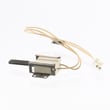
| Oven will not heat, no ignition | Oven ignition circuit | Bake igniter 316489403 |
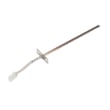
| Oven temperature seems off | Temperature sensing | Frigidaire range oven temperature sensor 316490000 |
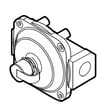
| Weak flames on multiple burners | Gas supply/regulation | Range pressure regulator 5304521339 |
Why it matters
Trying to lift or pry a non-removable cooktop can bend the manifold area, damage igniters, or create a gas leak risk. Using the correct access method protects the burner system, wiring harness, and gas connections.
Helpful tip for model identification
If you are confirming you have model FCRG3051ASA, the serial plate is typically found by opening the lower oven drawer or storage drawer; details are shown in the FCRG3051ASA owner’s manual.
Last updated: February 2026
Where to find model number on Frigidaire gas range?
On the Frigidaire gas range model FCRG3051ASA, the model and serial number label is typically on the serial plate you can see after opening the lower oven drawer or storage drawer. Use that tag to match the exact model number when ordering parts or checking specifications in the FCRG3051ASA owner's manual.
Where to look on FCRG3051ASA
Check these common locations in this order:
- Open the lower oven drawer (or storage drawer) and look along the frame area
- Look on the front frame of the range behind the drawer opening
- Check the side trim/frame near the drawer rails
- If your range has a storage drawer, check the top edge of the drawer opening
What you should write down
Record both numbers exactly as shown on the tag:
- Model number (example format: FCRG3051ASA)
- Serial number (unique to your unit)
- Purchase date (helpful for service and warranty reference)
| Item | What it’s used for | When you need it |
|---|---|---|
| Model number | Ensures parts fit your exact range configuration | Ordering parts like an igniter or sensor |
| Serial number | Identifies production details for your specific unit | Service calls, support, documentation |
Why it matters
Frigidaire ranges can look similar across model families, but burner parts, oven igniters, control overlays, and wiring can vary by model and serial range. Using the exact model number from the serial plate helps us match the correct diagrams and compatible parts the first time.
Last updated: February 2026
Why does my Frigidaire gas range smell like gas?
If your Frigidaire FCRG3051ASA gas range smells like gas, treat it as a safety issue first: do not try to light the range, do not touch electrical switches, and call your gas supplier from a neighbor’s phone (or call the fire department if you cannot reach them). These steps are listed in the FCRG3051ASA installation guide.
What commonly causes a gas odor (after safety steps)
After the gas supplier says it is safe to use the home, these are the most common range-related causes we see:
- A burner that is not fully igniting (gas flowing but flame not established quickly)
- Clogged or wet burner ports causing delayed ignition and incomplete combustion
- A surface burner cap or burner head that is mis-seated after cleaning
- A weak oven ignition system that allows gas to flow longer before lighting
- A loose connection in the range gas supply path (must be checked by a qualified servicer)
Quick checks you can do safely (no disassembly)
Only do these checks after the home is declared safe:
- Confirm all burner knobs are fully in the OFF position.
- Run the range hood or open a window for ventilation.
- Check that each surface burner cap sits flat and centered.
- Look for delayed ignition: you hear clicking or smell gas for several seconds before flame.
- If the odor is strongest when baking, suspect the oven ignition system.
Parts that often fix “smells like gas” symptoms
These model-matched parts are commonly involved when ignition is slow or inconsistent:
| Symptom | Most likely area | Example model-matched part |
|---|---|---|
| Smell when baking, slow oven light-off | Oven ignition | Bake igniter 316489403 |
| Smell plus poor temperature control | Oven sensing/control | Frigidaire range oven temperature sensor 316490000 |
| Smell at cooktop burner, clicking/no spark | Surface ignition | (inspect burner cap/head seating first) |
Why it matters
A persistent gas odor can indicate delayed ignition or a leak. Delayed ignition can cause flare-ups and soot; a leak can create a fire or explosion hazard. Following the safety steps in the installation instructions protects your home and helps pinpoint whether the issue is supply-related or appliance-related.
Last updated: February 2026