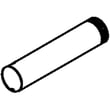
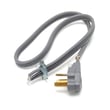
Installation guide
 Owner’s manual
 Error Codes



How to remove the top of a Whirlpool Cabrio Platinum dryer?
On the Whirlpool WGD8500DC4 dryer, the top panel is typically released from the front retaining clips and then lifted up (it hinges upward and back) to give you access to internal components; you usually do not need to fully remove the top to reach the console or cabinet area.
Before you start (safety and prep)
- Unplug the dryer from the wall outlet.
- Shut off the gas supply valve (gas model) before opening the cabinet.
- Let the dryer cool completely if it was recently running.
- Protect the finish by placing a towel on the top surface.
- Use a plastic putty knife when prying to avoid scratching painted panels.
Typical top panel release method
Most Whirlpool Cabrio-style dryers use spring clips at the front edge of the top.
- Stand in front of the dryer.
- Slide a plastic putty knife under the front edge of the top (near the left and right front corners).
- Push in to release each spring clip.
- Lift the front of the top panel; then hinge it up and back.
For model-specific cabinet access points and fastener locations, follow the WGD8500DC4 installation guide.
Tools and what they are used for
| Tool | Why you need it |
|---|---|
| Plastic putty knife | Releases spring clips without damaging paint |
| #2 Phillips screwdriver | Removes console or bracket screws (if required) |
| TORX T25 screwdriver | Common Whirlpool fastener type for panels/hinges |
If the top will not release
- Confirm you are prying at the front corners; the clips are usually several inches in from each side.
- Check for screws at the back edge of the top (some builds use rear screws instead of clips).
- If the console overlaps the top seam, remove the console fasteners first per the WGD8500DC4 owner’s manual.
- Do not force the panel; bending the top can cause fit and vibration issues.
Why it matters
Opening the top correctly prevents cabinet damage and helps you safely access common wear items (belt, idler pulley, drum rollers) when diagnosing noise, vibration, or a drum that will not turn.
Last updated: February 2026
What are the common problems with whirlpool dryers?
Common Whirlpool dryer problems (including model WGD8500DC4) are no-start conditions, poor drying from restricted venting, drum not tumbling, and heat-related failures. We start by checking the door, power, and settings, then move to airflow and common wear parts like the belt, rollers, and idler pulley.
Quick checks we recommend first (fast, no parts)
- Confirm the dryer door fully closes and latches.
- Make sure the controls are set to an active cycle (not Air Only) and press Start firmly.
- Verify power at the outlet; check the household fuse or circuit breaker.
- Run a heated Timed Dry cycle to confirm basic operation.
- If the display shows “Check Vent”, inspect the vent for crushing, lint buildup, or blockage.
For model-specific operating steps and troubleshooting tables, use the WGD8500DC4 owner's manual.
Most common symptoms and likely causes
| Symptom | What usually causes it | Parts that commonly fix it |
|---|---|---|
| Won’t start | Door not closed, power issue, control setting issue | (Often no parts) |
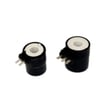
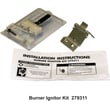
| Runs but won’t heat (gas) | Ignition or gas valve components failing | Dryer gas valve coil kit 279834, igniter 279311 |
| Long dry times | Restricted venting, poor airflow, lint buildup | (Often vent cleaning) |
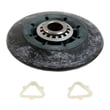
| Loud rumbling or thumping | Worn drum support rollers or hardware | Dryer drum support roller WPW10314173, dryer support roller tri-ring washer WPW10512946 |
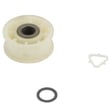
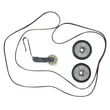
| Squealing, drum not turning | Worn belt or idler pulley | Dryer idler pulley W10837240, belt-4 rib, W10849499 |
Why it matters
A blocked vent can trigger “Check Vent,” increase dry times, and overheat the dryer. Worn drum support parts and belt-drive components can quickly turn a minor noise into a no-tumble failure.
When to stop and get service
- You smell gas, hear hissing, or suspect a gas leak: shut off the gas supply and have a qualified technician check the dryer.
- The dryer repeatedly stops mid-cycle or trips breakers after basic checks.
Last updated: February 2026
What's the average lifespan of a whirlpool dryer?
A Whirlpool dryer like model WGD8500DC4 typically lasts 10 to 13 years. With consistent airflow maintenance (lint screen and venting) and avoiding overloads, it’s common to reach the upper end of that range before major repairs become more likely.
Typical lifespan and what to expect
Most household dryers fall into a predictable wear pattern as they age.
- 0 to 5 years: mostly maintenance items (vent cleaning, minor adjustments)
- 6 to 10 years: higher chance of wear parts (belt, rollers, idler pulley)
- 10 to 13 years: common window for larger repairs (heat system, controls)
- 13+ years: still possible with good care, but downtime and repair frequency usually increase
What shortens dryer life fastest
Airflow problems are the biggest lifespan killer because they increase heat stress and run time. We follow the venting and airflow guidance in the WGD8500DC4 owner's manual.
- Running with a clogged lint screen
- Crushed/kinked vent behind the dryer
- Long vent runs or too many elbows
- Using the wrong vent size (most setups use 4 in. venting)
- Overloading so clothes cannot tumble freely
Wear parts that commonly decide “repair vs replace”
If your dryer is noisy, thumping, squealing, or stopping mid-cycle, these common wear parts often restore performance.
| Symptom | Common wear area | Example part for WGD8500DC4 |
|---|---|---|
| Thumping/rumbling | Drum support | Dryer drum support roller WPW10314173 |
| Squealing | Belt tension system | Dryer idler pulley W10837240 |
| Drum not turning | Drive system | Belt-4 rib, W10849499 |
Why it matters
A dryer that runs longer to dry loads uses more gas and puts extra stress on the burner system, sensors, and motor. Keeping airflow strong helps drying times stay normal and helps the dryer reach its full expected lifespan.
Last updated: February 2026