Error Codes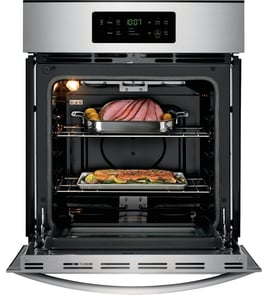

What is the disadvantage of a wall oven?
A wall oven like the Maytag MEW5530BAW costs more to buy and install than a freestanding range, and repairs can take longer because the oven is built into cabinetry. You also need a separate cooktop, which adds cost and planning.
Common disadvantages (and what they mean day to day)
- Higher total cost: wall oven plus a cooktop, plus cabinetry and electrical work.
- More complex installation: built-in fit, leveling, and electrical connections must be correct.
- Harder access for service: some repairs require pulling the oven from the cabinet.
- Heat and ventilation planning: tight cabinetry can trap heat if clearances are wrong.
- Ergonomics vary: depending on mounting height, you may still bend for lower racks or lift heavy roasts.
Quick comparison: wall oven vs. range
| Feature | Wall oven (MEW5530BAW style) | Freestanding range |
|---|---|---|
| Upfront cost | Higher (oven + cooktop) | Usually lower (all-in-one) |
| Installation | More involved | Simpler |
| Service access | Often harder | Often easier |
| Kitchen layout | Flexible | Less flexible |
When a “disadvantage” becomes a benefit
Wall ovens are a strong choice when you want a custom layout, easier access at standing height, or a separate cooktop location. If you bake often, adding an extra rack can help with capacity and airflow; see the compatible oven rack WPW10282527.
Why it matters
Wall ovens are a long-term kitchen decision. Knowing the cost, installation complexity, and service access up front helps you avoid surprises and choose the setup that fits your cooking habits and space.
Last updated: January 2026
Does Maytag make wall ovens?
Yes. Maytag makes wall ovens, including single wall ovens and double wall ovens, and the Maytag MEW5530BAW is an example of a Maytag electric wall oven model. Wall ovens are built-in ovens designed to fit a cabinet cutout rather than sitting on a range.
What types of Maytag wall ovens you will see
- Single wall oven: one oven cavity for everyday baking and roasting
- Double wall oven: two oven cavities so you can cook at two temperatures at once
- Combination wall oven: typically an oven paired with a second cooking cavity (varies by lineup)
How this relates to parts and repairs
If you are shopping parts for a Maytag wall oven, matching the exact model number is what ensures fit and electrical compatibility.
- Confirm the model number on the oven frame (often around the door opening)
- Use the model number to match parts like the bake element, broiler element, and door seal
- For heating issues, start with common wear items like elements and thermostats
Common wall oven parts (examples for MEW5530BAW)
| Part type | What it does | Example part for this model |
|---|---|---|
| Bake element | Provides most baking heat | Bake element WPW10310258 |
| Broiler element | Provides top heat for broiling | Broiler element WPW10310260 |
| Door seal | Helps keep heat inside the oven | Wall oven door seal WP71001841 |
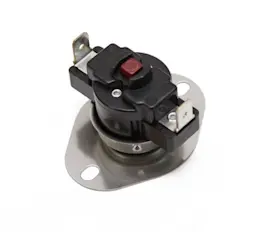
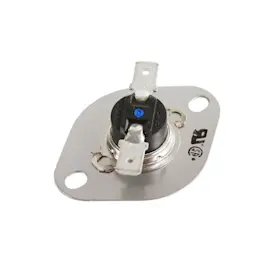
| High-limit thermostat | Helps prevent overheating | Range high-limit thermostat WP71001844 |
Why it matters
Maytag wall ovens are not one-size-fits-all. Using the correct Maytag MEW5530BAW parts helps maintain proper temperatures, safe wiring connections, and a tight door seal for efficient baking.
Last updated: January 2026
Where is the model number on the Maytag wall oven?
On the Maytag MEW5530BAW electric wall oven, the model number is typically printed on a rating label around the oven door opening or on the frame behind the door. Check the front frame area first because it is the most common location.
Common places to check on a wall oven
- Open the oven door and look along the left or right front frame (the vertical trim/frame the door closes against)
- Look along the top front frame (above the door opening)
- Check the lower front frame near the bottom edge of the door opening
- If it is a double wall oven, check both upper and lower door frames
- As a last step, check the side trim area just inside the cabinet cutout (only if the label is not on the front frame)
What the label looks like (and what to write down)
The rating label usually includes both the model number and serial number. We recommend recording:
- Model number (for this unit: MEW5530BAW)
- Serial number
- Electrical rating (volts/amps)
| Item | Why you need it | Example format |
|---|---|---|
| Model number | Ensures parts match your exact oven | MEW5530BAW |
| Serial number | Helps confirm production series | Letters and numbers |
| Electrical rating | Useful for wiring and heating issues | 240V, amps |
Why it matters
Wall oven parts can look similar across Maytag models, but mounting points, wiring connectors, and trim dimensions often vary. Using the exact model number helps us match the correct bake element, broiler element, door seal, or electrical parts for your oven.
If the label is missing or unreadable
- Look for a faint “shadow” outline where the label used to be and check nearby surfaces
- Take a clear photo of the oven frame and any remaining sticker fragments
- Use a known part from the oven to help confirm the model family (for example, the bake element WPW10310258)
Last updated: January 2026
What does F3 mean on Maytag oven?
On the Maytag MEW5530BAW electric wall oven, an F3 error typically points to a temperature sensing problem, most often the oven temperature sensor circuit (sensor, wiring, or control input) reading as open/shorted or out of range. Fixing it usually starts with checking the sensor wiring and connections, then testing the sensor.
What to check first (safe, high-value steps)
- Power reset: Turn the breaker off for 1 minute, then back on; retry Bake.
- Look for heat damage: Inspect wiring near the oven cavity and rear access area for brittle insulation or burned connectors.
- Check connectors: Reseat any sensor-related plugs; a loose connection can trigger F3.
- Test the sensor: With power off, measure sensor resistance with a multimeter (details below).
- If the sensor tests good: The issue is commonly the control board input or a harness/connector problem.
How we test the oven temperature sensor
With the oven unplugged or breaker OFF, access the sensor connector (often from inside the oven cavity or from the rear), then measure resistance across the sensor leads.
Typical sensor readings (most Maytag/Whirlpool-style RTD sensors):
| Sensor temperature | Typical resistance (ohms) | What it suggests |
|---|---|---|
| Room temp (70°F to 75°F) | ~1050 to 1100 Ω | Normal range |
| Higher temp | Resistance increases | Normal behavior |
| 0 Ω or very low | Shorted sensor/wiring | Likely cause of F3 |
| OL / infinite | Open sensor/wiring | Likely cause of F3 |
If you need help using the meter correctly, follow how to use a multimeter to test electrical parts video.
Parts that are often involved
F3 is usually sensor-related, but wiring and safety devices can contribute.
| Area | What can fail | Example part on this model |
|---|---|---|
| Overheat protection | High-limit thermostat opens | Range high-limit thermostat WP71001844 |
| Wiring/connection | Loose or heat-damaged terminals | Terminal block WPW10245259 |
Why it matters
When the control cannot trust the temperature signal, it may shut heating down or overheat the oven. Addressing F3 quickly helps restore accurate baking temperatures and prevents repeated shutdowns.
Last updated: January 2026