Owner’s manual
 Error Codes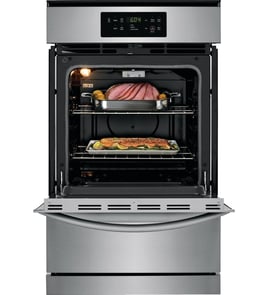



Are wall ovens a standard size?
Yes, wall ovens are mostly standardized, but the cabinet cutout is what matters. Your Kenmore 9113012991 is a 24-inch gas built-in oven, and 24, 27, and 30 inches are the most common wall-oven widths; always match the cutout dimensions listed in the 9113012991 owner's manual.
What “standard size” usually means
Most single wall ovens fall into a few common size families, but the exact height, depth, and cutout requirements vary by model.
- Common widths: 24 in, 27 in, 30 in
- Typical cutout height range (single ovens): about 27 to 29 in
- Typical cabinet depth range: about 22 to 24 in
- Small differences (even 1/8 inch) can affect fit, trim alignment, and door clearance
What to measure before you buy or replace
Measure the cabinet opening and compare it to the installation/cutout specs in the manual.
- Cutout width (left to right inside the opening)
- Cutout height (top to bottom inside the opening)
- Cutout depth (front of cabinet to back wall)
- Clearance for the oven door swing and nearby drawers
- Venting space; the oven vent must not be blocked for proper air circulation
Quick size guide (typical)
| Wall oven type | Common width | Typical cabinet depth |
|---|---|---|
| Single wall oven | 24, 27, 30 in | 22 to 24 in |
| Compact/specialty | 24 in | 22 to 24 in |
Why it matters
A wall oven that is “the same width” can still fail to fit if the cutout height or depth is off. Correct sizing also helps prevent airflow problems; the manual notes the oven vent is required for proper circulation and should not be blocked.
Last updated: January 2026
How to find wall oven model number?
For Kenmore wall oven model 9113012991, the model and serial number are typically printed on a tag on the left side of the oven front frame (the front frame you see when you open the oven door). The diagram and exact location callouts are shown in the 9113012991 owner's manual.
Where to look first (fastest checks)
- Open the oven door and look along the left side of the front frame for a model/serial tag.
- Check the front frame perimeter (around the opening) if you do not see it immediately.
- Look for a metal or foil label with “Model” and “Serial” fields.
- Use a flashlight; tags can be low-contrast or partially hidden by the door gasket.
Other common tag locations on built-in wall ovens
If the front frame tag is missing or unreadable, these are the next most common places to check:
- Around the door rim (edge area visible when the door is open)
- On an interior side panel just inside the oven cavity opening
- Behind the lower grille area (some designs place labels near service access)
What the model tag usually looks like
| What you’ll see | Why it helps |
|---|---|
| Model number (example: 9113012991) | Ensures you get the correct parts list and diagrams |
| Serial number | Helps match production run details for compatible parts |
| Electrical and gas info | Useful for troubleshooting and safe servicing |
Why it matters
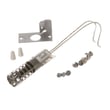
We use the exact model number to match the correct Kenmore wall oven parts, wiring layout, and service procedures. Even small model-number differences can change parts like the igniter, control valve, or oven light bulb.
Last updated: January 2026
What is the life expectancy of a wall oven?
Most wall ovens last 15 to 20 years with normal use and basic maintenance. For the Kenmore 9113012991 24" gas built-in oven, keeping the oven clean, using the racks correctly, and addressing ignition or temperature issues early helps you reach that typical lifespan; see the 9113012991 owner's manual.
Typical lifespan and what affects it
Wall ovens tend to outlast many other appliances because they have fewer moving parts, but heat and grease are hard on components.
Common factors that shorten life:
- Heavy high-heat use (frequent broiling, long bakes)
- Poor ventilation around the built-in cabinet cutout
- Grease buildup and spillovers that repeatedly bake onto surfaces
- Ignition problems that cause delayed lighting or repeated cycling
- Door wear (slamming, leaning on the door, or using it as a step)
Maintenance that helps your oven last longer
The manual emphasizes keeping the oven clean and following the recommended cleaning methods.
Best practices:
- Wipe up spillovers after the oven cools; avoid abrasive cleaners and steel pads
- Keep the appliance area clear of items that can burn (paper, towels, cleaners)
- Let hot air and steam vent when opening the door; avoid heat shock to glass
- Move oven racks while the oven is cool whenever possible
- Replace a failed oven light with the correct 40-watt appliance bulb, such as 40A15 bulb 40A15, when applicable
Quick “repair or replace” guide
Use this as a practical decision tool when the oven starts acting up.
| What you’re seeing | Most common next step | Why it matters |
|---|---|---|
| Oven won’t heat or heats inconsistently | Diagnose ignition and gas heat system | Prevents repeated strain on controls and wiring |
| Temperature seems off | Use the built-in temperature adjustment procedure | Restores baking accuracy without replacing major parts |
| Door doesn’t seal well or feels loose | Inspect hinges and door alignment | Heat loss increases run time and wear |
| Interior is heavily stained | Use the manual’s cleaning approach and run at 400°F as directed | Reduces smoke, odors, and flare-up risk |
Why it matters
A wall oven that is clean, properly installed, and operating with a stable flame and accurate temperature runs fewer extra cycles. That reduces heat stress on the igniter, control components, wiring connections, and door parts, which is what typically determines whether you get closer to 15 years or 20 years.
Last updated: January 2026