
Can I put a 16 inch bar on a 14 inch chainsaw?
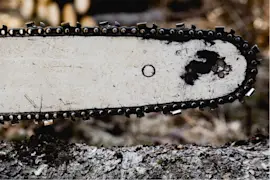
Yes, you can often run a 16-inch guide bar on a 14-inch-class gas chainsaw, but only if the bar mount pattern, chain pitch, gauge, and drive-link count match what your Mcculloch EAGER chainsaw is designed to use. If any of those specs differ, the chain will not track correctly and cutting performance and safety will suffer.
What must match for a safe swap
Before you install a longer bar, confirm these items match your current setup:
- Bar mount pattern: the slot, stud spacing, and oil-hole location must line up with your saw
- Chain pitch (common sizes include 3/8 low profile or .325): must match the drive sprocket and bar
- Chain gauge (common sizes include .050 or .058): must match the bar groove width
- Drive-link count: changes with bar length; the chain must be the correct length for the 16-inch bar
- Oiling: the bar oil holes must align so the chain gets lubrication
Quick compatibility checklist
Use this as a fast way to decide what you need to verify.
| Item | Must match your current saw? | Why it matters |
|---|---|---|
| Bar mount | Yes | If it does not fit the studs/tensioner, you cannot tension the chain correctly |
| Pitch | Yes | Wrong pitch will not mesh with the sprocket |
| Gauge | Yes | Wrong gauge binds or wobbles in the bar groove |
| Drive links | No (it will change) | Longer bar typically needs a longer chain |
What changes when you go from 14-inch to 16-inch
A longer bar can work, but it changes how the saw behaves:
- Slightly slower cutting in thicker wood because the engine works harder
- More chain to oil; bar and chain lubrication becomes more important
- More kickback potential if you are not using a low-kickback chain and proper technique
Why it matters
On a gas chainsaw like the Mcculloch EAGER, the bar and chain are a matched system with the sprocket, clutch, and oiler. When pitch, gauge, or mount is wrong, the chain can derail, overheat, or wear the sprocket and bar quickly.
For help confirming you have the correct model identification before ordering a bar or chain, use our guide: how to find your appliance model number (and what it means for parts).
Last updated: February 2026
How do you tell the year of a chainsaw?
You tell the year of a chainsaw by decoding the information on its model/serial tag (and sometimes the engine tag). For a Mcculloch gas chainsaw like model EAGER, the build date is typically embedded in the serial number format or shown as a date code on the identification label; the exact format depends on the production run.
Where to look on the saw
Check these common locations for the identification tag or stamping:
- Starter housing or recoil cover (near the pull cord)
- Rear handle area (near the throttle trigger)
- Under the top cover (near the air filter and carburetor)
- Crankcase area (sometimes stamped into the metal)
- Bar mount side (near the clutch cover)
How to decode the year (what usually works)
Once you find the tag, use these practical checks:
- Look for a printed date: some tags show month and year directly.
- Check for a date code: a short code may represent year and week of manufacture.
- Compare model and serial formats: different eras use different serial lengths (for example, 6 digits vs. 7 digits) and tag styles.
- Check the engine tag separately: on some chainsaws, the engine has its own serial/date code that can narrow the year.
Common date-code patterns you may see
These patterns vary by manufacturer and era, but they are common on outdoor power equipment:
| What you see on the tag | What it often means | Example interpretation |
|---|---|---|
YYWW |
Year + week | 1420 = week 20 of 2014 |
WWYY |
Week + year | 2014 = week 20 of 2014 |
MMYY |
Month + year | 0612 = June 2012 |
| Long serial with embedded year | Year is part of serial | Year appears in first 2 to 4 digits |
Why it matters
Knowing the year helps us match the correct ignition parts, carburetor parts, fuel lines, and bar and chain components. Small design changes across production years can affect fit, especially on Mcculloch saws.
Fast way to get the right parts list
If your tag is worn or you are unsure which number is the true model identifier, use our guide: how to find your appliance model number (and what it means for parts). It helps you confirm the exact model/serial information before ordering.
Last updated: February 2026
What is the average lifespan of EAGER?
A Mcculloch gas chainsaw like model EAGER typically lasts 10 to 15 years with normal homeowner use and consistent maintenance. Heavy, daily cutting shortens lifespan; clean fuel, sharp chain, and good air filtration extend it.
What most affects lifespan
- Fuel quality and storage: fresh, properly mixed fuel (and draining for storage)
- Air filter care: cleaning or replacing when dirty
- Chain sharpness and bar condition: a dull chain overheats the clutch and engine
- Cooling system cleanliness: keeping fins and covers free of sawdust
- Correct lubrication: steady bar-and-chain oil flow
Quick maintenance schedule (typical)
| Task | How often | Why it matters |
|---|---|---|
| Check chain tension and oiling | Every use | Prevents bar wear and overheating |
| Clean air filter | Every few tanks | Protects cylinder and carburetor |
| Inspect spark plug | Monthly or seasonally | Helps reliable starting and power |
| Clean cooling fins/cover | Monthly | Prevents heat damage |
Signs your chainsaw is nearing end-of-life
- Compression feels weak; it pulls too easily and won’t stay running
- Persistent hard starting even after tune-up items (plug, filter, fuel)
- Excessive vibration, noisy clutch, or recurring bar and chain alignment issues
- Fuel system problems that keep returning (leaks, inconsistent idle)
Why it matters
Knowing the typical 10 to 15 year lifespan helps you decide whether to invest in maintenance items (air filter, spark plug, fuel lines) or plan for replacement when performance and reliability drop.
For help confirming you have the exact model identification before ordering parts, use [how to find your appliance model number (and what it means for parts)].
Last updated: March 2026