
Which is stronger, MIG or TIG?
TIG and MIG can both produce strong welds; the stronger result depends on joint design, base metal, filler, and technique. For a Lincoln PRECISION PRECISION TIG 185 welder, TIG is typically chosen when we need maximum control and clean, high-quality welds, while MIG is often chosen for speed and productivity.
A weld’s strength is usually limited by the base metal and the quality of fusion, not the process name. In practice, TIG often looks and tests stronger on thin or critical work because it gives tighter control of heat and puddle.
Strength drivers we focus on:
- Correct joint prep (clean metal, proper bevel, tight fit-up)
- Proper penetration and fusion at the root
- Correct filler selection for the alloy
- Heat control to avoid undercut, porosity, and lack of fusion
- Consistent travel speed and torch angle
| Factor | MIG (GMAW) | TIG (GTAW) |
|---|---|---|
| Typical advantage | Faster deposition, easier on thicker steel | Highest control, very clean welds |
| Best fit | Production, general fabrication | Thin material, stainless, aluminum, PRECISION |
| Common risk | Cold lap or lack of fusion if settings are off | Slower speed can overheat parts if technique is poor |
We typically recommend TIG when the job demands PRECISION and defect control, such as:
- Thin wall tubing and sheet metal
- Stainless steel cosmetic welds
- Aluminum where puddle control matters
- Critical joints where rework is costly
MIG can match TIG strength when it is set up correctly and the joint is designed for it, especially on:
- Thicker mild steel
- Long welds where consistent penetration matters
- Structural-style fabrication where speed reduces heat distortion
Choosing MIG vs TIG is often about controlling defects and heat input. If we pick the process that best fits the material thickness and joint, we get better fusion, fewer failures, and less rework.
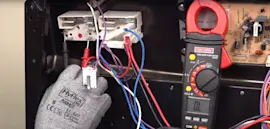
For electrical troubleshooting that affects arc stability (intermittent output, no arc, weak arc), use how to use a multimeter to test electrical parts video.
Last updated: February 2026
How much does a decent TIG welder cost?
A decent TIG welder typically costs $500 to $5,000+, depending on output (amps), AC/DC capability for aluminum, duty cycle, and whether you need features like pulse TIG. For Lincoln PRECISION TIG-class machines, your budget should match the metals and thickness you weld most.
- $500 to $1,200: Entry-level DC TIG; best for mild steel and stainless, limited aluminum capability
- $1,200 to $2,500: Mid-range; better duty cycle, smoother arc control, more reliable starts
- $2,500 to $5,000+: Pro-grade AC/DC TIG; higher output, advanced controls (pulse, balance), heavier-duty components
| Budget range | Best for | Common tradeoffs |
|---|---|---|
| $500 to $1,200 | Light hobby work, thin steel/stainless | Lower duty cycle, fewer controls |
| $1,200 to $2,500 | Regular shop use, broader material range | Accessories may still be extra |
| $2,500 to $5,000+ | Aluminum work, thicker material, production | Higher upfront cost, heavier machine |
A “decent” TIG setup is more than the power source. Plan for these common add-ons:
- Shielding gas cylinder and regulator/flowmeter (argon for most TIG work)
- TIG torch, consumables (collets, cups, tungstens), and filler rod
- Work clamp/ground lead upgrades if your arc is unstable
- Dedicated input power needs (many TIG welders require 240V)
- Safety gear (auto-darkening helmet, gloves, jacket)
Use these quick checkpoints before you buy:
- Aluminum: prioritize AC TIG capability
- Thicker material: prioritize higher amperage and duty cycle
- PRECISION work: prioritize stable low-amp control and reliable HF start
- Portability: smaller inverter units cost more per amp but move easier
Matching price to features prevents common frustrations like overheating (low duty cycle), poor arc starts, or not being able to weld aluminum cleanly. Spending for the right amperage and AC/DC capability usually saves time and consumables.
For help confirming the exact model identification details before shopping, use how to find your appliance model number (and what it means for parts).
Last updated: February 2026
What is the rule of 33 in TIG welding?
The Rule of 33 in TIG welding is a simple pulse-TIG starting point: set pulse frequency to about 33 pulses per second (PPS), set background current to about 33% of peak, and set pulse on-time (duty cycle) to about 33%. On a Lincoln PRECISION TIG 185 welder, it helps reduce heat input and steady the puddle on thin material.
- 33 PPS (frequency): fast pulsing that “stirs” the puddle without a slow, distracting flash.
- 33% background current: lowers average amperage so the part cools slightly between peaks.
- 33% on-time: keeps peak heat brief, which helps limit warping and burn-through.
This guideline is most useful for:
- Thin stainless steel sheet and tubing
- Edge welds where overheating is easy
- Small parts where distortion control matters
It is less useful for:
- Thick sections where you need sustained heat
- Situations where you are already near max output and need continuous amperage
- Welds where pulse makes your travel speed inconsistent
Use this as a baseline, then tune for puddle control and bead profile.
| Material / situation | Frequency | Background | On-time | What to adjust first |
|---|---|---|---|---|
| Thin stainless (most common use) | 33 PPS | 33% | 33% | Increase background if arc feels too “cold” |
| Very thin edge work | 33 PPS | 25% to 33% | 25% to 33% | Reduce on-time to prevent melt-away |
| Tubing with tight fit-up | 20 to 33 PPS | 33% | 33% | Lower frequency if timing feels rushed |
Pulse settings change average heat more than peak heat. That means you can keep enough peak amperage to start and maintain the puddle, while reducing overall heat soak that causes warping, sugaring on stainless, and burn-through.
If the arc feels unstable or the pulse does not seem consistent, check basics before chasing settings:
- Verify your work clamp connection and clean contact point
- Inspect torch lead and pedal/control cable for damage
- Confirm correct polarity and shielding gas flow
- Test fuses and continuity if the machine acts intermittent
For step-by-step electrical troubleshooting techniques, use our guides: how to tell if a fuse is blown and how to use a multimeter to test electrical parts video.
Last updated: February 2026
Who makes the best TIG welder for the money?
For the best TIG welder for the money, we typically see the strongest value from proven brands like Lincoln, Miller, and ESAB because they balance arc stability, parts availability, and long-term reliability. If you already own a Lincoln PRECISION TIG 185, keeping it running with the right replacement parts is often the most cost-effective “upgrade.”
When customers compare TIG welders, the best value usually comes down to a few practical factors:
- Stable arc at low amps for thin steel and stainless work
- AC TIG capability if you plan to weld aluminum
- Duty cycle that matches how long you weld continuously
- Input power flexibility (common shop voltages) and proper circuit sizing
- Serviceability: torches, consumables, switches, and internal electrical parts that can be replaced
| Brand | Best for | Typical tradeoff |
|---|---|---|
| Lincoln | All-around value, broad support, solid performance | Feature set varies by model tier |
| Miller | Smooth arc and premium build | Higher upfront cost |
| ESAB | Modern features and strong performance | Model-to-model learning curve |
| CK Worldwide | Torches and TIG accessories (not usually the power source) | You still need a compatible welder |
Match the machine to the materials and processes you actually use:
- Steel/stainless only: DC TIG is the priority; focus on low-amp control and duty cycle.
- Aluminum: choose AC TIG with adjustable balance and frequency.
- Shop fabrication: prioritize duty cycle and a rugged torch setup.
- Field or garage use: prioritize input power compatibility and portability.
A TIG welder that is “best for the money” is the one that fits your metal type, amperage range, and duty cycle without forcing workarounds. For many owners, maintaining a quality machine like the Lincoln PRECISION TIG 185 can deliver better results than replacing it with a cheaper, feature-heavy unit.
Even without a parts list shown here, the most common value-saving repairs on TIG welders involve electrical checks and wiring integrity:
- Inspect the power cord and plug for heat damage
- Check internal connections for looseness or discoloration
- Test fuses and switches if the unit is dead or intermittent
- Verify torch lead connections are tight and clean
For step-by-step electrical testing basics, use how to use a multimeter to test electrical parts video.
Last updated: February 2026