 Owner’s manual


What is the average lifespan of an LG washer?
Most LG washers, including the LG WT1701CV, typically last 10 to 15 years with normal household use. Regular maintenance (cleaning, correct loading, and fixing small issues early) is what most often determines whether you land closer to 10 years or push beyond 15.
A washer’s life is mostly driven by load size, cycle frequency, water quality, and how well it drains and spins.
- Heavy weekly usage (large families) shortens lifespan faster than light use
- Overloading strains the drive system and suspension
- Poor draining increases wear on the drain pump and can leave residue behind
- Hard water can contribute to buildup and odors
- Leveling issues increase vibration and stress the tub support and suspension
For model-specific care and operating guidance, follow the maintenance and usage recommendations in the WT1701CV owner's manual.
- Keep loads balanced; mix items to avoid one heavy side
- Use the right amount of HE detergent; too much can cause residue
- Run periodic tub-cleaning cycles (per the manual)
- Check fill hoses periodically for cracks or leaks
- Make sure the washer stays level to reduce vibration
If performance changes (noise, vibration, slow drain, weak fill), these are common wear-related areas on top-load washers like the WT1701CV.
| Symptom | Common area to check | Example model part |
|---|---|---|
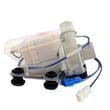
| Not draining or draining slowly | Drain system | Washer drain pump assembly 5859EA1004P |
| Excessive shaking or banging | Suspension | Washer suspension rod AJK72989704 |
| Poor agitation or slipping | Washplate/hub area | Washer washplate AGZ72909711 |
A realistic lifespan helps you decide when maintenance and a targeted repair (like a drain pump or suspension component) makes sense versus planning for replacement. Keeping the washer level, avoiding overloads, and maintaining good draining are the biggest factors we see in long service life.
Last updated: February 2026
Why are LG parts so expensive?
LG parts for the LG WT1701CV washer often cost more because they are engineered to fit and perform precisely with the washer’s design (controls, lid system, drive components, and diagnostics), and many assemblies are sold as complete modules rather than small sub-parts. That combination raises manufacturing, testing, and inventory costs.
- Model-specific engineering and fit: Parts are built to match the WT1701CV’s tub, wash action, and control features.
- Assembly-level replacements: Items like a drain pump or control board are commonly sold as full assemblies.
- Electronics and sensors: Boards, switches, and diagnostics-related components cost more than simple hardware.
- Durability requirements: High-wear parts (drive, suspension, pump) use materials designed for repeated cycles.
- Distribution and stocking: Keeping exact-fit parts available for specific models adds supply-chain cost.
| Part type | Example part (WT1701CV) | Why it’s pricier |
|---|---|---|
| Mechanical drive/wash action | Washer washplate AGZ72909711 | Large molded component; exact fit and balance matter |
| Water management | Washer drain pump assembly 5859EA1004P | Motorized assembly; seals and performance specs |
| Controls/electronics | Washer electronic control board (varies by model) | Complex electronics; higher failure-testing standards |
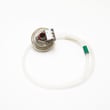
| Sensing/fill control | LG washer water-level pressure switch 6501EA1001R | Calibrated switching; interacts with fill logic |
- Confirm the symptom first using the troubleshooting and feature info in the WT1701CV owner’s manual.
- Check for simple causes before replacing parts (clogs, kinked drain hose, unbalanced loads, loose connections).
- Replace the correct related items together when appropriate (for example, a pressure switch issue can also involve the pressure hose).
- Avoid “universal” substitutions on LG washers; fit and electrical specs matter.
- Use built-in diagnostics when available; SmartDiagnosis is designed to reduce unnecessary part swaps.
Using the correct LG WT1701CV parts helps the washer fill, drain, spin, and balance properly. Exact-fit components reduce repeat failures, leaks, vibration, and error codes, which usually saves money over time compared with trial-and-error replacements.
Last updated: February 2026
What is the most common problem with LG washers?
The most common problems we see with LG washers (including the LG WT1701CV) are draining problems, out-of-balance spinning (shaking or banging), and filling issues caused by restricted water flow or sensing problems. Many of these are fixed with basic checks and a few key parts.
- Drainage problems: water left in the tub, long drain times, or the cycle stops before spin.
- Unbalanced load (UE-type symptoms): heavy vibration, thumping, or the washer repeatedly tries to rebalance.
- Filling problems: slow fill, no fill, or incorrect water level.
- Lid not closed or controls inactive: washer will not start or appears “dead” until POWER is pressed.
- Over-sudsing/too much detergent: poor rinsing, longer cycles, or performance complaints.
For model-specific operating and troubleshooting steps, use the WT1701CV owner's manual.
- Confirm power and settings: press POWER, select a cycle, then press START/PAUSE.
- Check water supply: turn both hot and cold faucets fully on; straighten kinked inlet hoses.
- Clean inlet screens: sediment can restrict flow and cause fill errors.
- Fix balance issues: wash similar items together, avoid overloading, and level the washer on the floor.
- Use the right detergent amount: reduce detergent for small loads or soft water.
| Symptom | Common suspect | Example WT1701CV part to check |
|---|---|---|
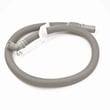
| Won’t drain / won’t spin out | Drain pump or drain path restriction | Washer drain pump assembly 5859EA1004P or washer drain hose AEM73732901 |
| Overfills / underfills / wrong water level | Water level sensing issue | LG washer water-level pressure switch 6501EA1001R or washer water-level pressure switch hose 5210FA3427J |
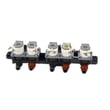
| Won’t fill or fills slowly | Inlet valve or clogged screens | LG washer water inlet valve AJU75152601 |
Drain, fill, and balance problems can stop a cycle mid-wash, leave clothes soaking wet, or cause excessive vibration that wears suspension and drive components faster. Catching the root cause early helps prevent repeat breakdowns.
Last updated: February 2026
How much does it cost to replace a rubber seal on an LG washing machine?
On the LG WT1701CV top-load washer, “rubber seal” usually means a tub seal or another leak-related gasket, not a front-load door boot. Typical professional repair pricing runs $200 to $500 total, depending on whether it’s a simple gasket or a major tub tear-down.
Top-load designs like WT1701CV don’t use a front door gasket. Most leak repairs involve one of these areas:
- Tub seal or tub-to-pump hose gasket (requires more disassembly)
- Drain path leak (hose, pump, clamps)
- Fill leak (inlet valve, fill hoses, hose washers)
- Oversudsing or splash-out that looks like a “seal” leak
Pricing varies by region and by how far the washer must be disassembled.
| Repair type (top-load) | Typical parts cost | Typical labor cost | Typical total |
|---|---|---|---|
| Drain leak repair (hose or pump related) | $25 to $150 | $150 to $250 | $175 to $400 |
| Tub seal or internal leak repair (major tear-down) | $30 to $120 | $250 to $450 | $280 to $570 |
Use the WT1701CV owner's manual for safety steps and access guidance before inspecting.
- Leak during drain or spin: inspect the washer drain hose AEM73732901 and pump area
- Leak during fill: check household hoses, hose washers, and the inlet connections
- Water on the floor with heavy suds: reduce detergent and run a rinse cycle
- Leak only with large loads: redistribute items; out-of-balance loads can splash water over the tub ring
A top-load leak is often misdiagnosed as a “rubber seal” problem. Identifying whether the leak happens during fill, wash, drain, or spin prevents buying the wrong part and reduces repeat service calls.
Last updated: February 2026


