Owner’s manual
 Error Codes



Are top mount or bottom-mount fridges better?
Bottom-mount and top-mount refrigerators are both good choices; the better option depends on how you use your kitchen. With a bottom-mount design like Whirlpool model WRF532SMBM01, everyday fresh-food items sit at eye level, while a top-mount typically costs less and often uses a bit less energy.
Quick comparison
| Feature | Top-mount (freezer on top) | Bottom-mount (freezer on bottom) |
|---|---|---|
| Fresh-food access | Lower, more bending | Higher, less bending |
| Freezer access | Easier, at chest level | More bending for freezer |
| Typical energy use | Often slightly lower | Often slightly higher |
| Organization | Simpler layout | Often better fresh-food organization |
| Best for | Budget, frequent freezer use | Frequent fresh-food use, back comfort |
What we see most customers prefer
- Choose bottom-mount if you use the refrigerator section most and want less bending for milk, produce, and leftovers.
- Choose top-mount if you use the freezer most, want a simpler layout, or want the most budget-friendly style.
- Choose based on door swing and space; your kitchen layout can matter more than the freezer position.
Fit and clearance matters (especially for bottom-mount)
Bottom-mount units often need careful placement so doors and drawers open fully. For WRF532SMBM01, our guidance matches the clearances in the WRF532SMBM01 owner's manual:
- Allow about 1/2 inch of space on each side and at the top
- Allow about 1 inch behind the refrigerator
- If you have an ice maker, allow extra room behind for the water line
- If installed next to a fixed wall, allow about 2 1/2 inches on the hinge side for door swing
Why it matters
The “better” refrigerator is the one that fits your space and matches your habits. If you open the fresh-food doors dozens of times a day, a bottom-mount like WRF532SMBM01 usually feels more convenient; if you rely heavily on frozen foods, a top-mount can feel easier day to day.
Last updated: January 2026
What is the biggest problem in a Whirlpool refrigerator?
The biggest problem we see in Whirlpool refrigerators like model WRF532SMBM01 is a cooling complaint: the fridge is warm, the freezer is warm, or the unit runs almost constantly. In many cases, the root cause is restricted airflow, a fan issue, or a defrost problem; the checks in the WRF532SMBM01 owner's manual help narrow it down fast.
Most common “big” problems (and what they look like)
- Not cooling well: food spoils, freezer softens, temperatures drift.
- Runs too much: compressor and fans seem to run most of the day (more noticeable on high-efficiency models).
- Ice maker or water issues: slow ice production, no ice, dispenser problems.
- Frost buildup: heavy frost on the back wall or poor airflow from vents.
- Door sealing problems: moisture, frost, or temperature swings from air leaks.
Quick checks we recommend first
Start with these basics before replacing parts:
- Confirm the controls are turned on and set to normal temps.
- If it was a new install or recently plugged in, allow 24 hours to cool completely.
- Make sure doors close fully; avoid overloading shelves that block door closure.
- Reduce frequent door openings and let hot food cool before loading.
- Listen for the evaporator fan; if airflow is weak, inspect for frost or obstructions.
Parts that commonly solve the “big problem”
If troubleshooting points to a failed component, these are frequent fixes on bottom-mount designs:
| Symptom | Common suspect | Example part for WRF532SMBM01 |
|---|---|---|
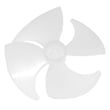
| Warm fridge, weak airflow | Evaporator fan motor | Refrigerator evaporator motor W11024089 |
| Frosted evaporator cover, warm fridge | Defrost system issue | Refrigerator defrost heater WP12729128 |
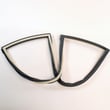
| Door not sealing, moisture/frost | Door gasket | Refrigerator door gasket W11368721 |
Why it matters
Cooling problems are the “biggest” issue because they can look like a sealed-system failure when the real cause is something simpler (controls, airflow, fan, defrost, or a door seal). Fixing the correct root cause restores stable temperatures and reduces constant run time.
Last updated: January 2026
What's the average lifespan of a whirlpool refrigerator?
Most Whirlpool refrigerators last 10 to 15 years on average, and many reach 15 to 20 years with good care. For your Whirlpool WRF532SMBM01 bottom-mount refrigerator, consistent maintenance and avoiding heavy door-opening habits are the biggest factors that help it reach the upper end of that range (see the WRF532SMBM01 owner's manual).
Typical lifespan range (what to expect)
Here’s a practical way to think about refrigerator life expectancy:
- 10 to 15 years: most common real-world lifespan
- 15 to 20 years: achievable with good airflow, clean coils, and stable temperatures
- Under 10 years: more likely when the unit runs hot, doors do not seal well, or the compressor runs nearly nonstop
| Lifespan range | What it usually indicates | What to do now |
|---|---|---|
| 10 to 15 years | Normal wear on sealed system and fans | Keep coils clean; keep temps steady |
| 15 to 20 years | Strong maintenance and good operating conditions | Stay ahead of gasket and airflow issues |
| Under 10 years | High stress conditions or unresolved cooling problems | Fix airflow, sealing, and defrost issues early |
Maintenance that extends life the most
We see these steps make the biggest difference in compressor and fan workload:
- Keep condenser area and airflow paths clean so heat can leave the cabinet efficiently
- Make sure doors close fully every time; avoid overloading door bins
- Set stable temperatures (avoid frequent big adjustments)
- Let the refrigerator cool properly after installation; many Whirlpool units need about 24 hours to cool completely
- Reduce long door-open times, especially during loading groceries
Parts that commonly affect longevity
A refrigerator often “wears out” because one stressed component causes others to run harder.
- If warm air leaks in, the compressor and fans run longer; a worn gasket is a common cause (example: refrigerator door gasket W11368721).
- If frost buildup restricts airflow, the unit can struggle to cool; defrost components matter (example: refrigerator defrost heater WP12729128).
- If the unit is not moving air well, the evaporator fan system becomes a key suspect (example: refrigerator evaporator fan motor W11024089).
Why it matters
A refrigerator that runs “too much” is usually under extra load (warm room, frequent door openings, or sealing issues). Reducing that load helps the sealed refrigeration system (compressor, condenser, evaporator, dryer, and tubing) operate with less stress and typically adds years of service life.
Last updated: January 2026