
How big of a boat will a 55lb trolling motor push?
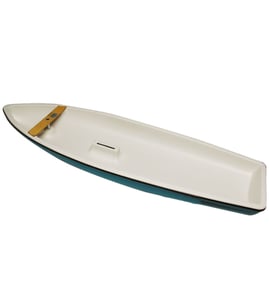
A 55 lb thrust trolling motor typically pushes a small, light fishing boat in the 12 to 17 ft range, assuming a reasonable total loaded weight (often about 1,500 to 2,000 lb). For heavier boats, strong wind, or current, you usually need more thrust than 55 lb.
Quick sizing rule we use (works better than boat length)
Boat length alone is a rough guide; total loaded weight matters more (boat, motor, fuel, batteries, gear, and passengers).
- Start with 2 lb of thrust per 100 lb of fully loaded boat weight
- Add thrust if you fish in wind, current, or heavy weeds
- Add thrust if you want higher top speed (thrust mostly improves control and holding power)
- If you are near the limit, stepping up in thrust gives a noticeable improvement in handling
What to expect from 55 lb thrust
Here is a practical way to think about it for typical fishing setups:
| Fully loaded boat weight | Typical boat examples | 55 lb thrust result |
|---|---|---|
| 1,000 to 1,500 lb | Jon boat, small aluminum V-hull | Good control, good all-around |
| 1,500 to 2,000 lb | Larger aluminum fishing boat | Usable, but slower; struggles in wind/current |
| 2,000+ lb | Heavier fiberglass, big loads | Underpowered; step up in thrust |
When 55 lb feels underpowered
Plan on more thrust if any of these are true:
- You regularly fish big lakes with wind
- You deal with river current
- You have a wide-beam boat or heavy gear load
- You want to hold position (spot-lock style use) without constant correction
- You run through vegetation that drags the motor down
Why it matters
Right-sizing thrust helps your trolling motor run cooler, hold speed more consistently, and maintain better steering control. It also reduces battery strain, which is a big deal on long fishing days.
Related help for electrical checks
If your motor feels weak, the issue is often wiring, connections, or a failing battery. Our guide on how to use a multimeter to test electrical parts video helps you confirm voltage drop and connection problems.
Last updated: February 2026
How fast will a trolling motor push a Jon boat?
A trolling motor typically pushes a Jon boat at about 3 to 4 mph in calm water. With a Minn Kota 65W electric fishing motor, exact speed depends most on boat load, wind/current, battery voltage, and prop condition.
What affects Jon boat speed the most
- Total weight: passengers, gear, fuel, livewell, and battery weight
- Wind and current: headwind or river current can cut speed dramatically
- Battery health and wiring: low voltage, weak connections, or undersized wire reduces thrust
- Prop condition: bent blades, fishing line on the shaft, or wrong prop pitch
- Boat setup: trim, transom height, and how the load is distributed
Typical speed ranges (real-world expectations)
| Setup and conditions | Typical speed | What you’ll notice |
|---|---|---|
| Light load, calm water | 3.5 to 4.5 mph | Best-case performance |
| Average load, light wind | 3 to 4 mph | Most common result |
| Heavy load or strong headwind/current | 1.5 to 3 mph | Motor works harder, battery drains faster |
Quick checks to get the best speed
- Charge the battery fully and test voltage under load.
- Inspect the prop and remove any line or weeds from the shaft.
- Check all electrical connections for corrosion and heat discoloration.
- Confirm correct wire size and fuse/breaker for your motor’s amp draw.
- Balance the load so the bow is not plowing and the stern is not dragging.
Why it matters
Speed is a useful benchmark, but thrust and runtime are what get you back to the ramp safely. A small voltage drop or a damaged prop can turn a 3 to 4 mph setup into a 2 mph setup and shorten battery life.
For electrical troubleshooting steps, we recommend our guide: how to use a multimeter to test electrical parts video.
Last updated: February 2026
What are the common problems with Minn Kota, 65W?
Common problems on the Minn Kota 65W Kota electric fishing motor are power-related shutdowns, intermittent operation from wiring or connection issues, steering or speed control problems, and mechanical binding in the mount or shaft. Most issues trace back to battery voltage drop, corrosion, damaged wiring, or a failing switch or control module.
Most common symptoms we see
- Motor runs slow, surges, or cuts out under load
- Motor will not turn on (no response)
- Steering is erratic or stuck (foot pedal or remote systems)
- Excessive vibration or noise (prop or shaft issues)
- Breaker or fuse trips repeatedly
Quick checks that fix many problems
- Confirm battery health and voltage under load (weak batteries can look “fine” at rest).
- Inspect and clean all connections: battery posts, terminals, quick-disconnect plugs, and ground points.
- Check the circuit protection: reset the breaker; replace a blown fuse with the correct rating.
- Inspect wiring end-to-end for pinched insulation, green corrosion, or overheated connectors.
- Check the prop area for fishing line, weeds, or debris; remove the prop and clear the shaft if needed.
Electrical troubleshooting guide (what to test)
Use this as a fast way to narrow the failure to power supply, wiring, or the motor/control.
| What you observe | Most likely cause | What to do next |
|---|---|---|
| Runs slow only at higher speeds | Voltage drop, undersized wiring, weak battery | Load-test battery; inspect connectors for heat damage |
| Completely dead | Tripped breaker, blown fuse, open connection | Verify voltage at motor leads; check breaker/fuse and plugs |
| Breaker trips quickly | Shorted wiring, water intrusion, failing motor | Inspect wiring for rub-through; check for moisture in housings |
| Vibrates or rattles | Damaged prop, bent shaft, line wrapped | Inspect prop and shaft; remove line and replace worn hardware |
Why it matters
A trolling motor that is starved for voltage or has high-resistance connections can overheat wiring, trip breakers, and damage controls. Catching corrosion, loose terminals, and damaged wires early prevents repeat failures and helps the motor deliver full thrust.
Helpful DIY references
- How to tell if a fuse is blown
- How to use a multimeter to test electrical parts video
- How to repair broken or damaged wires video
Last updated: February 2026
Why did 65W get bad reviews?
On the Minn Kota model 65W boating parts listing, “bad reviews” typically point to common trolling motor pain points: weak thrust from battery or wiring issues, intermittent power from a fuse/breaker or connections, vibration from prop damage or line wrap, or wear in the mount/steering.
What usually drives negative reviews on 65-lb class trolling motors
- Low battery capacity or aging battery: short run time, slow speed on high
- Voltage drop from wiring/connectors: motor feels weak under load
- Loose/corroded terminals: random cutouts, heat at connections
- Fuse or breaker problems: intermittent power, won’t stay running
- Prop issues (bent blade, nicks, line wrapped): vibration, noise, reduced thrust
- Water intrusion or internal wear: inconsistent speeds, grinding noises
Quick checks that resolve most complaints
- Verify the battery setup: fully charge, then test voltage at rest and while running.
- Inspect the prop and shaft: remove the prop, clear fishing line, and check for damage.
- Check the full power path: battery posts, connectors, plug/receptacle, and ground return.
- Measure voltage at the motor while running: a noticeable drop indicates wiring or connection losses.
Symptom-to-cause guide
| Symptom | Most likely cause | Best first step |
|---|---|---|
| Slow on high | Weak battery, voltage drop | Load-test battery; inspect wiring |
| Cuts out | Loose connection, breaker/fuse | Tighten/clean terminals; test protection device |
| Vibrates/noisy | Prop damage, line wrap | Remove prop; clear debris; replace prop if needed |
| Runs hot | High resistance connection | Check for warm plugs/terminals; correct wiring size |
Why it matters
Most “bad motor” experiences are actually power delivery or prop/shaft issues. Fixing voltage drop and prop problems restores thrust, reduces heat, and prevents repeat failures.
Helpful DIY reference
Use a meter to pinpoint voltage drop and connection problems: how to use a multimeter to test electrical parts video.
Last updated: February 2026