Owner’s manual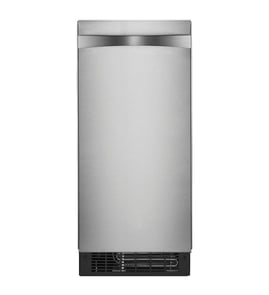


How to find ice maker model number?
For a Kenmore freestanding ice maker, the model number is typically printed on the appliance’s rating label. On model 10689482998, check the inside cabinet area near the storage bin or along an interior side wall; the exact label location is shown in the 10689482998 owner's manual.
- Inside the cabinet on a side wall (near the ice storage bin area)
- Along the door opening (cabinet frame) where the door seals
- Behind the lower front grille or kick plate area
- On the rear exterior panel near the power cord entry
- On the side or back of the cabinet near the bottom
Most Kenmore rating labels include:
- Model number (example: 10689482998)
- Serial number
- Electrical rating (volts/amps)
- Refrigerant information
| What to record | Why we need it for parts and service |
|---|---|
| Model number | Matches the correct parts diagrams and part IDs |
| Serial number | Helps confirm production version changes |
| Brand | Prevents mix-ups with similar-looking units |
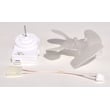
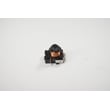
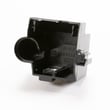
Kenmore ice maker parts can vary by production run, even when the unit looks the same. Using the exact model number helps us match the correct components (for example, a start relay like ice maker start relay WP2217224 or a condenser motor like condenser motor W10124096) and avoid ordering the wrong part.
Last updated: January 2026
Why is my free standing ice maker not making ice?
If your Kenmore freestanding ice maker model 10689482998 runs but makes no ice, the most common causes are the control being OFF, the water supply being shut off, a loose drain cap that empties the water pan, mineral scale buildup, or a drain problem that prevents proper operation. Use the checks below and confirm settings in the 10689482998 owner's manual.
- Confirm the ice maker control is set to ON (not OFF).
- Verify the household water supply valve is connected and turned on.
- Tighten the drain cap; if it is loose, the water pan can empty and you can get thin ice or no ice.
- Check the drain hose for kinks or twisting; a twisted hose can stop draining and the ice maker may not work.
- If the room is very hot (over 90°F / 32°C), expect reduced production.
| What you see | Likely cause | What we recommend |
|---|---|---|
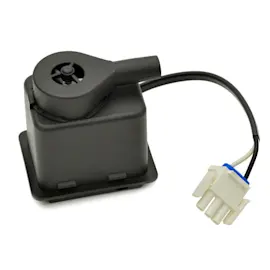
| Water pan stays full but no ice forms | Water not circulating over the freezing plate | Check for a failed recirculation pump; consider replacing the ice maker recirculation pump assembly WP2217220 |
| Water pan keeps emptying | Loose drain cap or drain issue | Tighten drain cap; clear debris from drain tube; straighten drain hose |
| Very little ice | Dirty condenser or scale buildup | Clean condenser area; descale/clean per the manual |
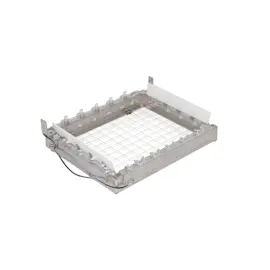
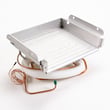
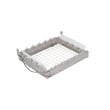
| Ice sheet forms but does not cut | Cutter grid connection issue | Unplug unit; reseat cutter grid harness plug; inspect the ice maker cutter grid WP2313637 |
This ice maker relies on constant water circulation over the freezing plate and proper draining after each cycle. If water cannot circulate (pump issue) or the water pan empties (drain cap or drain problem), the unit can run but never complete a normal ice-making cycle.
- Unplug the ice maker before removing covers, checking wiring connections, or handling the cutter grid.
- Drain alignment and household plumbing issues should be handled by a licensed plumber.
Last updated: January 2026
What are common problems with pebble ice makers?
Common pebble ice maker problems are no ice, low ice output, unusual water or fan noises, and ice sheets that do not cut cleanly. On Kenmore freestanding ice maker model 10689482998, these issues are most often tied to warm room temperatures, a dirty condenser, scale buildup, or a loose drain cap (all covered in the 10689482998 owner's manual).
- No ice or thin ice: water supply off, drain cap loose, or scale restricting water flow
- Low ice output: room temperature above 90°F (32°C), dirty condenser restricting airflow, or scale buildup
- Noisy operation: normal water circulation sounds, or a “whooshing” sound from water supply or drain cap issues
- Ice sheets or jams near the grid: unit not level, ice between evaporator plate and cutting grid, or needs a cleaning cycle
- Confirm the water supply is connected and fully turned on.
- Make sure the drain cap is tight; a loose cap can empty the water pan and cause thin ice or no ice.
- Check room temperature; higher temperatures reduce production and increase melting in the bin.
- Inspect and clean lint or dust from the condenser area to restore airflow.
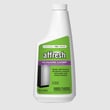
- If you see white scale, run the cleaning/descaling process.
| Symptom | Most likely cause | Best next step |
|---|---|---|
| Produces very little ice | Hot room, dirty condenser, scale | Cool the room, clean condenser, descale |
| “Whooshing” sound | Water supply or drain cap issue | Verify water on, tighten drain cap |
| Grid not cutting sheets | Grid/harness connection, ice buildup | Check grid seating and harness, clean and level |
| Runs but bin has water | Drain hose kinked | Straighten hose, allow pump to clear |
Pebble ice makers recirculate water over a freezing plate and drain mineral-heavy water each cycle. When airflow is blocked or minerals build up, the machine cannot freeze efficiently, so output drops and ice quality suffers.
Last updated: January 2026
Can I leave my portable ice maker on all the time?
Yes, you can leave the Kenmore 10689482998 freestanding ice maker powered on continuously as long as it’s installed correctly and has proper water supply and drainage; for safety and performance, we follow the shutdown and cleaning steps in the 10689482998 owner’s manual when the unit won’t be used for a while.
A freestanding ice maker is designed to cycle on and off to maintain ice production. If you leave it on all the time, you’ll typically see:
- Normal cycling as the bin fills and the ice level is maintained
- Higher energy use compared to “as-needed” operation
- More frequent need for cleaning (mineral scale and biofilm build faster)
- Faster wear on moving parts like the condenser fan motor and pumps
- More sensitivity to room temperature and airflow around the cabinet
The manual calls out key electrical and servicing safety items that matter even more with continuous operation:
- Plug into a grounded 3-prong outlet; do not use an adapter or extension cord
- Use a dedicated circuit when possible (115V, 60 Hz, 15-amp supply)
- Keep the unit level so it operates properly
- Disconnect power before cleaning or servicing
- Make sure the drain hose is not kinked or twisted (a drain problem can stop ice production)
If you won’t use the ice maker for several days, shutting it down prevents stale ice and reduces the chance of odor or scale buildup.
| Situation | Best practice |
|---|---|
| Daily use | Leave it on; empty old ice as needed |
| Away for a weekend | Turn off, empty bin, clean if needed |
| Long storage or freezing temps | Follow full shutdown and drain steps in the manual |
Running continuously is usually fine, but ice makers depend on steady water flow, proper drainage, and safe electrical supply. Small issues like a kinked drain hose or poor airflow can quickly turn into “thin ice” or “no ice” symptoms.
Last updated: January 2026