Owner’s manual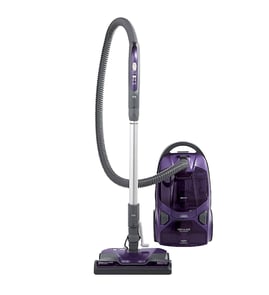

What is the very best canister vacuum?
There is no single “best” canister vacuum for everyone; the best choice depends on your floors, allergies, pets, and how much maintenance you want. For Kenmore model 11626412690, we recommend using its suction control and pile-height settings to match your home, then comparing features like filtration, bagged vs. bagless, and tool set.
What to compare when choosing a top canister vacuum
Use these factors to decide what “best” means for you:
- Flooring mix: hard floors, low-pile carpet, or deep pile
- Filtration: HEPA-level filtration helps with allergens and fine dust
- Bagged vs. bagless: bagged is cleaner for allergy households; bagless avoids bag purchases
- Power nozzle performance: brush roll and belt design matter for carpet pickup
- Controls and ergonomics: suction control, wand handling, and cord rewind convenience
- Maintenance access: how easy it is to change bags, clean filters, and clear clogs
How to get “best performance” from Kenmore 11626412690
Your Kenmore canister vacuum is designed to let you tune cleaning performance for different surfaces.
- Use pile height settings to prevent the power nozzle from bogging down on thick carpet
- Use the suction control to reduce suction for drapes and lightweight rugs, and increase it for upholstery and carpet
- Vacuum with slow, straight strokes for better deep cleaning (fast, jerky strokes reduce pickup)
- Keep airflow open by checking for clogs in the hose, wand, and nozzle path
- Change the dust bag before it overfills; fine powders can clog bags early
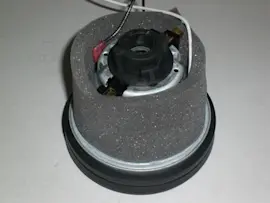
- Check the motor safety filters at each bag change; the foam filter can be washed and the white filter is replaced when dirty
Quick feature comparison (what “best” usually means)
| If you want the best for... | Prioritize | Why it helps |
|---|---|---|
| Allergies and fine dust | Bagged + strong filtration | Cleaner disposal and better particle capture |
| Pet hair on carpet | Power nozzle + brush roll performance | Better agitation and pickup |
| Mostly hard floors | Smooth floor tool + controllable suction | Prevents scatter and improves control |
| Low maintenance | Easy-access bag/filter system | Faster routine upkeep |
Why it matters
Canister vacuums can all look similar, but airflow management (bag condition, filters, and clogs) and correct settings (pile height and suction control) are what separate “okay” cleaning from truly top-tier results in real homes.
For model-specific operating and care steps, follow the owner's manual.
Last updated: February 2026
How long do canister vacuums last?
Most canister vacuums last 7 to 10 years with normal household use; a well-maintained Kenmore canister vacuum like model 11626412690 often reaches the high end of that range because routine care prevents airflow restrictions and motor strain. For the exact maintenance schedule and care steps, follow the owner's manual.
Typical lifespan (what we see most often)
A vacuum’s life depends less on the brand name and more on how clean the airflow path stays (bag, filters, hose, and nozzle).
- 7 to 10 years: typical lifespan for most canister vacuums
- 10 to 15 years: common when bags and filters are changed on time and clogs are cleared quickly
- 5 to 7 years: common when the vacuum is run with restricted airflow (full bag, dirty filter, frequent clogs)
| Usage and care pattern | What usually happens | Expected lifespan |
|---|---|---|
| Regular bag and filter care, clogs cleared quickly | Motor runs cooler, suction stays steady | 10 to 15 years |
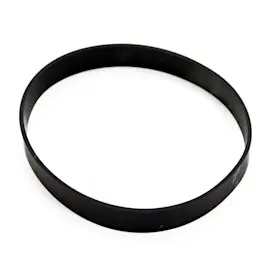
| Mixed maintenance, occasional clogs | More wear on motor and belt/brush system | 7 to 10 years |
| Frequent restrictions (full bag, dirty filters) | Overheating risk, reduced suction, more failures | 5 to 7 years |
What extends the life of a Kenmore canister vacuum
These are the maintenance items that most directly affect longevity and performance.
- Change the dust bag before it is packed full (restricted airflow shortens motor life).
- Clean the motor safety filter as directed in the manual.
- Watch for signs of blockage; some models use a performance indicator light that comes on when airflow is restricted.
- Clear clogs in the wand, hose, and nozzle as soon as suction drops.
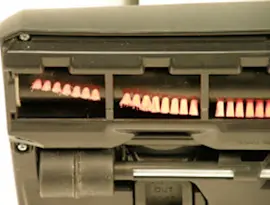
- Keep the Power-Mate brush area clear; unplug before cleaning the brush area.
- If the brush jams and stops, reset the overload protector only after removing the cause of the jam.
Why it matters
A canister vacuum’s motor relies on moving air for cooling. When the bag is full, a filter is dirty, or a hose is clogged, airflow drops; that increases heat and load, which is the fastest way to shorten the vacuum’s service life.
Last updated: February 2026
How to replace a canister vacuum bag?
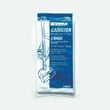
To replace the bag in your Kenmore 11626412690 canister vacuum, unplug the cord, open the canister hood, remove the old bag by releasing the cardboard tab from the red bag mount, then install a new bag so the tab locks in place and the holes align (see the owner's manual).
Step-by-step: bag changing on model 11626412690
- Unplug the vacuum from the wall outlet.
- Pull the hood release out and up, then lift the canister hood.
- Press away and lift up on the cardboard tab to disengage it from the red bag mount.
- Pull the bag out of the red bag mount.
- Check and clean the motor safety filter; the red bag mount may flip forward after bag removal.
- Install the new bag into the slots, push down until the cardboard tab locks, and confirm the holes align.
- Tuck the back end of the bag down, raise the red bag mount, then close and latch the hood.
Bag replacement checklist (what to verify before you close the hood)
| Item to check | What “correct” looks like | What happens if it’s wrong |
|---|---|---|
| Cardboard tab | Fully seated and locked into the red bag mount | Poor suction, bag may not seal |
| Bag holes alignment | Holes line up with the mount openings | Air leak, dust bypass |
| Bag tucked in | Back end tucked down, not pinched by hood | Hood may not latch, bag can tear |
| Motor safety filter | Installed, clean, and dry | Reduced airflow, motor protection risk |
Why it matters
A properly installed dust bag keeps airflow open so your Kenmore canister vacuum maintains suction and keeps dirt contained. A misaligned bag or clogged filter can trigger a performance indicator light and make the vacuum act like it has a blockage.
Important cautions
- Never reuse a dust bag; fine dust (plaster, soot, carpet freshener, new carpet lint) can clog it and cause it to burst.
- Change the bag more often when vacuuming very fine materials.
- Do not operate the vacuum without the motor safety filter installed and dry.
Last updated: February 2026
What are the disadvantages of a canister vacuum?
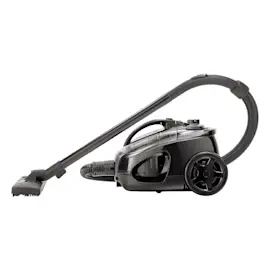
Canister vacuums like the Kenmore 11626412690 clean very well, but the tradeoff is handling and upkeep: you pull a separate canister behind you, manage a hose and wand, and typically maintain a bag and filters. For model-specific use and care details, follow the owner's manual.
Common disadvantages you will notice
- Bulkier to store than many uprights; you have a canister, hose, and wand to park.
- More “pulling and steering”; the canister can bump furniture or catch on thresholds and thick carpet.
- Slower for quick pickups; setup and tool changes take longer than a stick vacuum.
- More connection points (hose, wand, floor nozzle) that can loosen, clog, or need checking.
- Ongoing maintenance; many canister designs use bags and filters that need routine attention.
- Cord rewind requires care; the cord moves quickly during rewind, so you need a clear path.
What matters most for this Kenmore canister design
The manual highlights a few practical drawbacks that come with the canister format and power nozzle (POWER-MATE):
- Cord management: You pull out the cord to length, and it rewinds only when you press the rewind bar; hold the plug while rewinding to prevent injury or damage.
- Stairs handling: Placing the canister on stairs can be risky if it shifts.
- Clog sensitivity: Airflow restrictions can reduce performance; the performance indicator may signal a full bag, a clogged airflow path, or a filter that needs cleaning.
Quick comparison: canister vs upright (typical)
| Feature | Canister vacuum (like 11626412690) | Upright vacuum (typical) |
|---|---|---|
| Storage | More pieces to store | Usually one main body |
| Handling | Pull canister, steer hose/wand | Push one unit |
| Tight spaces | Often better reach with hose | Can be bulkier at the head |
| Maintenance | Bag and filter checks are common | Bagless bins are common |
Why it matters
If you vacuum often, the canister’s hose swivel, suction control, and pile-height settings can be big advantages, but the extra handling, cord rewind safety, and bag or filter upkeep are the main reasons some owners prefer an upright.
Last updated: February 2026
Where to find model number on Kenmore canister vacuum?
On Kenmore canister vacuum model 11626412690, the model number is printed on the Model and Serial Number Plate; on this style of canister, that plate is typically located on the bottom of the canister. For the exact plate location and a diagram, use the 11626412690 owner's manual.
Where to look on the vacuum
Check these common spots first (with the vacuum unplugged and the canister turned over carefully):
- Bottom of the canister body (most common for this model style)
- Near the bag compartment area (inside or near the hood on some versions)
- On or near the canister hood or performance cover area
- On the underside area close to the cord rewind pedal area
Quick steps to find it fast
- Unplug the vacuum and retract the cord.
- Turn the canister over so you can see the underside.
- Look for a label/plate that lists Model No. and Serial No.
- Write both numbers down; you often need both for parts lookup and service information.
What the label usually shows
| Label item | What it’s used for |
|---|---|
| Model number | Matching the correct Kenmore parts diagrams and part lists |
| Serial number | Identifying production details for the unit |
| Electrical ratings | Confirming basic power information for troubleshooting |
Why it matters
Using the correct model number (like 11626412690) prevents ordering the wrong vacuum cleaner parts and helps us match the right diagrams for items such as the hose, wand, dust bag, motor safety filter, and Power-Mate components.
Last updated: February 2026