Installation guide
 Owner’s manual
 Error Codes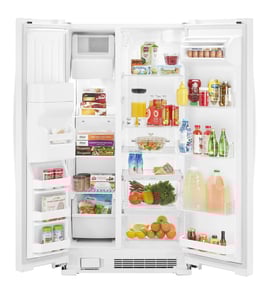



How do I read my Kenmore refrigerator model number?
For Kenmore model 10644553401, the model number is printed on the model and serial number label inside the refrigerator compartment. We use that full model number to match the correct parts list, diagrams, and service information for your exact side-by-side refrigerator.
Where to find the model number label
Check these common locations on a Kenmore side-by-side refrigerator:
- Inside the fresh food (refrigerator) compartment on an interior side wall
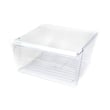
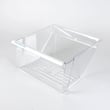
- On the wall behind the lower crisper drawer area
- Inside the door area near the lower hinge side
- Behind the lower front kick plate or grille (on some installations)
Use the location guidance in the 10644553401 owner's manual to confirm the exact label position for your unit.
How to read a Kenmore 106 model number
Kenmore model numbers typically follow a pattern that helps identify who built the unit and the product family.
| Example | What it usually means | Why it helps |
|---|---|---|
| 106 | Manufacturer prefix (commonly Whirlpool-built Kenmore) | Narrows down compatible parts systems |
| 44553401 | Model series and configuration | Matches the correct diagrams and parts |
Tips to avoid ordering the wrong part
Before you search for parts or place an order, we recommend:
- Write down the full model number exactly as shown (all digits)
- Record the serial number too; it helps with production variations
- Take a clear photo of the label for reference
- Use the model number (not the door badge) when looking up parts like a thermostat, ice maker, or door gasket
Why it matters
Kenmore refrigerators can look similar across multiple series, but small design changes affect fit and wiring. Using the exact 10644553401 model number is the fastest way to ensure parts like an ice maker, defrost heater, or evaporator fan components match correctly.
Last updated: February 2026
How wide is a Kenmore side-by-side refrigerator?
Most Kenmore side-by-side refrigerators measure about 32 to 36 inches wide; the exact cabinet width varies by model and whether it is standard-depth or counter-depth. For your Kenmore 10644553401, confirm the published dimensions in the 10644553401 owner's manual.
Typical widths you can expect
Side-by-side refrigerator widths commonly fall into these ranges:
- 32 to 33 inches: space-saving models
- 35 to 36 inches: most full-size side-by-sides
- 36 inches (counter-depth): common for built-in look, but depth changes more than width
- 30 inches: less common, usually smaller-capacity units
Measure it the right way (so it fits)
Use a tape measure and check these points before ordering a replacement refrigerator or planning cabinetry:
- Cabinet width: body of the refrigerator (not the doors)
- Door width: doors can extend past the cabinet edges
- Handle clearance: handles add extra width on many models
- Door swing space: you need room for doors to open fully
- Ventilation clearance: allow space at the sides and top for airflow
The installation guidance for this style of refrigerator typically calls for about 1/2 inch clearance on each side and at the top, and about 2 inches minimum next to a fixed wall so the doors can swing open properly. For model-specific clearances, use the 10644553401 installation guide.
Quick reference: what to measure
| What you’re checking | What it affects | What to include |
|---|---|---|
| Width (cabinet) | Fits between cabinets | Refrigerator body only |
| Width (doors/handles) | Walkway and door clearance | Doors, hinges, handles |
| Clearance at sides/top | Cooling performance | Air gap around unit |
| Door swing | Drawer access, bin removal | Space near walls |
Why it matters
A refrigerator that is even 1 inch too wide can prevent proper installation, reduce door opening, and restrict airflow, which can hurt cooling performance and ice maker operation.
Last updated: February 2026
What is the average lifespan of a Kenmore refrigerator?
Most Kenmore refrigerators average 10 to 15 years of service life; a well-maintained Kenmore 10644553401 side-by-side refrigerator often reaches the upper end of that range when airflow is kept clear, door seals stay tight, and cooling issues are repaired early. For model-specific care routines, follow the 10644553401 owner's manual.
Typical lifespan and what to expect
In normal household use, we see these ranges most often:
- 10 to 15 years: typical for most Kenmore refrigerators
- 15+ years: common when condenser coils are kept clean and doors seal well
- Shorter lifespan: more likely with poor ventilation, heavy ice buildup, or repeated warm-temperature events
Quick reference
| Item | Typical expectation | What helps most |
|---|---|---|
| Overall refrigerator lifespan | 10 to 15 years | Cleaning, good airflow, stable temps |
| Sealed system (compressor, tubing) | Often lasts most of the unit’s life | Keeping coils clean, avoiding overheating |
| Wear items (gaskets, switches, fans) | May need replacement sooner | Fixing small issues early |
Maintenance that extends life (high impact)
These steps reduce compressor run time and prevent temperature swings:
- Vacuum condenser coils and the grille area regularly
- Keep proper air circulation inside the cabinet (do not overpack shelves)
- Check door closing and alignment; fix sagging doors or hinge wear
- Clean sticky gaskets; replace if torn or not sealing
- Address frost buildup quickly (defrost system issues can strain cooling)
Parts that commonly affect longevity
If cooling performance drops, these parts are frequent contributors on side-by-side designs:
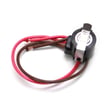
- Refrigerator defrost bi-metal WPW10225581 (helps prevent evaporator icing)
- Refrigerator heater WP2323198 (supports defrosting)
- Refrigerator compressor W10309994 (core of the sealed system)
Why it matters
A refrigerator that runs warmer than normal or runs constantly wears the compressor faster, increases energy use, and can lead to food spoilage. Basic cleaning and quick repairs usually add years of reliable operation.
Last updated: February 2026
What is the cubic foot of my Kenmore refrigerator model 10644553401?
The cubic-foot capacity for Kenmore side-by-side refrigerator model 10644553401 is listed in the product specifications section of the documentation for your exact unit. Use the 10644553401 owner's manual to confirm the total capacity (refrigerator plus freezer) for your configuration.
How to find the capacity in the manual
Look for a section labeled Specifications, Product data, or Capacity.
- Check the first few pages and any “Product record” or “Features” overview pages
- Search the PDF for keywords like capacity, cu. ft., cubic, volume, or specifications
- If the manual lists separate volumes, add refrigerator + freezer for total capacity
- If your unit has an ice maker installed, note that it reduces usable freezer space but not the published total volume
Typical capacity range for this style (for comparison)
Most Kenmore 106-series side-by-side refrigerators are in this general range; use it only to compare sizes while you confirm the exact spec for model 10644553401.
| Side-by-side size class | Typical total capacity | Common use case |
|---|---|---|
| Compact to mid-size | 20 to 22 cu. ft. | Smaller kitchens, average storage needs |
| Full-size | 23 to 26 cu. ft. | More shelf and door-bin space |
| Extra-large | 27+ cu. ft. | High storage needs, wider cabinets |
Why it matters
Cubic feet helps you match the right replacement refrigerator, plan shelf and bin organization, and estimate how much space you will have for items like freezer bins and an ice maker.
Related help
If you are comparing models or troubleshooting display messages while checking specs, use the Kenmore 106 model refrigerator error codes reference.
Last updated: February 2026