Owner’s manual
 View engine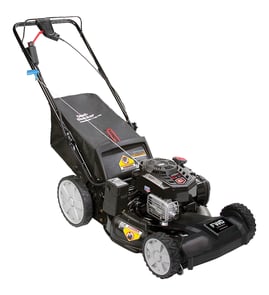



How old is my lawn mower by serial number lookup?
For your Craftsman walk-behind mower model 917370541, the serial number is on a decal on the rear of the mower housing; once you find it, you can often determine the build date by decoding the date-style digits in that serial number using the 917370541 owner's manual.
Where to find the serial number on model 917370541
We look for the model and serial decal in one consistent spot on this mower.
- Tip the mower only as directed in the manual (to avoid fuel or oil spills)
- Look at the rear of the mower housing (deck) for the decal
- Record the serial number and your date of purchase
- Clean grass and dirt off the deck if the decal is hard to read
- Take a photo of the decal before it fades further
How to decode the serial number (common Craftsman formats)
Craftsman walk-behind mowers commonly use a serial number that begins with a date code.
- MMDDYYxxxxx: month, day, year (example: 061508xxxxx = June 15, 2008)
- If your serial starts with 6 digits, try reading it as MMDDYY first
- If your mower has a Briggs & Stratton engine tag with its own code, that code can indicate engine build date (engine date can differ from mower assembly date)
Quick decode table
| If the serial starts with | Read it as | Example meaning |
|---|---|---|
6 digits like 061508 |
MMDDYY | June 15, 2008 |
6 digits like 150608 |
DDMMYY (less common) | June 15, 2008 |
| Engine code varies | Engine manufacture date code | Engine build date only |
Why it matters
Knowing the mower’s age helps us match the right maintenance schedule and parts (blade, belt, drive components) and avoid ordering look-alike hardware that does not fit.
Parts that are commonly age-related
If you are refreshing wear items, these are common on walk-behind mowers:
- Blade and blade mounting hardware
- Drive system wear parts (belt, pulley, transmission components)
- Wheels and wheel dust covers
For example, if you are replacing cutting components, use the exact blade listed for this model: lawn mower blade 532406712.
Last updated: February 2026
Should I use 87 or 89 gas for lawn mower?
Use 87 octane (regular) unleaded gasoline in your Craftsman lawn mower model 917370541. Higher octane (89) does not improve performance in typical walk-behind mower engines; what matters most is using clean, fresh fuel and the correct oil level per the owner's manual.
What fuel to use (and what to avoid)
For reliable starting and smooth running, we recommend:
- 87 octane unleaded for normal mowing conditions
- Fresh fuel (do not keep gas from one season to the next)
- Clean fuel container (replace a rusting gas can to prevent dirt and rust contamination)
- No more than 10% ethanol (E10) when possible (higher ethanol blends commonly cause hard-start and storage issues in small engines)
- Never mix oil into the gas unless your engine is specifically a 2-cycle design (this model is a typical 4-cycle walk-behind mower)
Why 89 octane usually is not the answer
Octane is mainly about resistance to knock, not “power.” Most small 4-cycle mower engines are designed to run correctly on regular fuel, so moving from 87 to 89 typically does not fix problems like surging, stalling, or hard starting.
If you are chasing a “won’t start” problem
The troubleshooting table in the manual points to fuel quality and ignition basics first. Common causes include:
- Out of fuel or stale fuel
- Water in fuel
- Dirty air filter
- Spark plug wire disconnected or bad spark plug
- Loose blade or a damaged blade adapter
If the engine will not start and the fuel is old, drain the tank and refill with fresh 87 octane.
Quick comparison
| Fuel choice | Best use | What to expect |
|---|---|---|
| 87 octane (regular) | Everyday mowing | Correct performance for this mower |
| 89 octane (mid-grade) | Not needed for normal use | No meaningful benefit |
| E15/E85 blends | Avoid | Hard starting, poor storage stability |
Why it matters
Using fresh 87 octane and storing fuel correctly prevents varnish in the carburetor, reduces starting issues, and helps the engine run cooler and last longer.
Last updated: February 2026
What size belt does a 42 in Craftsman lawn mower take?
A “42-inch Craftsman mower belt” usually refers to a riding mower deck belt, not your Craftsman walk-behind mower model 917370541. This 21-inch walk-behind uses a drive belt for self-propel, and the exact belt size is best confirmed in the owner's manual for 917370541.
Why the 42-inch belt info does not apply to model 917370541
A 42-inch measurement is the cutting deck width found on many riding mowers. Your 917370541 is a 21-inch multi-cut, power-propelled rotary mower, so it does not use a 42-inch deck belt.
Common mix-ups we see:
- Riding mower deck belt: drives the mower deck blades (42-inch deck)
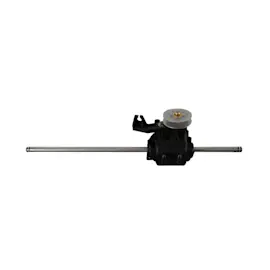
- Walk-behind drive belt: drives the transmission/gearcase for self-propel
- Blade drive on walk-behinds: the blade is typically direct-driven by the engine (no deck belt)
How to identify the correct belt for your Craftsman mower
Use these checks to make sure you buy the right belt type:
- Confirm the equipment type: riding mower vs. walk-behind
- Match the model number exactly (917370541)
- Look up the belt in the drive system section of the parts list/manual
- Compare the old belt’s markings (if readable) before ordering
- If the mower “won’t move,” inspect belt routing and condition first
What the manual says about replacing the drive belt (quick overview)
For model 917370541, the manual procedure focuses on removing the drive cover, releasing the belt keeper/spring, routing the belt around the engine pulley and gearcase pulley, then reinstalling the keeper and cover. It also notes to use a factory-approved belt for proper fit and life. See the step-by-step diagrams in the owner's manual.
Drive belt routing points (walk-behind self-propel)
| Component | What it does | What to check |
|---|---|---|
| Engine pulley | Drives the belt | Debris buildup, pulley damage |
| Gearcase pulley | Transfers power to transmission | Belt seated fully in groove |
| Belt keeper/spring | Maintains belt position/tension | Bent keeper, weak spring |
Why it matters
Using a 42-inch deck belt size on a walk-behind mower leads to wrong fit, slipping, or loss of self-propel. Matching the belt to 917370541 prevents repeat failures and protects the transmission.
Last updated: February 2026
Why is my self-propelled lawn mower pulling to one side?
A Craftsman 917370541 self-propelled mower usually pulls to one side when the drive system is not applying equal traction at both rear wheels. The most common causes are uneven wheel height settings, a worn wheel drive/pawl on one side, or a dragging/bent blade that makes the mower “walk” sideways. See the owner's manual for the wheel-height and drive-control checks.
Quick checks that fix most “pulling” problems
- Match the wheel height on all four wheels; the manual lists uneven wheel heights as a cause of uneven cutting and handling.
- Inspect the blade for damage and tightness; a worn, bent, or loose blade can cause vibration and steering drift.
- Clean packed grass from under the deck; buildup can create drag on one side.
- Check the drive engagement; make sure the drive control bar is fully held against the handle during self-propel.
- Look for a worn wheel drive part on one side; a slipping wheel will make the mower veer.
Parts that commonly affect side-to-side drive
If one rear wheel is not “biting” like the other, these model-listed parts are good starting points:
- Drive pawl 532404845 (a worn pawl can slip on one wheel)
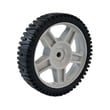
- Lawn mower wheel 532400542 (tread wear or damage reduces traction)
Symptom-to-cause guide
| What you notice | Most likely cause | What to do |
|---|---|---|
| Pulls more under self-propel than when pushed | One wheel drive slipping | Inspect/replace drive pawl; check wheel condition |
| Pulls and vibrates | Bent/loose blade or blade adapter issue | Inspect blade, tighten hardware; replace blade if damaged |
| Pulls and leaves uneven cut | Wheel heights not matched | Set all wheels to the same height |
Why it matters
When the mower pulls, you fight the handle and the drive system works harder. Fixing wheel height, blade condition, and wheel traction improves cut quality, reduces vibration, and helps protect the transmission and drive belt.
Last updated: February 2026