 Installation guide
 Owner’s manual
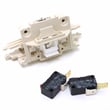


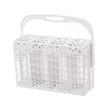
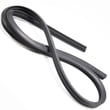
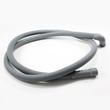

What are the commonly replaced parts in a dishwasher?
In the Kenmore 58714402400 dishwasher, the most commonly replaced parts are the ones that affect starting, sealing, washing action, and dispensing: door latch components, tub gaskets, spray arm parts, and the detergent dispenser. Routine cleaning and correct loading (per the 58714402400 owner's manual) also reduces repeat failures.
- Door latch and door switch area: helps the dishwasher start and stay running; a worn latch can cause no-start or mid-cycle stopping.
- Door and tub seals: stops leaks around the door opening and tub edge.
- Spray arm and mounting hardware: restores strong spray and proper rotation for better cleaning.
- Detergent dispenser: fixes detergent not releasing or poor wash results.
- Filters: improves cleaning and drainage; the manual notes the filter assembly should be cleaned often for best performance.
These are common replacements we see for this model when symptoms match:
| Symptom | Likely part area | Example part for this model |
|---|---|---|
| Won’t start or won’t stay latched | Door latch | Dishwasher door latch 5304535183 |
| Leaks at the door/tub edge | Seals/gaskets | Dishwasher tub gasket 5304512895 |
| Poor cleaning, weak spray | Spray arm hardware | Dishwasher spray arm 5304461012 or dishwasher upper spray arm nut 5304461019 |
| Detergent not dispensing | Dispenser | Dishwasher detergent dispenser assembly 5304460911 |
These parts wear out first because they handle heat, detergent, vibration, and repeated door movement.
- Latches wear from daily opening and closing
- Gaskets compress and harden over time
- Spray arms clog from debris and mineral buildup
- Dispensers stick from detergent residue and moisture
- Clean the filter assembly and re-seat it fully (a loose filter reduces cleaning efficiency).
- Confirm the door closes squarely and latches firmly.
- Inspect spray arm holes for clogs and verify the arm spins freely.
- Use the loading guidance in the manual to prevent blocking the spray arms.
Last updated: February 2026
How to remove lower spray arm Kenmore Elite dishwasher?
On the Kenmore dishwasher model 58714402400, we remove the lower spray arm by holding the arm still, turning the retaining nut clockwise, then lifting the spray arm straight up off the shaft. Use the steps and diagrams in the 58714402400 owner's manual to match your exact hardware.
- Turn off power to the dishwasher at the breaker (recommended anytime your hands are inside the tub).
- Pull out the lower rack to fully access the lower spray arm.
- Hold the spray arm in place so it cannot rotate.
- Turn the retaining nut clockwise to loosen it.
- Lift the lower spray arm up and off the shaft.
- Rinse the spray arm jets and bearings with warm, soapy water; use a soft brush to clear clogs.
Set the spray arm back on the shaft, then install the retaining nut and turn it counterclockwise until it locks in place. Spin the arm by hand to confirm it turns freely and does not hit dishes.
| Check | What you want to see | What it prevents |
|---|---|---|
| Arm spins freely | No rubbing or binding | Poor cleaning, noise |
| Jets are clear | Water can spray from every hole | Dead spots on dishes |
| Rack loading is clear | No handles protruding below rack | Arm blocked from rotating |
A clogged or stuck lower spray arm reduces water coverage, which causes leftover food, cloudy glasses, and detergent that does not fully rinse away. Keeping the arm clean also helps protect the pump and improves overall wash performance.
If the spray arm is cracked, warped, or the hub is stripped so it will not tighten, replacement is the reliable fix. For this model, we recommend matching the replacement to the correct assembly for your unit; the dishwasher spray arm 5304461012 is a common spray arm part listed for model 58714402400.
Last updated: February 2026
What does E25 mean on a Kenmore dishwasher?
On the Kenmore 58714402400 dishwasher, an E25 error means the dishwasher is not draining properly, most often because the drain pump area is blocked or the pump cover/filter area is not seated correctly. Clearing the blockage and restoring normal water flow typically resolves it.
- Turn off power at the breaker before reaching into the sump area.
- Remove the lower rack and check the bottom of the tub for debris.
- Clean out food, glass, labels, or twist ties near the filter and pump intake.
- Confirm the drain hose is not kinked, crushed, or pinched behind the unit.
- If the unit recently stopped mid-cycle, restart after clearing debris and verify it drains.
- Cancel the cycle and let the dishwasher attempt to drain.
- If water remains, remove standing water (cup or wet/dry vac).
- Inspect the filter and sump area; remove any obstructions.
- Check the drain hose routing to the sink/disposer for kinks and high-loop/air-gap issues.
- If the door is not latching firmly, the dishwasher can pause or stop unexpectedly; inspect the latch.
For model-specific operating and troubleshooting guidance, follow the steps in the 58714402400 owner's manual.
If the dishwasher stops because it cannot drain, these parts are often involved:
- Dishwasher door latch 5304535183 (if the door is not staying firmly closed)
- Drain hose and clamps (if you find a loose connection or leak)
| What you notice | Most likely cause | What we do |
|---|---|---|
| Humming but no drain | Debris at pump intake | Clear sump/filter area |
| Drains slowly | Partial blockage or kinked hose | Straighten hose, clear restriction |
| Stops mid-cycle | Door not fully latched | Inspect latch alignment and closure |
| Water left after cycle | Drain path restriction | Check hose routing and sink connection |
A drain fault leaves dirty water in the tub, reduces wash performance, and can cause the dishwasher to pause between cycles. Keeping the filter area clear after each wash helps prevent repeat E25 drain problems.
Last updated: February 2026
What is the spinning thing at the bottom of a dishwasher called?
In the Kenmore 58714402400 dishwasher, the spinning part at the bottom is the lower spray arm (often called the wash arm). It rotates while the circulation pump pushes water through it, spraying hot water and detergent to clean dishes.
The lower spray arm is the rotating sprayer you see at the bottom rack level; it distributes wash water throughout the tub during the cycle.
- Sprays a mixture of hot water and detergent onto dishes
- Rotates from water pressure and internal jet design
- Can be stopped if a pan handle or utensil protrudes through the lower rack
- Works with the pump and motor to keep water circulating
- Helps prevent redepositing soil by keeping water moving and draining between fills
For diagrams and feature names for this model, use the 58714402400 owner's manual.
If the “spinning thing” is not moving, we focus on loading, clogs, and water flow first.
- Make sure nothing blocks the arm (handles should not protrude through the rack)
- Reposition large items to the sides so the arm can rotate freely
- Check the spray arm holes for debris and rinse them out
- Confirm the dishwasher is filling and circulating (you should hear swishing/pulsing)
- Verify incoming hot water is 120°F to 150°F for best wash performance
If the spray arm is cracked, warped, or the hub is stripped, replace the dishwasher spray arm 5304461012.
| What you call it | Common name | Where it is |
|---|---|---|
| Spinning thing | Lower spray arm (wash arm) | Bottom of tub, under lower rack |
| Spinner | Spray arm | Bottom and sometimes upper rack area |
| Propeller | Spray arm | Bottom of tub |
When the lower spray arm cannot rotate or spray strongly, dishes come out dirty, you may hear loud ticking (something hitting the arm), and wash performance drops even with good detergent.
Last updated: February 2026
What does f2 e2 mean on a Kenmore dishwasher?
On Kenmore dishwasher model 58714402400, the F2 E2 error code indicates a communication problem between the user interface (control panel) and the main control board. This typically shows up as unresponsive buttons, beeping, or a cycle that will not start or finish normally.
- Turn the dishwasher off at the breaker for 5 minutes, then restore power.
- Press Cancel/Drain (if your model has it) and try starting a normal cycle.
- Make sure the door is fully latched; a weak latch can mimic control issues.
- If the keypad is acting “stuck,” wipe the control area dry and try again.
- If the code returns quickly, focus on the control panel and wiring connections.
| Likely cause | What you’ll notice | What usually fixes it |
|---|---|---|
| Moisture or contamination at the console | Random beeps, keys not responding | Power reset, dry console area |
| Loose or damaged wire connection (console to control) | Code appears after moving door or during vibration | Reseat/inspect harness connections |
| Failed user interface (keypad/control panel) | Certain keys never work | Replace control panel |
| Failed main control (less common) | Multiple odd behaviors, won’t run cycles | Control replacement after diagnosis |
If the keypad or console is the issue, the control panel is a common repair item for this model. We match parts by model number to help ensure fit.
When the user interface and main control cannot “talk” reliably, the dishwasher may stop mid-cycle, refuse to start, or drain unexpectedly. Fixing the communication fault restores normal cycle selection, wash performance, and dependable operation.
Last updated: February 2026
Is it worth repairing a Kenmore dishwasher?
Repairing a Kenmore dishwasher is worth it when the problem is a single, fixable failure (like a door latch, leak at the seal, or a dispenser issue) and the rest of the machine is in good shape. For Kenmore model 58714402400, we use the troubleshooting and safety guidance in the 58714402400 owner's manual to decide whether a repair is practical.
- Repair when the dishwasher still cleans well, fills and drains normally, and the issue is isolated (door won’t latch, minor leak, noisy spray arm contact).
- Replace when you have repeated breakdowns, multiple major symptoms at once (won’t fill, won’t drain, won’t heat), or heavy corrosion and chronic leaking.
- Repair sooner if the unit is stopping because the door is not firmly closed; the manual notes this is a common cause of operating problems.
- Replace sooner if the tub or door sealing surfaces are damaged and leaks persist after correcting loading and sealing issues.
- Door won’t close or start: inspect and replace the dishwasher door latch 5304535183
- Leaks at the door: inspect the tub seal and replace the dishwasher tub gasket 5304512895 if worn
- Soap door not opening or poor detergent release: consider the dishwasher detergent dispenser assembly 5304460911
- Confirm the door closes fully; remove anything sticking out that prevents sealing.
- Listen for loud ticking; it often means an item is hitting the wash arm (re-load to clear the spray path).
- Verify you are using dishwasher detergent and rinse agent intended for dishwashers.
- Disconnect electrical power before servicing; repairs should be done by a qualified technician.
| Option | Best for | What you avoid | Typical downside |
|---|---|---|---|
| Repair | Single-part failure (latch, gasket, dispenser) | New installation hassle | May still have future wear items |
| Replace | Multiple major failures or chronic leaks | Repeat service calls | Higher upfront cost |
A targeted repair can restore safe operation and stop leaks without changing your kitchen setup. Using the manual’s troubleshooting steps helps prevent replacing parts that are not causing the symptom.
Last updated: February 2026
How do I get rid of standing water in my Kenmore dishwasher?
Standing water in your Kenmore 58714402400 dishwasher happens when the drain path is restricted or the cycle does not complete its pre-drain and pump-out steps. Remove the water safely first, then clean the filter and check the drain connection (see the 58714402400 owner's manual).
- Turn off power at the breaker (or unplug if accessible).
- Put towels under the door area to catch drips.
- Remove the lower rack for access.
- Scoop water out with a cup into a bucket.
- Soak up the remaining water with a sponge or towels.
The 58714402400 is designed to pre-drain at the start of a cycle and pump out soiled water during the wash; any clog or backflow can leave water in the tub.
- Clean the filter assembly: Pull up the main filter, rinse the main and fine filters under running water, and brush off debris; press the filter down so it seats fully.
- Clean the spray arm area: Remove the spray arm and flush the jets so food particles do not drop into the sump.
- Check the drain air gap (if installed): Remove the cap and clear buildup.
- Inspect the drain hose: Correct kinks or crushing; make sure the hose has a high loop to prevent backflow.
- Verify the sink or disposer connection: Clear the dishwasher inlet at the drain connection so water can exit freely.
| What you notice | Likely direction | Next step |
|---|---|---|
| Overfilling or inconsistent water level | Water-level sensing restriction | Inspect the pressure hose; replace if damaged using dishwasher water-level pressure switch hose 5304460976 |
| Cycle stops and will not continue unless you press Start | Drain issue or error condition | Clear clogs first, then check Kenmore he dishwasher error codes |
Standing water causes odors, redeposits soil on dishes, and prevents normal pump-out performance during the cycle.
Last updated: February 2026





