Owner’s manual
 Error Codes



How to remove bottom grille on GE refrigerator?
On the GE GFE29HSDHSS bottom-mount refrigerator, the bottom grille (base grille/toe grille) typically comes off by releasing its retaining clips or removing a few screws (model variations exist). Once released, pull the grille straight out from the bottom front of the cabinet; reinstall by aligning it and snapping or screwing it back in per the GFE29HSDHSS owner's manual.
Quick steps (safe, no-damage method)
- Unplug the refrigerator or switch it off at the control if you will be working near wiring.
- Empty the lower freezer drawer enough to give yourself room to kneel and work.
- Look along the top edge and corners of the grille for fasteners (often 1/4-in hex head screws) or clip tabs.
- If screws are present, remove them and set them aside.
- If clips are present, press the clip tabs inward while gently pulling the grille toward you.
- Pull the grille straight out; avoid twisting so the plastic tabs do not crack.
- Reinstall by lining up the tabs/slots, pushing the grille into place, then reinstalling screws if used.
What you should see (clips vs. screws)
| What’s holding it on | What to do | What to avoid |
|---|---|---|
| Screws along the top edge | Remove screws, then pull grille forward | Stripping screw heads by using the wrong driver |
| Snap clips/tabs | Press tabs, pull straight out | Prying hard with a metal tool (can chip the finish) |
| Both screws and clips | Remove screws first, then release clips | Forcing it before all fasteners are released |
Why it matters
We remove the bottom grille to access and clean the condenser area, check for debris, and improve airflow. Better airflow helps the compressor run efficiently and can reduce warm-temperature and noise complaints.
If you are removing it for a cooling or noise issue
These checks often help right away:
- Vacuum dust from the grille openings and the floor area under the front of the refrigerator.
- Make sure the doors close fully and the freezer drawer seals evenly.
- If you hear a fan noise or have warm fresh-food temps, inspect the evaporator fan area; a failing fan motor can cause poor airflow.
Last updated: February 2026
What is the most common problem with GE refrigerators?
In our experience with GE refrigerators like model GFE29HSDHSS, the most common complaint is poor cooling (fresh food too warm, freezer not holding temperature). It is often caused by restricted airflow, dirty condenser coils, or a failing evaporator fan or defrost component; the owner's manual helps confirm the correct temperature and operating checks.
Most common causes to check first
- Condenser coils are dirty: heat cannot leave the system efficiently, so cooling drops.
- Air vents are blocked: overpacked shelves or bins can stop cold air circulation.
- Evaporator fan issue: weak or noisy fan reduces airflow through the evaporator.
- Defrost system problem: frost buildup blocks airflow and mimics a “not cooling” failure.
- Temperature sensing/control issue: a bad sensor or control board can misread temps and run the system incorrectly.
Quick troubleshooting steps (no tools)
- Set the controls to the recommended temperatures and give the refrigerator 24 hours to stabilize.
- Make sure interior vents are not covered by food packages.
- Clean dust from the condenser area (unplug power first).
- Listen for the evaporator fan when the doors are closed (you may hear it ramp up after a short delay).
- Check for heavy frost on the rear freezer panel (a common sign of a defrost problem).
Common “symptom to likely cause” guide
| Symptom | Most likely cause | Parts that often relate |
|---|---|---|
| Fresh food warm, freezer OK | Airflow restriction or fan issue | Refrigerator evaporator fan motor assembly WR60X35205 |
| Both sections warm | Dirty coils, control issue, sealed system issue | Refrigerator main board assembly WR55X46805 |
| Cooling comes and goes | Sensor/control misread | Refrigerator temperature sensor WR55X10025 |
| Frost buildup, weak airflow | Defrost failure | Refrigerator defrost heater WR51X10132, refrigerator defrost bi-metal thermostat WR50X10108 |
Why it matters
Poor cooling makes the compressor run longer, increases energy use, and can lead to food spoilage. Catching airflow and defrost problems early often prevents bigger repairs.
Last updated: February 2026
What is the life expectancy of a GE GFE29HSDHSS refrigerator?
A GE bottom-mount refrigerator like model GFE29HSDHSS typically lasts 12 to 15 years with normal household use. Regular maintenance (cleaning condenser coils, keeping door seals tight, and changing the water filter on schedule) helps you reach the upper end of that range. See the GFE29HSDHSS owner's manual for model-specific care and operating guidance.
Typical lifespan and what affects it
Most refrigerators wear out from heat stress, airflow restrictions, and sealed-system strain over time. These factors have the biggest impact:
- Condenser coil cleanliness (dirty coils run hotter and longer)
- Door gasket condition (air leaks cause longer run times and frost)
- Ice maker and dispenser use (more water flow and moving parts)
- Room temperature and ventilation around the cabinet
- Power quality (surges can damage control boards)
Maintenance checklist to help it last longer
Use this routine to reduce compressor run time and prevent common failures:
- Vacuum and brush the condenser area every 6 to 12 months
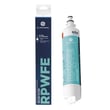
- Replace the water filter regularly (use refrigerator water filter RPWFE)
- Inspect and clean door gaskets; replace if torn or warped (example: refrigerator freezer door gasket WR14X36194)
- Keep vents inside the fresh food section and freezer unblocked
- If temperatures swing, check the sensor and airflow components (example: refrigerator temperature sensor WR55X10025)
Quick guide: “repair or replace” decision
| What you’re seeing | What it usually means | Common next step |
|---|---|---|
| Still cools well, minor issues | Normal wear items | Replace wear parts (filter, gasket, lights) |
| Warm temps, fan noise, frost buildup | Airflow or defrost problem | Check defrost heater/thermostat, evaporator fan |
| No cooling, repeated shutdowns | Major electrical or sealed-system issue | Diagnose controls and compressor system |
Why it matters
A refrigerator that runs longer than it should uses more electricity, struggles to hold safe food temperatures, and puts extra load on the compressor and main control board. Simple upkeep often prevents the “runs constantly” and “not cold enough” problems that shorten service life.
Last updated: February 2026