Owner’s manual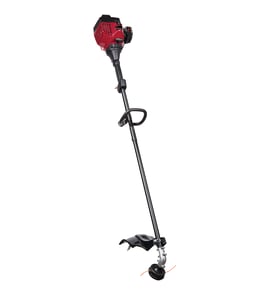



How to replace line on Craftsman gas trimmer?
To replace the cutting line on your Craftsman gas line trimmer model 358791800, remove the trimmer head cover and spool, load 15 ft of 0.095 in (2.4 mm) line (or install a pre-wound spool), then reinstall the spool and snap the cover back on. Follow the steps in the 358791800 owner's manual.
Before you start (safety and setup)
- Disconnect the spark plug boot before maintenance.
- Work outdoors and keep fuel away from sparks or flames.
- Wear hearing protection and gloves.
- Clean dirt and debris from the head before reassembly.
- Use only 0.095 in (2.4 mm) diameter line (never wire, rope, or string).
Step-by-step: replace the trimmer line
- Press the tabs on the side of the trimmer head to remove the cover and spool.
- Pull out any remaining line.
- Clean the cover and spool; replace the spool if it’s worn or damaged.
- Cut 15 ft of 0.095 in line.
- Bend the line at the midpoint and snap the bend into the center slot on the spool.
- With a finger between the two strands, wind the line evenly and firmly clockwise.
- Set the lines into the guide slots.
- Feed the line ends through the exit holes in the cover.
- Place the spool into the cover; confirm the line is not pinched.
- Reinstall the spool and cover onto the head; push until it snaps into place.
Pre-wound spool vs. bulk line
| Option | Best for | What you do |
|---|---|---|
| Pre-wound spool | Fastest reload | Swap the spool and reassemble |
| Bulk line (0.095 in) | Lowest cost per reload | Wind 15 ft onto your existing spool |
Parts that commonly get replaced with line
If the head won’t feed line smoothly or the line keeps breaking, these parts are often involved:
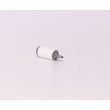
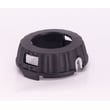
- Spool 596585805 (worn spool channels can snag line)
- Eyelet p25 545003365 (damaged eyelets can cut line)
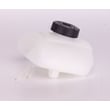
- Line trimmer bump feed knob 537419601 (worn knob can affect bump feed)
Why it matters
Correct line diameter and even winding help the bump-feed system work reliably, reduce tangles inside the head, and prevent premature wear on the spool and eyelets.
Last updated: February 2026
What size is the fuel line on a Craftsman trimmer?
On Craftsman gas line trimmer model 358791800, the fuel line size is selected by matching the hose’s inside diameter (ID) to the fittings on the fuel tank, fuel filter, carburetor, and primer bulb. Use the routing diagram and fuel system notes in the 358791800 owner's manual to match the correct line(s) for your exact configuration.
How we match the correct fuel line size
Fuel lines are not “one size fits all” across Craftsman trimmers; the correct fit depends on where the line connects and whether your unit uses a primer bulb return.
- Match ID first; it must fit snugly on the barb without clamps in most small engines
- Match OD only as needed to pass through the tank grommet or tank opening
- Confirm whether you have one line (no primer) or two lines (with primer return)
- Replace any line that is hard, cracked, swollen, or leaking
- Route the hose exactly like the factory setup to prevent kinks and air leaks
Common fuel line locations (what to measure)
Measure the old hose ID (or the fitting barb OD) at each connection point.
| Fuel line path | Typical connection points | What must fit correctly |
|---|---|---|
| Supply line | Tank fuel filter to carburetor inlet | Snug ID on filter nipple and carb barb |
| Return line (if equipped) | Primer bulb return to tank | Snug ID on primer return barb and tank pass-through |
Model-specific part option for the larger line
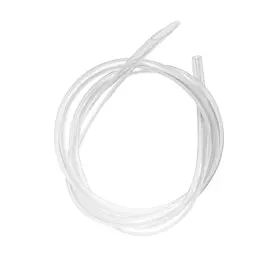
If you are replacing the larger fuel line used on this model’s fuel system, a listed option is the ayp lawn & garden equipment fuel line, large 530069216. Match it by fit and routing, not by guessing diameter.
Why it matters
A fuel line that is even slightly loose pulls air and causes hard starting, surging, or stalling. A line that is too tight can split during installation or restrict fuel flow.
Last updated: February 2026
What trimmer line does Craftsman use?
For the Craftsman 358791800 gas line trimmer, we use 0.095 inch (2.4 mm) diameter Craftsman brand replacement line. This size is required for proper bump-feed line advance and safe cutting performance; other sizes can jam, wear the head faster, or fail to feed correctly (see the 358791800 owner's manual).
Recommended line specs for this model
- Diameter: 0.095 in (2.4 mm)
- Type: Craftsman brand replacement line
- Do not use: wire, rope, string, or other materials (they can break and become hazardous)
- Typical reload length: about 15 ft (4.5 m) when winding line onto an existing spool
How to confirm you have the right line
Use this quick checklist before you buy or install line:
- The package clearly lists 0.095 in diameter
- The line is intended for a bump-feed trimmer head
- The line is flexible trimmer line (not metal reinforced)
- Your trimmer head cover and spool are not cracked or excessively worn
- The debris shield is installed and secure
Line size and performance: what changes if you go smaller or larger?
| Line choice | What you may notice | Result |
|---|---|---|
| 0.095 in (correct) | Smooth feed, consistent cutting | Best performance and safest operation |
| Smaller than 0.095 in | Feeds poorly, breaks easier | More downtime, uneven trimming |
| Larger than 0.095 in | Won’t advance correctly, binds in head | Head wear, poor cutting, possible damage |
Why it matters
This trimmer’s cutting head is designed around 0.095 in line. Using the specified diameter helps the bump-feed mechanism advance about 2 inches per tap and keeps the head from wearing prematurely.
Last updated: February 2026
What type of oil and gas for Craftsman 2 cycle 25cc 17 trimmer?
For the Craftsman 358791800 2-cycle 17-inch trimmer, we use fresh unleaded gasoline mixed with high-quality synthetic 2-cycle air-cooled engine oil at a 40:1 ratio (8.2 oz oil per 1 gallon of gas). Do not use automotive or marine oil.
Fuel mix you should use (40:1)
Use this mix every time you fuel the trimmer:
- Gas type: fresh unleaded gasoline
- Oil type: synthetic 2-cycle oil for air-cooled engines
- Mix ratio: 40:1
- Mix thoroughly: add oil first, then gas, then shake the container
- Avoid: automotive oil and marine (outboard) oil (they can damage the engine)
If you want the exact wording and any fuel warnings for your unit, follow the 358791800 operator's manual.
Quick mix chart
| Gasoline amount | 40:1 oil amount | Notes |
|---|---|---|
| 1 gallon | 8.2 oz | Standard full mix |
| 1/2 gallon | 4.1 oz | Good for small batches |
| 1 quart | 0.205 oz (about 1.2 tsp) | Measure carefully |
Storage and “old fuel” guidance
Old fuel is the most common reason a 2-cycle trimmer runs poorly after sitting.
- Mix only what you will use in about 30 days
- Use a clean, approved fuel container
- For seasonal storage, run the engine until the fuel lines and carburetor are empty
- If you use fuel stabilizer, run the engine for a few minutes after adding it
Why it matters
A correct 40:1 mix protects the piston and crank bearings while keeping the spark plug and exhaust from carbon buildup. Too little oil can seize the engine; too much oil can foul the plug and reduce power.
Last updated: February 2026
Why does my Craftsman trimmer die when I give gas?
When your Craftsman 358791800 gas line trimmer dies as you squeeze the throttle, the engine is usually losing the correct fuel to air mix under load. On this model, the most common causes are stale or incorrect 40:1 fuel mix, restricted fuel flow, or an air leak that shows up when RPM increases (often felt as a bog, then stall). See the fuel and starting steps in the 358791800 owner's manual.
Quick checks that fix most “dies when I give it gas” problems
- Drain old fuel and refill with fresh unleaded gas mixed 40:1 (8.2 oz 2-cycle oil per 1 gallon gas).
- Prime and start normally; let it warm up briefly, then squeeze the throttle fully to move the start lever back to RUN.
- Inspect the fuel lines for cracks, soft spots, or loose connections; replace if questionable.
- Check the primer bulb for splits or if it will not fill with fuel.
- Verify the spark plug wire is firmly seated and the kill switch is not intermittently grounding.
Fuel system focus (most likely on a throttle-related stall)
A trimmer that idles but dies on throttle often cannot deliver enough fuel when demand increases.
| Symptom when throttling | Most likely cause | What to do next |
|---|---|---|
| Bogs, then stalls | Restricted fuel flow | Replace cracked/soft fuel line; check tank pickup/filter if equipped |
| Needs repeated priming | Air leak in fuel line or weak primer | Replace primer bulb; replace fuel line |
| Runs only with partial choke | Lean condition (air leak or fuel restriction) | Inspect fuel line routing and connections; service carburetor |
If the fuel line is brittle or leaking, replacing it is a solid first repair on the 358791800; use the exact ayp lawn & garden equipment fuel line, large 530069216.
Ignition and controls to rule out
- Toggle the kill switch a few times; a failing switch can cut spark as vibration increases. Consider the lawn & garden equipment kill switch 530069572 if the switch feels loose or inconsistent.
- Look for pinched or rubbed-through wires in the handle and along the shaft.
Why it matters
Stalling on throttle is typically a “lean-out” problem: at higher RPM the engine needs more fuel, and any restriction, air leak, or weak priming shows up immediately. Fixing fuel delivery first prevents hard starting, overheating, and repeated plug fouling.
Last updated: February 2026