Installation guide
 Owner’s manual
 Error Codes


How big is the Whirlpool model ED5FHGXNQ00?
The Whirlpool ED5FHGXNQ00 is a full-size side-by-side refrigerator; most units in this class are about 25 cubic feet of capacity and measure roughly 33 inches wide, 66 to 70 inches tall, and 32 to 35 inches deep (depth varies with handles). For the exact dimensions for your unit, use the ED5FHGXNQ00 owner's manual.
Typical size and what to expect
Most Whirlpool side-by-side refrigerators like ED5FHGXNQ00 fall into these common ranges:
- Capacity: 24 to 26 cu. ft.
- Width: about 33 inches
- Height: about 66 to 70 inches
- Depth (cabinet): about 30 to 33 inches
- Depth (with handles): about 32 to 35 inches
Quick reference table
| Measurement | Typical range for this style | What changes it most |
|---|---|---|
| Capacity | 24 to 26 cu. ft. | Interior layout, ice maker, door bins |
| Width | 32.5 to 33.5 in. | Door design, trim |
| Height | 66 to 70 in. | Hinges, leveling legs |
| Depth | 30 to 35 in. | Handles, door thickness |
How to measure your refrigerator correctly
To avoid fit issues, we recommend measuring in three ways:
- Measure width at the widest point (often the doors)
- Measure height from floor to the top hinge area (include leveling legs)
- Measure depth from the back to the front (note both with and without handles)
- Leave air clearance around the cabinet for ventilation (use the manual’s guidance)
Why it matters
Correct size measurements help prevent delivery and installation problems, ensure proper airflow for cooling performance, and confirm door swing clearance in tight kitchens.
Last updated: January 2026
What's the average lifespan of a whirlpool refrigerator?
Most Whirlpool refrigerators average 10 to 20 years of service life. For a Whirlpool ED5FHGXNQ00 side-by-side refrigerator, lifespan depends most on how well the sealed cooling system stays healthy and how consistently basic maintenance is done; door ice and water features can add wear points.
Typical lifespan ranges (what we see most often)
- 10 to 15 years: common for many households with average use
- 15 to 20 years: common when coils are kept clean and doors seal well
- Under 10 years: more likely with heavy use, poor airflow around the cabinet, or recurring ice and water issues
| Refrigerator type | Typical lifespan | What usually ends it first |
|---|---|---|
| Basic top-freezer | 15 to 20 years | Door seals, defrost issues |
| Side-by-side (like ED5FHGXNQ00) | 10 to 20 years | Ice maker, defrost system, fans |
| Feature-heavy models | 8 to 15 years | Dispenser, electronics, valves |
What to do to help it reach the high end of the range
- Clean condenser coils regularly (dust buildup raises compressor run time)
- Keep door gaskets clean and sealing tightly
- Maintain steady temperatures (avoid frequent warm-ups from propped doors)
- Replace clogged water filters on schedule to protect water flow
- Fix small issues early (odd noises, frost buildup, slow ice production)
Parts that commonly affect “how long it lasts”
These parts do not define the sealed system life, but they often drive repairs on side-by-sides:
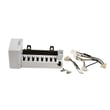
- Ice maker assembly 4317943 (ice production and harvest issues)
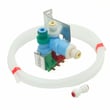
- Refrigerator inlet valve W10408179 (no water to dispenser or ice maker)
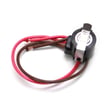
- Refrigerator defrost bi-metal WPW10225581 (frost buildup, warm fridge symptoms)
Why it matters
A refrigerator can run for years longer when airflow, defrost performance, and door sealing are kept in good shape. That reduces compressor strain and helps the sealed refrigeration system (compressor, evaporator, condenser, and tubing) operate under normal conditions.
For model-specific care and operating guidance, follow the ED5FHGXNQ00 owner's manual.
Last updated: January 2026
What is the most common problem with whirlpool refrigerators?
The most common Whirlpool refrigerator problem is a cooling complaint: the fridge is warm, the freezer is warm, or it runs constantly. On the Whirlpool ED5FHGXNQ00 side-by-side, the next most common issues are ice maker and water dispenser problems, which are often tied to airflow, defrost, or water supply components.
Most common symptoms we see
- Refrigerator section too warm but freezer seems OK
- Freezer too warm or soft ice
- Unit runs all the time or cycles very frequently
- Frost buildup on the back wall of the freezer
- Ice maker not making ice or making small/hollow cubes
- Water dispenser slow or not dispensing
Quick checks that solve many “not cooling” calls
- Confirm settings: Set freezer near 0°F and refrigerator near 37°F (typical targets).
- Clean condenser coils: Dusty coils reduce cooling and can make the compressor run longer.
- Check door sealing: A leaking gasket causes warm air intrusion and moisture, leading to frost.
- Listen for fans: You should typically hear an evaporator fan in the freezer when the compressor is running.
- Look for frost patterns: Heavy frost often points to a defrost system issue.
Parts commonly involved (when a repair is needed)
If basic checks do not restore normal temperatures, these model-matched parts are common suspects:
| Problem area | What you notice | Example model-matched part |
|---|---|---|
| Water supply to ice maker/dispenser | No ice, slow water, no fill | Refrigerator inlet valve W10408179 |
| Defrost system | Frost buildup, warm temps, fan noise changes | Refrigerator defrost bi-metal WPW10225581 |
| Ice production | No ice or inconsistent harvest | Ice maker assembly - refrigerator ice maker by Whirlpool 4317943 |
Why it matters
Cooling and ice maker complaints often share the same root causes: restricted airflow, frost from a defrost failure, or weak water flow. Catching the issue early helps protect food quality and reduces strain on the sealed system.
Helpful guides
- Use the ED5FHGXNQ00 owner’s manual for temperature recommendations, operating tips, and feature details.
- If your unit shows a fault code or unusual behavior, check Whirlpool refrigerator error codes for common meanings and next steps.
Last updated: January 2026