Owner’s manual
 Error Codes



Are bottom mount fridges better?
Yes, bottom-mount refrigerators are better for many households because the fresh-food section sits at eye and waist level, so you reach everyday items (milk, produce, leftovers) without bending as much. Your GE CYE22TP4MDW2 is a bottom-freezer design, so it’s built around that convenience.
What “better” usually means in real use
- More ergonomic access to fresh food (less bending for daily items)
- Better organization for refrigerated foods with shelves and drawers at comfortable height
- Freezer storage in a pull-out drawer, which can be easier for bulky frozen items
- Good fit for cooks who use fresh ingredients often
- Often counter-depth friendly in CYE models, helping reduce how far the cabinet sticks out (varies by kitchen layout)
Trade-offs to consider
Bottom-mount is not automatically best for everyone. Here’s a quick comparison:
| Feature | Bottom-mount refrigerator | Top-freezer refrigerator |
|---|---|---|
| Fresh food access | Easier, less bending | More bending |
| Freezer access | More bending | Easier |
| Freezer organization | Drawer bins, stacked layers | Open cavity, simpler |
| Typical cost | Higher | Lower |
Why it matters
Most people open the fresh-food doors far more than the freezer. With a bottom-mount layout, the items you use most are placed where your body naturally reaches, which reduces strain and makes day-to-day cooking and meal prep faster.
Model-specific notes for GE CYE22TP4MDW2 owners
- CYE models are identified in the documentation as counter-depth (CD) style models.
- For care, cleaning, and safe moving tips (including leveling legs and protecting the power cord and water line), follow the owner's manual.
Last updated: February 2026
What are the disadvantages of a bottom freezer refrigerator?
A bottom-freezer design on your GE CYE22TP4MDW2 keeps fresh food at eye level, but the tradeoff is that frozen items sit lower and can be harder to reach. Bottom-mount models also tend to cost more upfront and can feel heavier to load when the freezer is full (see the owner's manual for your model’s layout and features).
Common disadvantages (what most owners notice)
- You typically bend or squat more to access frozen foods in the lower drawer.
- Heavy items (bulk meat, frozen pizzas, ice bags) are harder to lift up from a low position.
- The freezer drawer can feel crowded; items stack, and smaller packages can get buried.
- If the freezer is opened often, cold air can spill out quickly, which can increase frost and temperature swings.
- Some kitchens have tighter clearance for a fully extended freezer drawer.
Bottom freezer vs. top freezer: quick comparison
| Feature | Bottom freezer | Top freezer |
|---|---|---|
| Fresh food access | Easier (at eye level) | Requires more bending |
| Frozen food access | More bending, drawer organization needed | Easier reach, simpler shelves |
| Typical price | Higher | Lower |
| Best for | Fresh-food-heavy households | Frozen-food-heavy households |
Tips to reduce the downsides
- Use bins or baskets to group items (breakfast, snacks, meats) so nothing gets buried.
- Keep the heaviest items toward the top of the drawer for easier lifting.
- Avoid overpacking; good airflow helps maintain even freezer temperatures.
- If you notice warm spots or inconsistent temps, review the temperature and airflow guidance in the owner's manual.
Why it matters
Ergonomics and organization affect daily use. If you frequently use frozen foods or have mobility concerns, the extra bending and lifting in a bottom-mount freezer can be the biggest practical drawback.
Last updated: February 2026
What is the most common problem with GE CYE22TP4MDW2 refrigerators?
The most common issue we see with the GE CYE22TP4MDW2 bottom-mount refrigerator is a cooling problem (fresh food too warm, freezer too warm, or temperatures that swing). Cooling complaints usually trace back to airflow, defrost, or temperature-sensing issues; use the owner's manual to confirm control settings and basic checks.
Most common symptoms (and what they usually point to)
- Fresh food section warm but freezer cold: airflow problem (fan, damper, frost buildup)
- Freezer warm and ice cream soft: sealed-system or airflow issue
- Frost on the back wall or weak airflow: defrost system problem
- Temperature seems wrong compared to a thermometer: sensor or control issue
- Clicking, humming, or fan noise changes: fan motor, capacitor, or compressor-related
Quick checks we recommend first
- Verify temperature settings and give the unit 24 hours to stabilize after changes.
- Make sure vents are not blocked by food packages.
- Check door closure and gasket seal; air leaks cause long run times and warm temps.
- Listen for fans: you should typically hear a fan running at times during normal operation.
- If you have a display code, look it up in GE refrigerator error codes.
Parts that commonly relate to “not cooling” on this model
| What you notice | Common area to inspect | Example part on this page |
|---|---|---|
| Temps read wrong or swing | Temperature sensing | Refrigerator temperature sensor WR55X10025 |
| Frost buildup, weak airflow | Defrost system | Refrigerator defrost heater WR51X10132 and refrigerator defrost bi-metal thermostat WR50X10108 |
| Warm fresh food, fan not running | Air circulation | Refrigerator fresh food fan motor assembly WR60X35205 |
Why it matters
A refrigerator that is not cooling correctly can lead to food spoilage and can also overwork the compressor. Catching airflow, defrost, or sensor problems early often prevents bigger repairs later.
Last updated: February 2026
What is the life expectancy of a GE CYE22TP4MDW2 refrigerator?
A GE bottom-mount refrigerator like model CYE22TP4MDW2 typically lasts 12 to 15 years with normal household use. Keeping airflow clear, cleaning the condenser area, and staying on schedule with filter changes helps you reach the upper end of that range; see the owner's manual for care and maintenance details.
Typical lifespan and what affects it
Most refrigerators fail early due to heat buildup, poor airflow, or deferred maintenance. These factors have the biggest impact:
- Condenser cleanliness (dust and pet hair raise operating temperatures)
- Door seal condition (warm air leaks force longer run times)
- Stable temperatures (avoid frequent setting changes)
- Water system upkeep (replace the filter on schedule)
- Vent clearance (don’t block interior air returns)
Maintenance that extends life
Use this simple routine to reduce wear on the compressor, fans, and control system:
- Replace the water filter about every 6 months, or sooner if flow slows
- Keep the doors closing tightly; clean and inspect gaskets
- Don’t overload shelves so air can circulate
- Wipe spills quickly to prevent odors and drain issues
- If the unit is noisy or warming, address it early (fans and sensors are common culprits)
Quick reference: life expectancy vs. what you can control
| Item | Typical impact on lifespan | What to do |
|---|---|---|
| Dirty condenser area | High | Clean periodically and keep airflow open |
| Worn door gasket | Medium to high | Inspect for gaps, replace if torn or warped |
| Late filter changes | Medium | Replace on schedule; use the correct filter |
| Ignoring warm temps/noise | High | Troubleshoot promptly to prevent compressor strain |
Why it matters
A refrigerator that runs hot or leaks air cycles longer and harder. That extra run time accelerates wear on key components like the compressor, evaporator fan, and temperature sensing system.
Last updated: February 2026
How to order GE appliance parts?
You can order replacement parts for your GE CYE22TP4MDW2 bottom-mount refrigerator by using the parts list for this model and matching the part to your symptom, then purchasing the exact part by part ID. For diagrams, part locations, and model details, use the owner's manual.
How we recommend ordering parts for model CYE22TP4MDW2
- Find the symptom first (no cooling, leaking, no ice, dim lights, warm fridge section).
- Identify the part category (water system, cooling system, door, controls, lighting).
- Match the exact part ID to your model (this prevents ordering the wrong revision).
- Order the part and keep your receipt and packaging until the repair is complete.
- If you are replacing a water filter, plan to replace it about every 6 months or sooner if flow slows.
Commonly ordered parts for this refrigerator
These are frequently purchased items for CYE22TP4MDW2 when troubleshooting common issues:
| Symptom | Part to check/replace | Part ID |
|---|---|---|
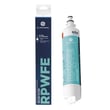
| Water tastes off or flow is slow | GE refrigerator water filter RPWFE | RPWFE |
| No water at dispenser or ice maker | Refrigerator water inlet valve WR57X27487 | WR57X27487 |
| Frost buildup, warm temps | Refrigerator defrost heater WR51X10132 | WR51X10132 |
| Door not sealing, moisture/frost | Refrigerator freezer door gasket WR14X36194 | WR14X36194 |
| Lights not working | Refrigerator led light assembly WR55X11132 | WR55X11132 |
Why ordering by exact model and part ID matters
GE refrigerators often use multiple versions of the same style component across similar models. Ordering by the exact model number CYE22TP4MDW2 and the exact part ID helps ensure proper fit, correct connectors, and reliable operation.
Helpful tip for water filter orders
If you are ordering a new filter, replacing it on schedule helps protect water flow and dispenser performance. Our how to replace the water filter in a GE refrigerator guide walks through the basic steps and what to expect after installation.
Last updated: February 2026