Owner’s manual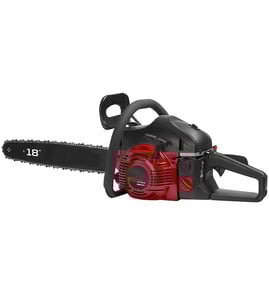







Are Poulan and Poulan Pro the same?
Poulan and Poulan PRO are closely related brands, but they are not exactly the same product line. For the Poulan PP3516AVX, the owner's manual identifies it as a Poulan PRO model, which is typically positioned as a higher-feature version within the Poulan family.
What “Poulan” vs “Poulan PRO” usually means
In practice, you will see both names used across similar gas chainsaw designs, but “PRO” is generally used to separate a more premium lineup.
Common differences you may notice:
- More “pro-style” features or configurations on certain models
- Different trim, labeling, and model naming (for example, PP-series models)
- Parts and assemblies that can look similar but still vary by model number
Why the model number matters for parts
Even when two saws look alike, the correct parts depend on the exact model and its diagrams. For PP3516AVX, use the parts list for that model when ordering items like fuel system or starting components.
Parts on this model page that commonly relate to “Poulan vs Poulan PRO” confusion:
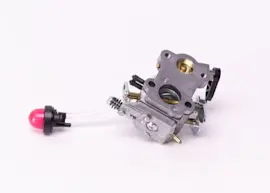
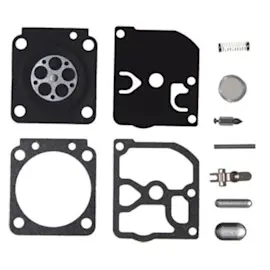
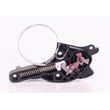
- Ayp chainsaw carburetor 545070601
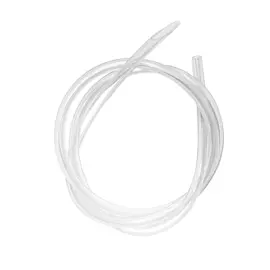
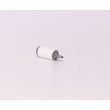
- Poulan lawn & garden equipment fuel line, small 530069247
- Ayp lawn & garden equipment fuel line, large 530069216
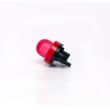
- Ayp lawn & garden equipment engine carburetor primer bulb 530047721
Quick comparison
| Term on the saw | What it indicates | What you should use for repairs |
|---|---|---|
| “Poulan” | Brand family name | Your exact model number (PP3516AVX) |
| “Poulan PRO” | A specific lineup within the brand family | The PP3516AVX diagrams and part IDs |
Why it matters
Using the PP3516AVX identification from the manual helps prevent ordering the wrong carburetor, fuel line, or primer bulb. Small differences in fittings and routing can cause hard-starting, fuel leaks, or poor running.
Last updated: February 2026
Is the Poulan Pro a good chainsaw?
Yes. Poulan PRO chainsaws like the Poulan PP3516AVX are a solid choice for homeowners who need a gas chainsaw for occasional cutting (storm cleanup, trimming, firewood). They deliver good value when you keep up with fuel, lubrication, and basic maintenance outlined in the PP3516AVX owner's manual.
What it’s best for (and what it’s not)
Poulan PRO models are designed around homeowner use, not daily professional logging.
- Good fit: occasional yard work, limbing, small to medium firewood cutting
- Good fit: budget-friendly saw with common service parts available
- Not ideal: all-day, every-day heavy cutting where maximum durability is the priority
- Not ideal: users who do not want to do routine upkeep (fuel care, chain sharpening, cleaning)
What “good” depends on with a gas chainsaw
A lot of chainsaw satisfaction comes down to setup and maintenance, not just the brand name.
| Factor | What you’ll notice | What to do |
|---|---|---|
| Fuel quality | Hard starting, rough running | Use fresh, properly mixed fuel; empty fuel for long storage |
| Bar and chain oiling | Smoking chain, discolored bar | Keep the oil tank filled; use proper bar and chain oil |
| Wear items | Starting issues, poor cutting | Replace normal wear parts on schedule |
| Carburetor tune | Chain creeping at idle, stalling | Follow the adjustment guidance in the manual |
Maintenance habits that make this saw perform well
The PP3516AVX manual calls out a few items that directly affect performance and lifespan.
- Keep the oil tank filled so the automatic oiler can continuously lubricate the bar and chain
- Never run with low bar oil; it quickly ruins the bar and chain
- Avoid waste oil for bar and chain lubrication
- For seasonal storage (30 days or longer), drain the fuel and run the engine until the fuel lines and carburetor are empty
- If the chain moves at idle, address idle speed and clutch-related issues per the manual’s service and adjustment guidance
Why it matters
Most “bad chainsaw” experiences are really fuel system or lubrication problems. Proper bar and chain lubrication prevents overheating and rapid wear, and proper fuel handling prevents storage-related damage that leads to hard-start complaints.
Last updated: February 2026
What happened to Poulan chainsaws?
Poulan chainsaws did not disappear; the Poulan name continued under different corporate ownership over time, and the product line shifted toward value-priced homeowner saws. If you own a Poulan PP3516AVX, we still support it with parts and model-specific operating and maintenance guidance in the PP3516AVX owner's manual.
What changed over the years
Several things typically drive the “what happened” question:
- Ownership and branding changes: the Poulan name has been used under different parent companies and product strategies.
- Product positioning: many Poulan-branded saws are aimed at light to moderate homeowner use rather than pro daily cutting.
- Materials and design: newer value-focused models often use more composite components to reduce cost and weight.
- Parts and service approach: routine wear items (spark plug, filters, starter components, chain, bar) are expected maintenance items.
What this means for your PP3516AVX today
For the Poulan PP3516AVX, the practical takeaway is that keeping it reliable is mostly about fuel system care, ignition basics, and normal wear-part replacement.
Common “keep it running” actions:
- Use fresh, properly mixed fuel and avoid long-term storage with fuel in the tank.
- Keep the air intake and cooling areas clean.
- Check chain tension and bar lubrication before cutting.
- If it is hard to start, focus first on fuel delivery and priming.
Quick symptom-to-part checklist
| Symptom | Most common area | Example part on this model page |
|---|---|---|
| Won’t start or only runs on choke | Fuel delivery or carburetion | Engine carburetor primer bulb 530047721 |
| Starts then dies, surges, or runs lean | Cracked or loose fuel lines | Fuel line, small 530069247 and fuel line, large 530069216 |
| Chain creeps at idle | Idle speed set too high or clutch issue | Chainsaw clutch 530057907 |
Why it matters
Understanding the brand shift helps set expectations: a homeowner chainsaw like the PP3516AVX can deliver solid performance when it is maintained, but it depends heavily on clean fuel flow, correct adjustments, and timely replacement of wear parts.
Last updated: February 2026