Owner’s manual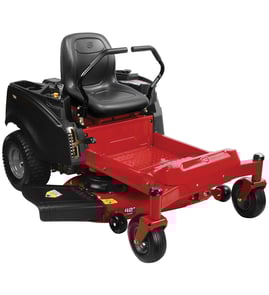


What is the advantage of a rear engine mower?
A rear-engine riding mower like the Husqvarna CZ3815 puts the engine weight over the drive wheels, which improves traction on grass and helps the mower feel stable while turning and mowing around obstacles. It also typically gives you a compact, easy-to-maneuver layout for residential yards.
- Better traction: more weight on the rear drive wheels helps reduce slipping on normal turf.
- Good maneuverability: compact design makes it easier to work around trees, beds, and fences.
- Simpler deck access: routine blade and deck checks are usually straightforward when you follow the safety steps in the owner's manual.
- Cleaner, safer mowing habits: the manual emphasizes controlling discharge direction and keeping guards in place to reduce thrown-object risk.
- Convenient transport handling: the CZ3815 uses EZT bypass linkages for pushing the mower short distances (never tow it).
Rear-engine riders are great for typical lawns, but they still require safe operation and regular maintenance.
| Situation | What a rear-engine rider does well | What you should do |
|---|---|---|
| Tight landscaping | Turns and navigates obstacles easily | Slow down before turning |
| Slopes and hills | Can maintain traction on mild grades | Use the slowest speed; avoid stopping on hills |
| Deck performance | Consistent cut when the deck is set correctly | Keep tires properly inflated; level the deck |
Most “advantages” come down to control and consistency: traction helps you keep a steady line, and maneuverability helps you cut closer around obstacles. Pair that with correct deck leveling and safe discharge practices, and you get a more even cut with fewer hassles.
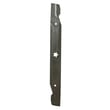
If your cut quality drops, inspect the blade and deck hardware. A worn or bent blade is a common cause; the CZ3815 uses a 42-inch deck blade such as the blade, 42" 532138971 when replacement is needed.
Last updated: February 2026
What is the difference between a front engine and rear engine riding mower?
A front-engine riding mower puts the engine under the hood in front of the operator; a rear-engine riding mower (like the Husqvarna CZ3815) places the engine behind the seat. Rear-engine designs are typically more compact and best suited for mowing, while front-engine models are often better for towing and heavier yard work.
- Engine location: Front-engine is ahead of you; rear-engine is behind you.
- Best use: Rear-engine is primarily for cutting grass; front-engine is better for multi-purpose yard tasks.
- Traction and towing: Front-engine models commonly handle tow-behind loads more confidently.
- Maneuverability: Rear-engine mowers are usually easier to maneuver in tighter spaces.
- Service access: Front-engine layouts often make routine checks (battery, belts, engine) more straightforward.
Your CZ3815 is built around mowing performance and safe control. The CZ3815 owner's manual emphasizes operating awareness (discharge direction, blade control, parking brake use) and extra caution on slopes, which are key day-to-day differences you will notice compared with heavier, front-engine tractors.
- Mow up and down slopes, not across.
- Slow down before turning; make turns slowly.
- Turn off blades when not mowing.
- Stop the engine and remove the key before leaving the seat.
- Do not tow the mower; use the EZT bypass linkages only for pushing or pulling when needed.
| Feature | Front-engine riding mower | Rear-engine riding mower (CZ3815 style) |
|---|---|---|
| Typical role | Mow plus towing/yard attachments | Primarily mowing and trimming around obstacles |
| Size/feel | Larger, more “tractor-like” | More compact, nimble |
| Handling on slopes | Still requires caution | Requires extra caution; follow manual guidance |
Choosing the right layout affects cut quality, how safely you can handle slopes, and whether the mower can realistically pull a cart or other tow-behind equipment without overworking the drive system.
Last updated: February 2026
What kind of engine is in a Husqvarna riding mower?
For the Husqvarna CZ3815 rear-engine riding mower, the exact engine make and model depends on the specific engine installed on your unit; the operator’s documentation covers safe operation and maintenance, and the engine itself is identified on the engine label and ID plate. Use the CZ3815 operator's manual for model-specific operating guidance.
We use the engine’s ID information (not the mower model number) to match tune-up and engine parts.
- Lift the seat or open the rear engine cover (as applicable) and locate the engine label.
- Record the engine manufacturer (commonly Briggs & Stratton, Kawasaki, or Kohler on riding mowers).
- Record the engine model, type, and code/spec numbers.
- Match those numbers when selecting spark plugs, air filters, and fuel system parts.
- If the label is dirty, wipe it clean; take a clear photo for reference.
Most gas riding mowers use a 4-cycle, air-cooled small engine. Common configurations include single-cylinder and V-twin engines, depending on horsepower and deck size.
| Engine detail | What it tells you | Where to find it |
|---|---|---|
| Manufacturer | Which parts system to use | Engine shroud label |
| Model/type | Core engine family | Engine label |
| Code/spec | Exact build and parts variations | Engine label |
| Horsepower/cc | Performance class | Engine label or decals |
The mower model number (CZ3815) helps us match chassis and deck parts like blades, belts, and mandrel components, but engine parts are matched by the engine’s own model and spec numbers. That prevents ordering the wrong air filter, carburetor parts, or ignition components.
If you are troubleshooting cutting performance (not engine starting), these model-matched deck parts are common wear items:
- Blade, 42" 532138971 (dull or bent blades cause ragged cuts)
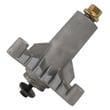
- Mandrel assembly 532130794 (bearing noise, wobble, uneven cut)
- Hydro belt 539110411 (loss of drive or slipping under load)
Last updated: February 2026
Why does my Husqvarna mower leave a strip of grass?
Your Husqvarna CZ3815 typically leaves a strip of uncut grass when the cutting deck is out of level, the blades are worn or installed incorrectly, or you are mowing too fast for conditions. Correcting deck level, blade condition, and mowing technique restores an even cut.
- Set the engine to full throttle while mowing; regulate cut quality by slowing ground speed.
- Confirm the deck is properly leveled (an unlevel deck is a top cause of uneven cut).
- Inspect blades for bends, heavy nicks, or looseness; tighten the blade bolt if needed.
- Clean packed grass and debris from the underside of the deck and around cutter housings.
- Avoid mowing wet grass; wet clippings plug the deck and cause uneven discharge.
- If grass is very tall, mow twice (first pass higher, second pass to final height).
Worn blades and loose or damaged mandrel components commonly create a “missed strip” between blade paths.
| What you see | Most likely cause | What we do next |
|---|---|---|
| Strip always in the same place | Deck not level or bent cutter housing | Level the deck; inspect housings |
| Ragged strip, torn tips | Blade dull or bent | Sharpen or replace blade |
| Strip plus vibration/noise | Mandrel issue or loose hardware | Check mandrel, pulley, fasteners |
| Clumps and striping | Wet grass or deck packed with debris | Let grass dry; clean underside |
Helpful model-matched parts from this page:
- Blade, 42" 532138971 (replace if bent, cracked, or too worn to sharpen)
- Mandrel assembly 532130794 (replace if the spindle/mandrel is worn and lets the blade wobble)
Striping is usually a cut-quality and airflow problem. A level deck, sharp blades, and clear discharge path help the deck lift and cut grass evenly, reduce clumping, and prevent extra strain on the belt, mandrels, and PTO system.
Use the step-by-step deck leveling instructions in the owner's manual.
Last updated: February 2026