Error Codes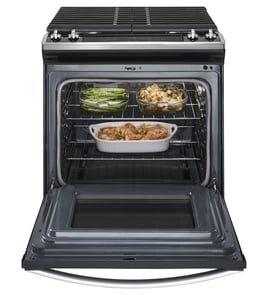




How many years should a gas oven last?
A gas oven in an Amana range like model AGR4230BAW3 typically lasts about 15 to 20 years with normal household use and basic maintenance. Heavy use, poor ventilation, and delayed repairs can shorten that; timely fixes to ignition and sealing issues can extend it.
Typical lifespan ranges (what we see most often)
- 10 to 15 years: heavy daily use, frequent spills, limited maintenance
- 15 to 20 years: typical home use with routine cleaning and occasional repairs
- 20+ years: lighter use, good cleaning habits, and prompt part replacement
What usually ends a gas oven’s life first
Most “end of life” decisions come down to repeated failures in a few key systems:
- Ignition problems (slow preheat, no bake ignition)
- Temperature control issues (uneven baking, overheating)
- Door heat leaks (long preheat, weak broil, hot control panel)
- Gas flow or safety-related component failures
- Corrosion or damage inside the oven cavity
If your AGR4230BAW3 is slow to ignite or won’t heat, the oven igniter is a common wear item; see igniter, hot surface W11176454.
Repair vs replace: a quick decision guide
| If your range is… | Usually makes sense to… | Why |
|---|---|---|
| Under ~10 years old | Repair | Parts replacement is often cost-effective |
| 10 to 15 years old | Compare costs | One major repair can still be worthwhile |
| Over ~15 years old | Decide based on condition | Multiple failures can add up |
Why it matters
A gas oven can appear “old” but still be reliable if the burner ignition and door sealing are healthy. Fixing a weak igniter or a leaking door seal can restore normal preheat times and baking performance without replacing the entire range.
If you suspect heat leaking around the door, inspect the gasket for gaps, tears, or flattening; the compatible replacement for this model is oven seal WPW10535778.
Last updated: January 2026
Is my stove gas or propane?
Your Amana AGR4230BAW3 is a gas range, but it can be set up to run on natural gas or LP (propane) depending on how it was installed. The most reliable way to tell is to confirm what your home supply is connected to and whether the range has been converted for LP.
Quick ways to tell natural gas vs. propane
- Look at the supply source: a utility gas line typically indicates natural gas; a tank (often outdoors) indicates propane.
- Check for an LP conversion: many ranges are converted by changing orifices and adjusting the regulator.
- Flame appearance (clue, not proof): steady blue flames are normal; persistent tall yellow flames can indicate an air/fuel issue or wrong setup.
- Smell and performance: sooty cookware, strong odor, or lifting flames can point to a setup problem.
- Paperwork from installation: installers often note whether the appliance was converted to LP.
Model-specific parts that relate to fuel type
If your AGR4230BAW3 was converted to propane, the conversion kit is the key component.
| What you’re checking | What it affects | Example part for this model |
|---|---|---|
| LP conversion kit installed | Changes the range from natural gas setup to LP setup | Lp conversion kit W11035598 |
| Regulator setting correct | Ensures proper gas pressure for the fuel type | Complete regulator W11346659 |
Why it matters
Natural gas and propane use different pressures and metering. If the range is set up for the wrong fuel, you can get poor ignition, weak heat, soot, or unsafe flame behavior.
Safety notes before you inspect anything
- If you smell gas, turn off the range, shut off the gas supply valve, and ventilate the area.
- Do not attempt to modify gas components unless you’re comfortable doing gas appliance work.
- If you’re unsure whether it’s converted, a qualified technician can verify the regulator and orifice setup.
For step-by-step guidance on conversions, use how to convert a gas range to operate on lp gas.
Last updated: January 2026
What replacement parts are most commonly needed for the AGR4230BAW3?
For the Amana AGR4230BAW3 gas freestanding range, the most commonly replaced parts are typically ignition parts, burner components, and door sealing or hardware items. These parts affect everyday cooking performance (lighting, flame quality, and heat retention) and are frequent wear items.
Most common replacement parts (and what they fix)
- Surface ignition problems (clicks but won’t light, weak spark): Range spark module W11590249, range surface burner igniter WPW10209656
- Oven won’t heat or heats unevenly: Oven burner W11220387, igniter, hot surface W11176454
- Poor flame pattern or uneven burner heating: Range burner head WPW10515453
- Heat leaking around the oven door (long preheat, uneven baking): Oven seal WPW10535778
- Door handling and service needs: Range oven door removal hinge pin set 98012220
Quick symptom-to-part guide
| Symptom | Most likely part to check | Why it matters |
|---|---|---|
| Burners won’t spark or all sparks are erratic | Range spark module | Drives spark to all surface burners |
| One burner won’t spark | Range surface burner igniter | Creates spark at that burner |
| Oven won’t ignite (no glow) | Igniter, hot surface | Opens gas valve when hot enough |
| Oven ignites late or bakes unevenly | Oven burner | Provides consistent flame across burner |
| Oven loses heat, gasket looks torn | Oven seal | Keeps heat in for stable temperatures |
How we recommend choosing the right part
- Match your model number exactly: AGR4230BAW3
- Compare the part name and part ID to your diagram location
- Replace obvious wear items together when it makes sense (for example, burner head plus igniter)
- If you smell gas, stop and address it immediately before continuing troubleshooting
Why it matters
On a gas range like the AGR4230BAW3, ignition and burner parts control safe, reliable lighting and steady heat. Door sealing parts help the oven hold temperature, which improves baking results and reduces long preheat times.
Last updated: March 2026