 Owner’s manual



How many years should a GE washing machine last?
A GE washing machine typically lasts 10 to 14 years with normal household use. For your GE GTW220ACK1WW top-load washer, consistent care (especially replacing water supply hoses every 5 years and avoiding overloads) helps you reach the high end of that range.
What affects lifespan the most
- Load size and balance: frequent overloading strains the drive system and suspension.
- Water supply hoses: replace hoses every 5 years to prevent deterioration and leaks.
- Cleaning habits: leaving the lid open between loads helps reduce moisture and odor.
- Drain performance: slow draining makes the pump work harder and can shorten pump life.
- Storage conditions: avoid freezing temperatures; drain water for long vacations or winter storage.
Maintenance checklist we recommend for GTW220ACK1WW
Use the care and maintenance steps in the GTW220ACK1WW owner’s manual.
- Replace fill hoses on a 5-year schedule.
- Turn off faucets when the washer is not in use for extended periods.
- Wipe spills promptly; clean the basket with a soft cloth and mild detergent (no harsh abrasives).
- Leave the lid open after washing so the interior can dry.
- If you notice slow draining or standing water, inspect the drain hose and pump area.
Common wear items and what they usually cause
| Symptom | Common area involved | What you may notice |
|---|---|---|
| Won’t drain or drains slowly | Drain system | Water left in tub, longer cycle times |
| Loud banging or excessive vibration | Suspension | Off-balance loads, tub movement |
| Won’t spin or has weak spin | Drive system | Clothes wetter than normal |
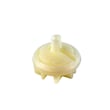
If draining problems show up, the washer drain pump assembly WH23X28418 is a common repair part for this model.
Why it matters
A washer that is maintained on schedule usually lasts longer and performs better. Simple steps like hose replacement every 5 years and keeping the interior dry help prevent avoidable failures and water damage.
Last updated: February 2026
What is the most common problem with GE washers?
For the GE GTW220ACK1WW washer, the most common customer-reported issues are “won’t drain” and “won’t spin” symptoms. In many cases, the root cause is a drain restriction, an out-of-balance load the washer cannot correct, or a lid lock or shifting/drive problem that prevents a full-speed spin.
What to check first (fast, no-tools)
- If clothes are wetter than normal, redistribute the load and run Drain & Spin.
- Look for an out-of-balance condition; the Spin light blinking indicates the washer detected imbalance and tried to correct it.
- If the washer won’t fill, confirm both water supply valves are fully open; the washer can enter a 4-minute lockout when the Fill light flashes.
- Make sure the lid is fully closed; this washer will not fill or start with the lid open.
- If the lid was left open with water in the tub, the washer can auto-drain after 15 minutes.
Common causes and the parts that often fix them
| Symptom | Most common cause | Part that’s often involved (if replacement is needed) |
|---|---|---|
| Won’t drain / drains slowly | Kinked hose, clog, pump issue | Washer drain pump assembly WH23X28418 or washer drain hose WH41X32477 |
| Won’t spin / stops before final spin | Out-of-balance load, lid lock issue, shift/drive issue | Washer lid lock WH08X37938 or washer shifter WH03X30517 |
| Shaking, banging, walking | Suspension wear, uneven leveling | Washer suspension rod kit WH16X26908 |
Why it matters
Drain and spin problems are the most disruptive because they leave water in the tub and clothes soaking wet. Catching a simple issue early (load balance, kinked drain hose, lid lock not engaging) can prevent repeat cycle failures and reduce wear on the motor, clutch, and gear case.
Best model-specific reference
Use the GTW220ACK1WW owner’s manual for the Consumer Help Indicator (CHI) light meanings, the automatic drain behavior, and troubleshooting steps such as drain hose height and kink checks.
Last updated: February 2026
Is the GTW220ACK1WW high efficiency?
Yes. The GE GTW220ACK1WW is a high-efficiency (HE) top-load washer; it’s designed to use less water and energy than traditional deep-fill washers while still delivering good cleaning when you match cycle, load size, and detergent correctly. For model-specific operating details, use the GTW220ACK1WW owner's manual.
How to tell you’re using it like an HE washer
- Use HE detergent and measure carefully (too much causes oversudsing and poor rinsing).
- Load clothes loosely; don’t pack the basket.
- Choose the cycle that best matches the fabrics and soil level.
- Expect lower water levels than older top-loaders; that’s normal for HE operation.
- Use options like Deep Rinse when you want a fuller rinse, especially with fabric softener.
Settings that commonly affect water use and performance
The manual for this GTW-series platform describes cycle selection and options such as Deep Rinse, 2nd Rinse, and Extra Spin. These options can change how the washer fills, rinses, and extracts water.
| What you notice | Most common cause | What to do |
|---|---|---|
| Water level seems “too low” | Normal HE wash action | Keep load size reasonable; select the best cycle for the load |
| Clothes feel soapy or stiff | Too much detergent | Reduce detergent; use 2nd Rinse or Deep Rinse |
| Clothes are wetter than expected | Out-of-balance load reduced spin | Redistribute load; run Drain & Spin |
| Long dry times | Not enough spin extraction | Use Extra Spin (if available) |
Why it matters
Using HE detergent and the right options helps the GTW220ACK1WW rinse cleaner, spin out more water (shorter dry times), and avoid issues like oversudsing that can mimic drain or performance problems.
Last updated: February 2026
Why is my GE front load washer leaking from the bottom?
If your GE GTW220ACK1WW washer is leaking from the bottom, the most common causes are a loose or damaged drain hose connection, a drain hose routed too deep into the standpipe (siphoning or overflow), or a failing drain pump. Start by checking the drain setup and hose condition, then inspect the pump area for drips. See the GTW220ACK1WW owner's manual for drain-hose routing and leak checks.
Quick checks we recommend first
- Unplug the washer and turn off both water faucets before inspecting.
- Pull the washer forward and look for the highest wet point; water runs downward and can mislead you.
- Check the standpipe or drain opening for overflow during drain and spin.
- Confirm the drain hose is secured and not kinked or crushed behind the cabinet.
- Look for water trails around the pump area and along the bottom edge of the tub.
Drain hose routing problems (very common)
Improper drain hose placement can cause siphoning or messy drain overflow. For GTW220ACK1WW, the drain hose should not be shoved too far down the drain pipe; the manual calls out that no more than about 5 inches of hose should be in the drain pipe and there must be an air gap around the hose.
What to correct
| What you see | Likely cause | What to do |
|---|---|---|
| Water on floor during drain | Standpipe overflow or hose too deep | Reposition hose; keep an air gap; secure with a tie |
| Washer seems to drain while filling | Siphoning | Raise/reposition hose; avoid snug fit in standpipe |
| Drips at hose connection | Loose clamp or split hose | Reseat connection; replace hose if cracked |
If you need to replace the hose for damage, match it to the model-specific part such as the washer drain hose WH41X32477 when applicable.
When the leak points to a bad drain pump
If the leak appears only during drain or spin and you see dripping near the pump housing, the drain pump can be the source. On this model, a common replacement is the washer drain pump assembly WH23X28418.
Why it matters
Bottom leaks can damage flooring and can also lead to repeated fill and drain issues if siphoning is happening. Correct drain hose routing and tight, undamaged connections prevent most repeat leaks.
Last updated: February 2026
What would cause a GE washer to not spin?
A GE GTW220ACK1WW washer usually won’t spin because the load is out of balance, the lid is not fully closed and locked, or the washer is pausing as part of normal operation. If clothes are wetter than normal, redistributing the load and running Drain & Spin often restores full-speed spinning.
Quick checks we recommend first
- Redistribute the load evenly in the wash basket; bulky items can prevent the washer from balancing.
- Close the lid completely; this model won’t agitate or spin with the lid open.
- If the Spin light is blinking, treat it as an out-of-balance condition and rerun Drain & Spin.
- If the washer pauses during spin, allow it to continue; pausing can be normal while it removes soapy water.
- Reset the electronics: unplug for 2 minutes, plug back in, then press Start.
Common causes and what to do
| What you notice | Likely cause | What to do next |
|---|---|---|
| Spin light blinks; load ends wetter than normal | Out-of-balance detected | Evenly redistribute, then run Drain & Spin (per the GTW220ACK1WW owner’s manual). |
| Washer won’t spin at all | Lid not closed or lid lock not engaging | Confirm lid closes firmly; if it still won’t lock, inspect/replace the washer lid lock WH08X37938. |
| Washer drains poorly and won’t reach spin | Drain restriction or weak pump | Check for a kinked drain hose and proper standpipe height; if pump is noisy or not moving water, replace the washer drain pump assembly WH23X28418. |
| Washer fills and washes but struggles to shift into spin | Drive system not shifting correctly | If symptoms persist after load balancing and reset, the washer shifter WH03X30517 is a common fix for spin/shift complaints. |
Why it matters
Spinning depends on the washer sensing a balanced load and confirming the lid is safely locked. When either condition fails, the control will reduce or stop spin to prevent excessive vibration and protect the drive system.
Helpful reference
If you’re seeing a flashing light pattern or a stored fault, use the GE top load washer error codes guide to match the indicator to the most likely repair.
Last updated: February 2026
How to reset the motherboard on a GE washer?
To reset the electronic control (often called the “motherboard”) on your GE washer model GTW220ACK1WW, unplug the washer for 2 minutes, then plug it back in and press Start. This power reset clears many control glitches without replacing parts.
Quick reset steps (safe and effective)
- Press Start/Pause to stop the cycle.
- Unplug the washer (or switch the breaker off).
- Wait a full 2 minutes.
- Restore power.
- Select a cycle and press Start.
For control locations and normal operation details, use the GTW220ACK1WW owner's manual.
If the washer still will not respond
These checks fix the most common “dead control” symptoms on this GE top-load washer:
- Confirm the outlet has power (test with a lamp).
- Make sure the lid is fully closed; the washer will not run with the lid open.
- If the Lid Locked light behavior seems abnormal, inspect the lid lock.
- If the washer has water in it and is paused, run Drain & Spin to clear the basket.
- Reset the house breaker again if it tripped under load.
Common symptom-to-action guide
| What you see | What it usually means | What we do next |
|---|---|---|
| No lights, no response | No power to washer | Check outlet, breaker, cord |
| Won’t start, lid issues | Lid not sensed/locked | Check lid closure; consider washer lid lock WH08X37938 |
| Stuck with water in tub | Needs drain/spin | Run Drain & Spin; check washer drain pump assembly WH23X28418 if it won’t drain |
Why it matters
A 2-minute power reset restores the control board’s normal logic after a power blip, paused cycle timeout, or control “freeze”. It is the fastest first step before troubleshooting parts like the lid lock, drain pump, or electronic control board.
Last updated: February 2026
How much does it cost to replace a gasket on a GE washing machine?
For a GE GTW220ACK1WW washer, replacing a gasket typically costs about $20 to $50 for the part, plus labor if you hire service. Total installed cost is commonly $150 to $350, depending on whether it’s a door boot (front-load style) or a smaller tub or hose seal.
What changes the price the most
- Washer design: Front-load door boot gaskets cost more and take longer to install than many top-load seals.
- Labor time: Accessing the tub area, removing panels, and reassembling adds time.
- What’s actually leaking: A “gasket leak” is often a hose, pump, or valve leak instead of a tub seal.
- Service rates in your area: Trip charges and hourly rates vary.
- Related parts: Clamps, hoses, or a pump may be needed if the leak damaged components.
Quick checks before you buy a gasket
We recommend confirming the leak source first so you do not replace the wrong part.
- Look for water at the front bottom of the cabinet (often pump or hose related)
- Check the drain hose connection and standpipe height
- Inspect fill hoses; GE recommends replacing water supply hoses every 5 years
- Run a Drain & Spin cycle and watch for drips underneath
- If the washer will not start or behaves oddly during fill, review the GTW220ACK1WW owner’s manual
Common leak sources vs typical repair cost
| Leak source (common) | Typical parts cost | Typical installed cost |
|---|---|---|
| Drain pump or pump area | $40 to $90 | $180 to $350 |
| Drain hose or clamp | $15 to $60 | $120 to $250 |
| Water inlet valve seep/leak | $25 to $70 | $160 to $320 |
| Tub or door gasket/seal | $20 to $50 | $150 to $350 |
If you find the leak is coming from the pump area on this model, the washer drain pump assembly WH23X28418 is a common fix.
Why it matters
A small leak can quickly lead to cabinet rust, floor damage, and repeated cycle interruptions. Identifying the exact leak point first helps you spend money on the right GE washer part the first time.
Last updated: February 2026


