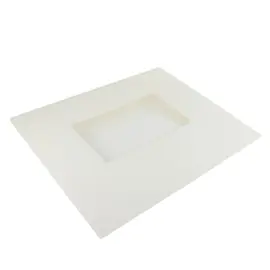
Owner’s manual
 Error Codes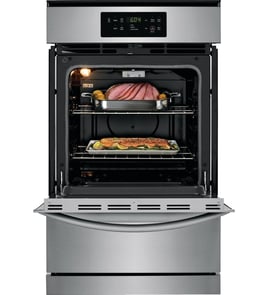


Where to find model number on Kenmore gas oven?
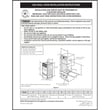
On Kenmore gas wall oven model 79030479400, the model and serial number are printed on the serial plate located along the interior side trim and it’s visible when you open the oven door. Use that exact model number when ordering parts or checking specifications in the owner's manual.
- Open the oven door fully.
- Look along the left or right interior side trim (the vertical trim just inside the oven frame).
- Find the serial plate label; it lists model and serial.
- Write down both numbers for future reference.
- If the label is greasy, wipe it gently with a damp cloth so the digits are readable.
| Item on the serial plate | Why you need it |
|---|---|
| Model number (example: 79030479400) | Ensures you get the correct Kenmore wall oven parts |
| Serial number | Helps match production details for certain replacement parts |
| Electrical and gas information | Useful for troubleshooting and safe service |
Kenmore wall ovens often share similar styling across multiple models, but parts like an igniter, temperature sensor, or gas valve can vary by model. Using the serial plate information helps you match the correct replacement part the first time.
Last updated: February 2026
What are the different parts of an oven?
A Kenmore 79030479400 gas wall oven is built from a cooking cavity plus gas-ignition, temperature-sensing, lighting, venting, and control components that work together to heat evenly and operate safely. Your exact feature set can vary by model; the layout and names are shown in the owner's manual.
- Oven door and window: seals heat in and lets you view food.
- Adjustable oven racks: support cookware; move them only when the oven is cool.
- Oven vent (upper control panel trim area): releases warm air for proper air circulation.
- Control pad and clock/timer: sets bake/broil temperature, cook time, and timer functions.
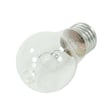
- Oven light and glass shield: illuminates the cavity; the glass shield must be in place during use.
In a gas wall oven, these parts are the most common “core” components involved in heating and temperature control:
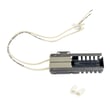
- Igniter: lights the gas at the burner.
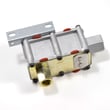
- Gas valve: opens to supply gas when heat is requested.
- Temperature sensor: tells the control how hot the oven is.
- Blower (some models): can run during baking and self-cleaning to keep internal components cooler.
| What it affects | Symptom you notice | Example part for this model |
|---|---|---|
| Ignition | No heat, delayed ignition, weak lighting | Frigidaire range oven burner igniter 5303935066 |
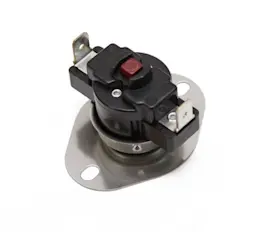
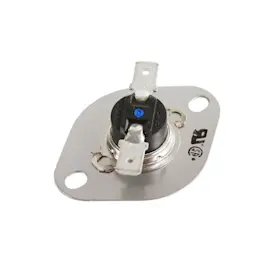
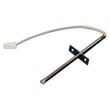
| Temperature control | Oven too hot or too cool | Frigidaire range oven temperature sensor 316217002 |
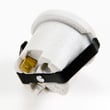
| Lighting | Light out, flickers, or won’t turn on | Range oven light bulb 316538904 |
Knowing the difference between “user parts” (racks, door, light cover) and “heating system parts” (igniter, gas valve, sensor) helps you troubleshoot faster. For example, a no-heat complaint often points to ignition or gas delivery, while uneven baking often points to rack position and air circulation.
- Arrange racks when the oven is cool; use oven mitts when handling hot racks.
- Keep cookware spaced so hot air can circulate around pans.
- If the blower keeps running after you turn the oven off, that is normal on some models.
- Keep the oven light glass shield installed whenever the oven is in use.
Last updated: February 2026
How long should a Kenmore gas stove last?
A Kenmore gas cooking appliance typically lasts 15 years with normal household use and basic maintenance. For your Kenmore 79030479400 gas wall oven, regular cleaning, proper airflow, and prompt repair of ignition or temperature issues help you reach that expected lifespan; see the maintenance guidance in the owner's manual.
Most gas ranges and gas wall ovens land in the same durability range, but real-world life depends on heat exposure, cleaning habits, and how quickly small problems are fixed.
- Typical lifespan: about 15 years
- Heavy use (daily high-heat cooking) can shorten life
- Poor airflow and grease buildup increase heat stress on components
- Delayed repairs can turn a small issue into a major failure
- Power surges can damage controls and igniters
These steps reduce strain on key parts like the igniter, gas valve, and temperature sensor.
- Keep the oven cavity and burner area free of baked-on spills (after the oven is cool)
- Maintain good air circulation around the oven and avoid blocking vents
- Use self-clean only as directed; excessive self-cleaning can stress wiring and electronics
- Replace a dim or failed oven light promptly to avoid damaging the socket
- If preheat is slow or the burner is inconsistent, check the igniter early
| Part type | What it does | Typical symptom when failing |
|---|---|---|
| Wear items (bulbs, some sensors) | Day-to-day operation support | Light out, temp swings |
| Ignition parts | Lights the gas burner | No heat, delayed ignition |
| Gas delivery parts | Controls gas flow | No bake/broil, weak flame |
If your oven will not heat or takes a long time to ignite, the frigidaire range oven burner igniter 5303935066 is a common fix on gas ovens.
A 15-year lifespan is realistic only when the oven heats safely and consistently. Catching early signs like delayed ignition, uneven baking, or temperature drift helps prevent damage to higher-cost parts (for example, the gas valve or wiring).
Last updated: February 2026