Installation guide
 Owner’s manual


How old is my KitchenAid oven by serial number?
KitchenAid model KUDS30IVBL4 is a dishwasher (not an oven), but you can still estimate the unit’s age from the serial number by decoding the manufacturing date. The model and serial label is typically located inside the tub near the door edge; see the KUDS30IVBL4 owner’s manual.
Where to find the serial number
We use the serial number from the appliance ID label to determine the build date.
- Open the dishwasher door fully.
- Look along the right-hand or left-hand side of the dishwasher interior near the door.
- Write down the full model number and serial number.
- If the label is worn, use a flashlight and take a photo for zooming.
How to decode the date from the serial number
KitchenAid serial formats vary by era. Use the pattern that matches your serial number length.
- 9-digit serial number: the 2nd character is the date code.
- 10-digit serial number: the 3rd character is the date code.
- Day and year format (common on many Whirlpool-built units):
- The first 3 digits can indicate the day of the year (001 to 365).
- The last 2 digits can indicate the year.
Quick reference table
| What you have | What to look for | What it tells you |
|---|---|---|
| 9-digit serial | 2nd character | Date code (used to derive build date) |
| 10-digit serial | 3rd character | Date code (used to derive build date) |
| Day/year style | First 3 digits + last 2 digits | Day-of-year + year |
Why it matters
Knowing the manufacture date helps us match the correct KitchenAid parts (like a control board, water inlet valve, or drain pump) and avoid ordering a look-alike part that does not fit your exact production run.
Last updated: January 2026
What is the average lifespan of a KitchenAid dishwasher?
Most KitchenAid undercounter dishwashers like model KUDS30IVBL4 typically last 10 to 14 years with normal household use. Lifespan depends most on water quality, how often you run cycles, and routine care outlined in the KUDS30IVBL4 owner's manual.
What affects dishwasher lifespan most
- Hard water and mineral buildup: shortens life by stressing the wash system and drying performance.
- Rinse aid use: helps drying and helps control hard-water deposits (important for long-term performance).
- Loading habits: overloading can reduce cleaning and strain racks, spray arms, and the pump.
- Drain health: slow draining makes the unit work harder and can lead to standing water issues.
- Electrical stability: repeated power interruptions can stress electronic controls.
Typical lifespan expectations (what to plan for)
| Item | Typical range | What you may notice first |
|---|---|---|
| Overall dishwasher service life | 10 to 14 years | More noise, longer cycles, more frequent minor issues |
| Major wash system components | 8 to 12 years | Poor cleaning, weak spray, unusual motor sounds |
| Door sealing components | 5 to 10 years | Leaks at the bottom or corners of the door |
Maintenance that helps you reach the high end of the range
- Use rinse aid consistently and avoid overfilling.
- Keep the tub and interior clean; address discoloration and buildup early.
- Confirm the door closes tightly and latches; a poor latch can stop cycles and increase wear.
- If storing seasonally, shut off water and power; winterize if exposed to freezing conditions.
- If the dishwasher will not start, check breaker/fuse, door latch, cycle selection, and water supply before assuming a major failure.
Why it matters
A dishwasher that is maintained for water quality and proper operation usually avoids the most expensive failures (pump/motor strain, drainage problems, and control issues), which is what typically determines whether you get 10 years or closer to 14.
Last updated: January 2026
What is the most common problem with a KitchenAid dishwasher?
For KitchenAid dishwasher model KUDS30IVBL4, the most common issues we see are poor cleaning (dirty dishes) and drain or start problems. These are usually tied to loading/spray coverage, a clogged wash system, or a drain path problem such as a restricted hose or a weak drain pump.
Most common symptoms and what they usually point to
- Dishes come out dirty: blocked spray arm holes, poor loading that blocks spray, or wash system buildup
- Won’t start or stops mid-cycle: door not fully latched, Start/Resume not completed, or a power interruption
- Won’t drain: kinked/blocked drain hose, clogged sump area, or a failing drain pump
- Odd noises: debris in the pump/sump area or an item contacting the spray arm
- Water leaks: door seal not sealing, door alignment issues, or a drain hose connection leak
Quick checks we recommend first (fast, no parts)
Use the troubleshooting guidance in the KUDS30IVBL4 owner’s manual and start with these basics:
- Press START/RESUME if the Start/Resume light is blinking (the dishwasher can pause during a cycle)
- Close the door firmly and make sure it is closed and latched
- Confirm a cycle is selected and the dishwasher has power (breaker/fuse)
- Check that large items are not blocking the spray arms
- Inspect the drain hose routing under the sink for kinks or a high-loop/air-gap setup required by your installation
Parts that commonly solve drain and leak complaints
If the dishwasher won’t drain or drains slowly, these model-matched parts are common fixes:
| Symptom | Most likely area | Model-matched part to consider |
|---|---|---|
| Standing water in tub | Drain system | Dishwasher drain pump WPW10348269 |
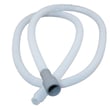
| Slow drain or backflow | Drain line restriction | Dishwasher drain hose 8269144A |
| Water leaking at door | Door sealing surface | Dishwasher door seal W11196317 |
Why it matters
Dirty dishes and drain problems often get worse over time; a restricted drain path can leave dirty water in the tub, and poor spray coverage can make detergent less effective. Following the loading and Start/Resume guidance in the manual prevents many “no wash” and “won’t run” complaints.
Last updated: January 2026
Is it worth fixing a KitchenAid dishwasher?
Yes, it’s usually worth fixing a KitchenAid undercounter dishwasher like model KUDS30IVBL4 when the problem is isolated (drain, fill, door, or a single electrical part) and the machine has been reliable; repairs often restore full performance for far less than replacement.
How we decide: repair vs. replace
Use these checkpoints to make a clear call:
- Age: Dishwashers typically last 10 years.
- Repair cost: If the repair is under about 50% of replacement cost, repair is the better value.
- Failure pattern: One-time failure favors repair; repeated breakdowns favor replacement.
- Type of failure: Leaks, no-drain, and no-fill are often straightforward; multiple electronic symptoms can add cost.
- Condition of key components: A solid tub and door seal area support repairing.
Quick symptom-to-part cost reality check (KUDS30IVBL4)
These are common “worth fixing” scenarios because they are single-component repairs.
| Symptom | Common suspect part | What it affects |
|---|---|---|
| Won’t drain | Dishwasher drain pump WPW10348269 | Removes water at end of cycle |
| Won’t fill or fills slowly | Dishwasher water inlet valve W10648041 | Lets water into the tub |
| Dead/no power | Fuse W10258275 | Protects the dishwasher’s electrical circuit |
| Door drops or won’t stay open | Dishwasher door balance link 8194001 | Controls door tension |
Before you spend money: checks that cost $0
The KUDS30IVBL4 user instructions note that the dishwasher may pause during a cycle and that a blinking Start/Resume light often just needs Start/Resume pressed and the door firmly latched.
- Press START/RESUME, then close the door firmly (especially if controls are on top of the door)
- Confirm a cycle is selected
- Check the breaker/fuse for the kitchen circuit
- If the unit won’t run and other lights blink, follow the service guidance in the KUDS30IVBL4 owner’s manual
Why it matters
A targeted repair (pump, valve, fuse, door hardware) usually fixes the root cause without changing how the dishwasher fits, mounts, or connects to plumbing. That saves time, avoids installation surprises, and keeps a KitchenAid you already know.
Last updated: January 2026