Owner’s manual
 Error Codes


Which is better, top mount or bottom mount refrigerator?
A bottom-mount refrigerator (like the GE GFE28GYNGFS) is better when you want everyday fresh-food items at eye level and a wider, more organized refrigerator section; a top-mount is better when you want the simplest layout and often a lower purchase cost. The “best” choice depends on how you use your fridge most.
Quick comparison: top mount vs bottom mount
| Feature | Top mount (freezer on top) | Bottom mount (freezer on bottom) |
|---|---|---|
| Most-used items (fresh food) | Lower, more bending | Higher, easier access |
| Freezer access | Easy, at chest/eye level | More bending (drawer style) |
| Organization | Often simpler shelves | Often more drawers, zones |
| Space feel | Typically narrower fridge section | Typically wider fridge section |
| Best for | Frozen-food heavy households | Fresh-food heavy households |
How to decide for your kitchen and habits
- If you cook often and grab produce, drinks, and leftovers daily, bottom-mount is the better fit.
- If you use the freezer more than the fridge, a top-mount can feel more convenient.
- If you want a cleaner, built-in look, many bottom-mount models are available in counter-depth styles.
- If you have limited aisle space, measure carefully; door swing and depth matter as much as width.
- If you are moving a fridge through tight hallways, confirm passageway clearance before delivery.
Model-specific sizing tip (GE GFE28GYNGFS)
For planning and moving, our GE bottom-freezer manual shows these typical dimensions for this platform:
- Height to top of hinge cover: about 69-7/8 in.
- Overall exterior width: about 35-3/4 in.
- Depth varies by standard-depth vs counter-depth configuration
For the exact configuration details and clearances, use the owner's manual.
Why it matters
Choosing the right mount style affects daily comfort (bending and reaching), how well your groceries stay organized, and whether the refrigerator fits your kitchen layout and entry path.
If you are shopping parts or planning a repair for this model, we list model-matched information and resources on Sears PartsDirect.
Last updated: February 2026
How to find GE appliance parts?
To find the right parts for your GE appliance (including the GE GFE28GYNGFS bottom-mount refrigerator), we use the model number to match exact-fit replacement parts and diagrams. Start with the model tag on the appliance, then use the parts lookup to narrow by section (doors, ice maker, dispenser, cooling). For broader searching by model number, use Sears PartsDirect.
Step-by-step: how we recommend finding the correct part
- Locate the model number tag (commonly inside the fresh food compartment on a side wall, ceiling, or near a crisper frame on many GE refrigerators).
- Write the model number exactly as shown (for this unit: GFE28GYNGFS).
- Use the model-based parts list to choose the correct section (for example: cabinet, doors, evaporator area, ice maker, dispenser).
- Compare the part description to what you see on your refrigerator (shape, connectors, mounting points).
- Confirm any special notes in the owner's manual (controls, alarms, filter and dispenser features can affect which parts apply).
Quick checks that prevent wrong-part orders
- Symptom match: confirm the failure (no ice, warm fridge, leaking water, door not sealing) before choosing a part.
- Visual match: look for wire plugs, tube sizes, and bracket locations.
- Revision differences: some models have multiple versions; match by model number and the diagram callouts.
- Consumables: water filters and air filters are replaced on a schedule; don’t troubleshoot them like a motor or board.
Common refrigerator part categories (and what they affect)
| Part category | What it typically impacts | Common symptom |
|---|---|---|
| Water filter / water system | Water taste, flow, ice quality | Slow dispenser, small cubes |
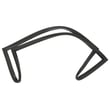
| Door gasket / mullion area | Sealing, condensation control | Frost, sweating, warm spots |
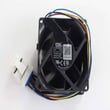
| Evaporator fan / airflow parts | Cooling performance | Warm fridge, noisy fan |
| Ice maker / dispenser components | Ice production and dispensing | No ice, jammed chute |
Why it matters
Using the exact model number (GFE28GYNGFS) is what keeps you from ordering a look-alike part that does not fit, does not connect correctly, or does not match your refrigerator’s configuration.
Helpful DIY guides for GE refrigerators
- How to replace the water filter in a GE refrigerator
- GE refrigerator error codes
- How to reset the door alarm on a GE refrigerator
Last updated: February 2026
Is it worth repairing a GE refrigerator?
Yes, repairing a GE refrigerator like model GFE28GYNGFS is worth it when the problem is a common, replaceable part (fan, door seal, dispenser component) and the total repair cost stays well below the cost of replacement; it is usually not worth it when the issue is a sealed-system or compressor failure.
Quick decision checklist
- Repair when the fridge still cools but has a specific symptom (noise, frost buildup, warm spots, leaking water).
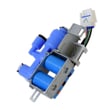
- Repair when the fix is a serviceable component (evaporator fan, defrost part, door gasket, water inlet valve).
- Repair when the unit is under 10 years old and has been reliable overall.
- Replace when cooling is weak and the diagnosis points to the sealed refrigerating system (compressor, condenser, evaporator, or connecting tubing).
- Replace when you have repeated cooling failures or multiple expensive repairs in a short time.
Use the warranty to guide the decision
Your owner's manual outlines limited warranty coverage, including one-year coverage for parts and labor for defects, and (for certain GE Profile models) longer coverage for the sealed refrigerating system. If your refrigerator is still in a covered period, repairing is typically the best value.
| Situation | Usually the better choice | Why |
|---|---|---|
| Door not sealing, door alarm issues, minor dispenser problems | Repair | Lower parts and labor; restores efficiency |
| Ice maker or water dispenser acting up | Repair | Often a valve, filter, or air-in-line issue |
| Warm fridge and warm freezer with sealed-system symptoms | Replace | High cost, complex repair |
| Multiple major failures close together | Replace | Total cost adds up quickly |
Why it matters
A bottom-mount refrigerator depends on steady airflow and tight door sealing to hold temperature. Small issues (like a weak fan or leaking gasket) can raise energy use and shorten food life, but they are usually cost-effective repairs.
Helpful DIY resources for common GE issues
Getting the right parts
We recommend matching parts by the full model number GFE28GYNGFS when you shop; you can also search by model on Sears PartsDirect.
Last updated: February 2026
Can I replace fridge parts myself?
Yes. With your GE GFE28GYNGFS bottom-mount refrigerator, we can usually replace many non-sealed-system parts ourselves (filters, bins, some dispenser and door hardware) using basic tools and the steps in the owner's manual. For sealed-system or certain electrical repairs, we use a qualified technician.
What you can typically replace yourself
These repairs are usually DIY-friendly when you unplug the refrigerator first and follow the manual’s safety steps:
- Water filter (plan to flush water after replacement)
- Door bins, shelves, and drawers (no wiring involved)
- Ice maker and dispenser trim components (model-dependent)
- Door alignment and hinge adjustments (if accessible)
- Flipper mullion (center door mullion) parts on French door models
For step-by-step help on a common door component, use how to remove a GE french door refrigerator flipper mullion.
Repairs we treat as “pro-only” on this model
The manual calls out items that require qualified service; we follow that guidance.
- LED light replacement (the LED assembly is typically technician-replaced)
- Power cord replacement (done by a qualified service professional)
- Sealed-system work (compressor, evaporator, condenser, refrigerant lines)
- Complex control board diagnostics when error codes point to internal failures
If you’re seeing a fault code, start with GE refrigerator error codes to narrow the problem before ordering parts.
Quick safety checklist before you start
- Unplug from a grounded 3-prong outlet (no adapter, no extension cord)
- Protect the power cord when pulling the refrigerator out
- Tape shelves and drawers in place if you need to move the unit
- Keep the refrigerator upright during moving
- Use gloves for sharp metal edges and eye protection when working underneath
Common DIY jobs and what they involve
| DIY task | Typical tools | Skill level |
|---|---|---|
| Replace water filter | None | Easy |
| Adjust/align doors | Nut driver, level | Easy to moderate |
| Dispenser trim access | Screwdriver | Moderate |
| Flipper mullion service | Screwdriver | Moderate |
Why it matters
DIY replacement can restore cooling, water flow, and door sealing faster and at lower cost, but choosing the right repair level helps prevent electrical shock hazards and avoids damage to sealed-system components.
To find model-correct replacement parts by diagram and model number, start with the parts list for GFE28GYNGFS, or search more broadly on Sears PartsDirect.
Last updated: February 2026
What is the most common problem with a GE refrigerator?
The most common problems we see on GE refrigerators, including model GFE28GYNGFS, are cooling complaints (not cold enough, warm fresh food section, or warm freezer) and ice maker or water dispenser issues. These usually trace back to airflow restriction, dirty condenser coils, fan problems, or a door seal leak.
Most common symptoms and what they usually mean
- Fridge warm, freezer OK: blocked vents, evaporator fan issue, or frost buildup from a defrost problem
- Both sections warm: dirty condenser coils, condenser fan issue, or sealed system cooling loss
- Ice maker not making ice: water supply issue, clogged filter, frozen fill tube, or inlet valve problem
- Water dispenser slow: filter restriction, air in the water line, or low household water pressure
- Door alarm beeping: door not sealing, door left ajar, or doors out of alignment
Quick checks we recommend first
- Set temps to about 37°F (fresh food) and 0°F (freezer); wait 24 hours to stabilize
- Make sure food packages are not blocking air vents
- Clean condenser coils and confirm the condenser fan runs when the compressor runs
- Inspect door gaskets for gaps, tears, or areas not contacting the cabinet
- If water or ice is weak, replace the filter on schedule and purge air after filter changes
Common causes at a glance
| Problem area | What you notice | What to do first |
|---|---|---|
| Airflow/vents | warm spots, uneven temps | clear vents, verify evaporator fan sound/airflow |
| Condenser area | runs a lot, weak cooling | clean coils, check condenser fan |
| Defrost system | frost on back wall | defrost troubleshooting steps |
| Water/ice system | no ice, slow water | check filter, purge air, verify supply |
Why it matters
Cooling and ice maker problems worsen over time; restoring airflow and heat removal helps protect food temperatures and reduces compressor run time.
Helpful resources
- Use the GFE28GYNGFS owner's manual for temperature settings, alarm behavior, and operating tips.
- For alarm issues, follow how to reset the door alarm on a GE refrigerator.
- For electronic diagnostics, check GE refrigerator error codes.
You can order replacement parts for GE GFE28GYNGFS through the model parts list, or search by model number on Sears PartsDirect.
Last updated: February 2026