Owner’s manual
 Error Codes



What is the bottom part of the fridge called?
On a GE CFE26KP2NKS1 bottom-mount refrigerator, the “bottom part” most people mean is the freezer drawer section; if you mean the mechanical area underneath or behind the cabinet, that area houses key cooling components such as the compressor and condenser fan.
Common meanings of “the bottom part”
- Freezer drawer: the lower compartment where frozen food is stored.
- Machine compartment: the service area where the sealed system and airflow parts live.
- Lower fresh food features: some models also have a full-width drawer at the bottom of the fresh food compartment.
For diagrams and the exact names GE uses for your model’s sections, check the owner's manual.
What you will find in the machine compartment (typical)
These parts work together to remove heat and keep temperatures stable:
- Compressor: pumps refrigerant through the sealed system.
- Condenser fan: moves air across the condenser coils to shed heat.
- Control and sensing parts: monitor temperatures and run the cooling system.
Examples of related parts for this model
| What it does | Example part name | Part ID |
|---|---|---|
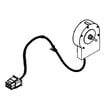
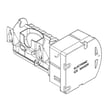
| Moves air across the condenser area | Refrigerator condenser fan | WR60X24484 |
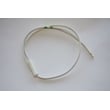
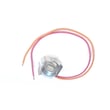
| Monitors temperature | GE Profile refrigerator temperature sensor | WR55X10025 |
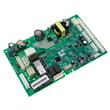
| Runs the refrigerator’s electronics | Main control board | WR55X46945 |
Why it matters
Using the right term helps you troubleshoot faster. For example, “freezer drawer not closing” points to baskets and slides, while “bottom of fridge is hot” points to airflow in the machine compartment (often the condenser fan and coil area).
Last updated: February 2026
What are the disadvantages of a bottom freezer?
A bottom-freezer design like the GE CFE26KP2NKS1 keeps fresh food at eye level, but it can be less convenient if you use frozen foods often because you still have to bend and pull out a heavy drawer to access items. Drawer-style freezers can also jam when overfilled.
Common disadvantages you may notice
- You bend more to reach frozen foods, especially items stored in the lower basket.
- The freezer drawer can feel heavy when fully loaded.
- Organization can be harder because items stack in baskets and can get buried.
- Access is slower than a swing-door freezer because you must pull the drawer out.
- Overfilling can cause sticking or jamming (GE notes not to fill baskets above the rim). See the owner's manual.
Freezer drawer organization limits (what GE calls out)
GE bottom-freezer drawer models typically use baskets (top and bottom full-width baskets, sometimes with a divider). When baskets are packed above the rim, they can stick or jam during opening and closing.
| Issue | What it looks like | What to do |
|---|---|---|
| Overfilled basket | Drawer drags, sticks, or will not close smoothly | Keep food below the basket rim; redistribute weight |
| Buried items | You cannot find small packages | Use bins or group foods by type in each basket |
| Heavy drawer | Hard pull, slams shut | Store heavier items toward the back and lower basket |
Why it matters
Bottom-freezer refrigerators are designed for convenience in the fresh-food section, but the freezer drawer takes more force and space to open. Keeping baskets properly loaded helps prevent jams and reduces wear on slides, rails, and drawer components over time.
Last updated: February 2026
Are bottom mount fridges better?
For many households, yes: a bottom-mount refrigerator like the GE CFE26KP2NKS1 is “better” because the fresh-food section sits at eye level, so you bend less and find everyday items faster. The tradeoff is you’ll bend more often to access the freezer drawer.
What “better” usually means in daily use
Bottom-mount (bottom freezer) designs are built around how most people cook: they open the refrigerator compartment more than the freezer.
Common advantages
- Fresh food is easier to see and reach (less bending for produce, drinks, leftovers).
- Wide refrigerator shelves and drawers make it easier to organize meal-prep items.
- Freezer drawer can hold bulky frozen items in baskets and bins.
- Many models (including this GE platform) place the icemaker and bin in the door on some versions, freeing interior shelf space.
Common drawbacks
- You bend or squat to reach frozen foods.
- Freezer drawers can feel “deep”; small items may migrate to the bottom.
- If the doors are left ajar, you may get beeping and temperature swings until the door is fully closed.
Quick comparison: bottom-mount vs. top-freezer
| Feature | Bottom-mount (like CFE26KP2NKS1) | Top-freezer |
|---|---|---|
| Fresh food access | Best (eye level) | More bending |
| Freezer access | More bending | Best (eye level) |
| Organization | Strong for fresh food drawers | Simple, basic layout |
| Typical fit | Often wider, deeper | Often narrower |
Fit and clearance matters (often the deciding factor)
“Better” also depends on whether it fits your kitchen. For the CFE26K platform, the manual lists a cabinet opening width range of 33 to 36 inches (varies by model) and shows overall dimensions for planning. Check the exact measurements and door-swing clearances in the owner's manual.
Why it matters
Choosing the right configuration reduces daily strain (bending and reaching), improves food visibility (less waste), and helps the refrigerator maintain stable temperatures by keeping airflow paths clear.
Last updated: February 2026
Is GE CFE26KP2NKS1 considered high end?
Yes. The GE CFE26KP2NKS1 is part of GE’s Café-style French door, bottom-freezer lineup (CFE26K series), which is generally considered a premium tier compared with basic GE refrigerators because it focuses on upgraded design, features, and fit-and-finish.
What “high end” means for this model
For refrigerators like the CFE26K series, “high end” usually refers to a combination of capacity, feature set, and built-in style details rather than just price.
Common high-end indicators you’ll see with this type of GE bottom-mount refrigerator include:
- French door layout with a bottom freezer drawer
- Large capacity class (the CFE26K series is a 26 cu. ft. platform)
- External controls and dispenser features (varies by configuration)
- Premium trim and door hardware options
- More advanced electronics and sensors for temperature management
For model-specific features and control options, use the owner's manual.
Quick comparison: where it typically fits
| Tier (typical) | What you get | Where CFE26KP2NKS1 fits |
|---|---|---|
| Entry-level | Basic cooling, fewer electronics, minimal styling | Above this |
| Mid-range | More features, better organization, some electronics | At the top end of this |
| Premium | Strong styling focus, more controls/sensors, higher part complexity | Commonly considered here |
| True luxury | Built-in columns, pro-style brands, highest price tier | Usually below this |
Why it matters (parts and repair expectations)
Premium models often use more sensors, control boards, and dispenser components. That can improve performance and convenience, but it also means troubleshooting is more “system-based” (airflow, sensors, controls) instead of only mechanical.
If you’re diagnosing temperature swings or inconsistent cooling, these parts are commonly involved:
- GE profile refrigerator temperature sensor WR55X10025 (tracks compartment temperature)
- Main control board WR55X46945 (manages cooling logic and component operation)
- Refrigerator air damper WR60X27396 (controls cold-air flow into the fresh food section)
Last updated: February 2026