Owner’s manual
 Error Codes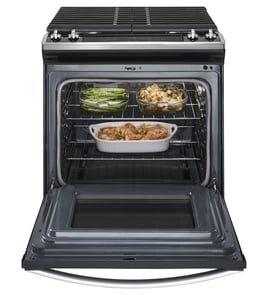




How to identify a Whirlpool stove model?
To identify your Whirlpool stove model, we look for the model and serial tag on the range itself; for the Whirlpool GGG390LXS03 30-inch gas freestanding range, the tag is typically on the oven frame (around the door opening), inside the storage drawer, or on the back panel. Use the model number (not the serial) to match parts and manuals.
Where to find the model tag on a Whirlpool range
Check these common spots first:
- Oven door frame or front frame behind the oven door (most common)
- Inside the storage drawer or warming drawer area
- Back of the range on the rear panel
- Under the cooktop edge (less common)
- On a small metal tag that flips or swivels near the back
What to write down (and what not to mix up)
The tag usually includes both a model number and a serial number.
- Model number: identifies the exact design and parts fit
- Serial number: identifies the production unit and date code
- Brand: Whirlpool (helpful, but not enough by itself)
| Item on the tag | Example format | What we use it for |
|---|---|---|
| Model number | Letters and numbers (like GGG390LXS03) | Correct parts diagrams and part compatibility |
| Serial number | Letters and numbers (varies) | Manufacturing info and service history |
Why it matters
Whirlpool ranges can look similar across multiple model series, but burner parts, igniters, valves, and control boards can differ. Using the exact model number (for example, GGG390LXS03) prevents ordering a surface burner valve or oven igniter that will not mount or wire correctly.
Helpful next step
Match what you find on the tag to the documentation for your exact model in the GGG390LXS03 owner's manual.
Last updated: February 2026
What size gas line for Whirlpool gas range?
For the Whirlpool GGG390LXS03 30-inch gas freestanding range, we use a 3/4-inch rigid gas supply pipe to the range location for proper flow. For LP (propane) installations, 1/2-inch minimum piping is commonly used; always confirm your exact setup in the GGG390LXS03 owner's manual.
Recommended gas line sizes
- Natural gas: 3/4-inch rigid pipe to the range location
- LP (propane): 1/2-inch minimum piping or tubing is commonly acceptable
- Longer runs: keep the larger pipe size longer to prevent low gas volume
- Final connection: use an approved flexible connector and fittings that match local code
Quick sizing guide (what to use when)
| Installation situation | Typical best choice | Why |
|---|---|---|
| Standard natural gas run | 3/4-inch rigid pipe | Helps prevent weak burner flames |
| Long distance from meter/regulator | 3/4-inch (or larger per code) | Reduces pressure drop |
| LP (propane) supply | 1/2-inch minimum | LP systems often use different pressure/regs |
| Any installation | Follow local code and manual | Ensures safe, compliant hookup |
What to check before you buy pipe or fittings
- Verify whether your home is natural gas or LP (propane).
- Measure the approximate run length from the shutoff valve to the range location.
- Confirm you have an accessible manual shutoff valve near the appliance.
- Make sure the connector is rated for gas appliances and the correct BTU load.
- If you smell gas at any time, shut off the supply and have the connection checked.
Why it matters
Gas line size affects gas volume and pressure stability. If the supply line is undersized, surface burners can have weak flames and the oven burner can struggle to maintain temperature, especially when multiple burners are on.
Last updated: February 2026
What is the life expectancy of a Whirlpool gas stove?
A Whirlpool gas stove like model GGG390LXS03 typically lasts 13 to 15 years with normal household use. Consistent cleaning, proper burner flame, and quick attention to ignition or gas-flow problems are the biggest factors that help you reach (or beat) that range.
What affects lifespan the most
- Daily cleaning: keeping burner ports and caps clear helps prevent poor combustion.
- Ignition health: weak or delayed lighting strains igniters and can lead to no-heat complaints.
- Gas flow and flame quality: steady blue flames reduce soot and overheating.
- Oven door seal and closure: heat loss makes the oven work harder and can shorten component life.
- Ventilation and spills: heavy boilovers can damage switches, wiring, and valves.
Quick care checklist (high impact, low effort)
- Wipe the cooktop after use; remove food and grease before it hardens.
- Keep burner heads and caps seated correctly after cleaning.
- If the oven takes a long time to ignite, address it early (a common fix is replacing the range bake igniter W11596211).
- Avoid lining the oven bottom with foil; it can disrupt airflow and overheat parts.
- Use cookware that fits the burner; oversized pans can reflect heat onto knobs and controls.
Common “end-of-life” symptoms and what they usually mean
| Symptom | Most common cause | Typical next step |
|---|---|---|
| Oven won’t heat or heats slowly | Weak igniter | Test/replace igniter |
| Burner clicks but won’t light | Dirty burner ports or ignition issue | Clean, then diagnose ignition |
| Smell of gas when off | Valve or connection issue | Stop use; have it checked |
| Uneven baking | Burner/ignition or airflow issue | Inspect burner, igniter, calibration |
Why it matters
Knowing the 13 to 15 year lifespan helps you decide whether to repair or replace. On a range that is otherwise in good shape, replacing a wear item like an igniter or burner component is often the most cost-effective way to restore reliable baking and broiling.
For model-specific operating and care guidance, use the GGG390LXS03 owner’s manual.
Last updated: February 2026
Does Whirlpool make a good gas range?
Yes. Whirlpool gas ranges, including the Whirlpool GGG390LXS03 30-inch gas freestanding range, are a solid choice for most homes because they deliver reliable everyday cooking performance, widely available replacement parts, and straightforward controls. For the features and care details that apply to your exact range, use the GGG390LXS03 owner's manual.
What “good” usually means for a gas range
A good gas range typically balances burner performance, oven consistency, and long-term serviceability.
- Strong, responsive cooktop heat for boiling and sautéing
- Predictable oven baking and broiling results after proper preheat
- Durable grates, knobs, and door hardware for daily use
- Parts support for common wear items like igniters and valves
- Reasonable maintenance (cleaning burner heads, caps, and ports)
What to expect over time (common wear items)
Most gas ranges eventually need a few service parts. On the GGG390LXS03, these are typical examples:
| Symptom | Common cause | Example part for this model |
|---|---|---|
| Oven won’t heat or heats slowly | Weak or failed bake igniter | Range bake igniter W11596211 |
| Surface burner won’t light or keeps clicking | Igniter switch or burner ignition issue | Range surface burner igniter switch assembly WPW10204718 |
| Burner flame is erratic or won’t adjust | Worn or sticking burner valve | Range surface burner valve WPW10206288 |
Quick checks that improve performance
These steps solve many “range isn’t working right” complaints without replacing parts.
- Clean burner caps and burner head ports; food spills block gas flow
- Confirm caps are seated correctly after cleaning
- Preheat the oven fully before baking
- Keep the oven door closed as much as possible during baking
- If flames look unusually large or lazy, have the gas supply and regulator checked
Why it matters
A “good” range is one you can cook on confidently and keep running for years. Whirlpool ranges are generally a good value because routine issues (like ignition problems) are usually repairable with standard parts and basic troubleshooting guided by the manual.
Last updated: February 2026