Owner’s manual


Where is the model number on a Kenmore 79671522211 dryer?
On the Kenmore Elite dryer model 79671522211, the model number is typically printed on a rating label inside the door opening; check the cabinet frame around the door (top, sides, or lower edge) and the inside surface of the door. For the exact label location, use the owner's manual.
- Open the dryer door and inspect the cabinet frame (the metal lip the door closes against)
- Look along the top edge of the door opening
- Check the hinge side and latch side of the opening
- Inspect the inside of the dryer door (near the edge)
- If you do not see it, use a flashlight and check the lower front frame area
The label usually includes several identifiers. Copy these exactly (or take a clear photo):
| Item on label | Why you need it |
|---|---|
| Model number (79671522211) | Ensures parts diagrams and parts match your exact dryer |
| Serial number | Helps confirm production series and service history |
| Electrical rating | Useful when troubleshooting power or control issues |
Kenmore 796-series dryers can use different parts depending on the exact model and production run. Using the correct model number helps us match the right components the first time, such as a dryer drum belt 4400EL2001F or dryer lint screen by lg 5231EL1001C.
Last updated: February 2026
How to reset a Kenmore 79671522211 dryer?
To reset your Kenmore Elite dryer model 79671522211, we recommend doing a simple power reset first: unplug the dryer (or switch the breaker off) for 1 minute, then restore power. This clears many control glitches and gets the dryer running normally again.
- Turn the dryer OFF.
- Unplug the power cord (or turn the circuit breaker OFF).
- Wait 60 seconds.
- Restore power.
- Press Power, then start a cycle to test.
A reset helps only if the issue is a temporary control problem. If the dryer still will not start, check these common causes next:
- Door not fully closed or door switch not engaging
- Blown house fuse or tripped breaker (electric dryers often need a full 240V supply)
- Control panel not accepting selections (stuck key or control glitch)
- Drive system problem (belt or idler issue can stop tumbling)
- Overheating protection triggered by restricted airflow (lint buildup)
If the motor runs but the drum does not turn, these parts are frequent suspects for this model:
| Symptom | What you may notice | Related part on this model page |
|---|---|---|
| Drum will not turn | Humming, drum hard to spin by hand | Dryer drum belt 4400EL2001F |
| Squealing or thumping | Noise increases as drum turns | Dryer drum support roller 4581EL2002H |
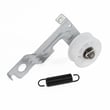
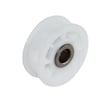
| Drum stops mid-cycle | Belt slack or pulley not tensioning | Dryer idler pulley 4560EL3001A |
Resetting is fast and safe, and it helps separate a one-time electronic hiccup from a real failure in airflow, door sensing, or drum drive components. That saves time before you move into deeper troubleshooting.
For model-specific control behavior and cycle details, use the owner's manual.
Last updated: February 2026
Is 7.4 a large capacity dryer?
Yes. A 7.4 cu. ft. drum is considered a large-capacity size for a full-size dryer, including the Kenmore Elite 79671522211; it comfortably handles bulky loads like towels and bedding while still fitting standard laundry spaces. For cycle and load recommendations, use the owner's manual.
Most full-size dryers fall into these capacity groupings:
| Dryer capacity | Common label | Best for |
|---|---|---|
| 6.0 to 6.9 cu. ft. | Standard | Everyday mixed loads |
| 7.0 to 7.9 cu. ft. | Large capacity | Comforters, towels, family loads |
| 8.0 to 9.0 cu. ft. | Extra-large | Very large households, frequent bulky items |
To dry faster and more evenly, we recommend:
- Fill the drum loosely; don’t pack items tightly.
- Mix similar-weight fabrics (towels with towels, sheets with sheets).
- Use the correct dryness level and temperature for the fabric.
- Clean the lint screen before every load; a clogged screen slows airflow.
- Check venting for restrictions if loads take longer than normal.
If your dryer is not tumbling well with larger loads, a worn belt or idler pulley can cause slipping; common wear items for this model include the dryer drum belt 4400EL2001F and dryer idler pulley 4560EL3001A.
Capacity affects drying performance and energy use. A large-capacity drum like 7.4 cu. ft. lets items tumble with better airflow, which helps reduce wrinkles and can shorten dry times when the venting and lint system are kept clean.
Last updated: February 2026
Why is my Kenmore 79671522211 dryer not tumbling?
If your Kenmore Elite dryer model 79671522211 runs but the drum will not turn, the most common causes are a broken or slipped drum belt, a seized idler pulley or support roller, or a motor issue. Start with simple checks, then inspect the belt-drive parts.
- Confirm the door fully closes; a dryer will not tumble if the door switch is not made.
- Try a different cycle and press Start firmly; some cycles delay tumbling briefly.
- Listen for symptoms:
- Motor hums but drum does not move: belt, roller, idler, or drum drag.
- Clicking then stops: motor overload from a stuck drum or failed motor.
- No sound at all: door switch, control, or power issue.
These parts commonly stop tumbling when worn, broken, or jammed:
- Drum belt: check for breakage, glazing, or slack; see dryer drum belt 4400EL2001F.
- Idler pulley: a seized pulley can prevent the belt from moving; see dryer idler pulley 4560EL3001A.
- Drum support rollers: flat spots or seized rollers can lock the drum; see dryer drum support roller 4581EL2002H.
Unplug the dryer before servicing.
- Belt routing and tension (belt should be tight and properly routed around the motor pulley and idler).
- Drum turns by hand: it should rotate smoothly with light resistance.
- Roller condition: rollers should spin freely and quietly.
- Idler pulley: should spin freely without wobble.
| What you notice | Most common cause | What to check |
|---|---|---|
| Drum spins freely by hand but will not run | Broken/slipped belt | Belt condition and routing |
| Drum is hard to turn by hand | Seized roller or idler | Rollers and idler pulley |
| Motor runs but drum barely moves | Belt slipping or drag | Belt wear, drum seals, rollers |
| Dryer stops shortly after Start | Motor overload from drag | Drum movement, rollers, idler |
A non-tumbling dryer usually means the belt-drive system is failing. Fixing belt, idler, or roller problems early prevents extra wear on the motor and reduces the chance of repeated shutdowns.
For model-specific disassembly steps and belt routing diagrams, use the owner's manual.
Last updated: February 2026
What is the lifespan of a Kenmore dryer?
A Kenmore dryer typically lasts 10 to 13 years. With consistent lint and vent maintenance, many Kenmore Elite dryers like model 79671522211 run 15 years or longer, especially when wear items (belt, rollers, idler) are replaced before they cause bigger damage.
Most dryers fail early because of heat and airflow stress, not because the cabinet or drum “wears out.” The biggest lifespan drivers are:
- How often you run loads (daily use shortens life)
- Overloading (stresses the motor, belt, and drum supports)
- Restricted venting (overheats thermostats and sensors)
- Lint buildup inside the cabinet (raises fire risk and heat stress)
- Replacing wear parts promptly instead of running them until they seize
We recommend these habits for Kenmore Elite 79671522211:
- Clean the lint screen every load; wash it with mild soap monthly to remove residue
- Check airflow at the outside vent hood; weak airflow means a vent restriction
- Clean the full vent run at least yearly (more often with long vents or pets)
- Listen for squealing, thumping, or scraping; address it before the drum support system fails
- Keep the dryer level to reduce drum and roller wear
If the dryer runs but gets noisy, stops tumbling, or smells hot, these parts are frequent culprits:
| Symptom | Most common wear area | Example part for this model |
|---|---|---|
| Drum not turning | Belt or idler system | Dryer drum belt 4400EL2001F |
| Thumping or rumbling | Drum support rollers | Dryer drum support roller 4581EL2002H |
| Squealing | Idler pulley | Dryer idler pulley 4560EL3001A |
A dryer that is overheating or running with worn drum support parts can damage the motor, thermostats, and drum seals. Simple maintenance and timely part replacement usually costs less than a major breakdown.
For model-specific care and cleaning guidance, follow the owner's manual.
Last updated: February 2026