Owner’s manual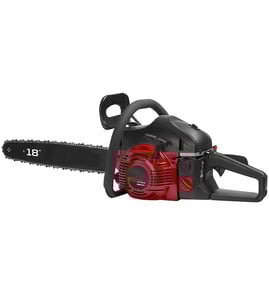





How many cc's is a poulan wild thing?
Most Poulan Wild Thing chainsaws are in the 40cc class; for the Poulan model 2375, the commonly listed engine size is about 40cc. For the exact displacement for your specific Type 1-5 version, match the model and type details in the 2375 operator's manual.
We recommend verifying the displacement using the model identification and the specifications section.
- Check the model tag on the saw (usually on the starter housing or rear handle area).
- Confirm it reads 2375 and note the Type (Type 1 through Type 5).
- Compare that information to the specifications in the 2375 operator's manual.
- If the saw has been rebuilt, confirm the cylinder and carburetor match the original configuration.
Engine displacement (cc) is the cylinder volume; it helps predict power and the correct tune and fuel expectations.
| Spec | What it affects | What you’ll notice |
|---|---|---|
| Engine cc (displacement) | Power potential and torque | Cutting speed under load |
| Carburetor tuning | Idle quality and acceleration | Stalling, bogging, chain creep |
| Bar and chain match | Cutting efficiency and safety | Poor cutting, overheating |
Knowing the cc helps you choose compatible parts and settings for your Poulan 2375, especially when you are diagnosing performance issues (hard starting, bogging, chain moving at idle) or selecting fuel system parts.
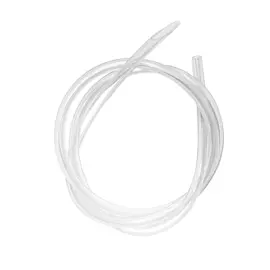
- Ayp lawn & garden equipment fuel line, large 530069216 for cracked or leaking fuel lines
- Spark plug 503235111 for no-start or misfire symptoms
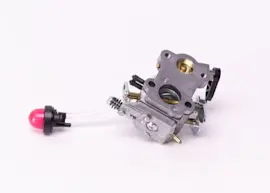
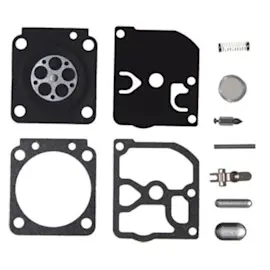
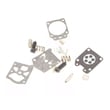
- Ayp lawn & garden equipment engine carburetor rebuild kit 530069826 for surging, bogging, or poor idle
Last updated: January 2026
Is 40 1 or 50 1 better for chainsaws?
For the Poulan 2375 chainsaw, we use a 40:1 gas-to-oil mix because the manual specifies mixing unleaded gasoline with quality 2-cycle air-cooled engine oil at 40:1 (3.2 oz oil per 1 gallon gas). A 50:1 mix has less oil and is not the recommended ratio for this model.
Follow the fuel-mix guidance in the Poulan 2375 owner's manual. For best results, use fresh unleaded gasoline and a quality 2-cycle air-cooled oil.
- Mix at 40:1: 3.2 oz 2-cycle oil per 1 gallon of gas
- Use oil labeled for 2-cycle air-cooled engines
- Mix in an approved fuel container; shake to blend before filling
- Make only what you will use soon; old mix can cause hard starting and poor running
- If the saw is used hard (hot weather, long cuts), staying at the specified 40:1 helps protect the engine
| Mix ratio | Oil content | Typical outcome | Best choice for Poulan 2375 |
|---|---|---|---|
| 40:1 | More oil | Better lubrication and cooling | Yes (recommended) |
| 50:1 | Less oil | Runs with less lubrication; higher wear risk over time | No |
A 2-cycle chainsaw depends on the oil in the fuel for lubrication. Using the correct ratio helps prevent overheating, scoring, and premature wear in the cylinder and crank bearings, especially during sustained cutting.
Fuel mix (gas + 2-cycle oil) is separate from bar and chain oil. Keep the bar oil tank filled so the automatic oiler can lubricate the bar and chain; lack of bar oil can quickly ruin the bar and chain.
Last updated: January 2026
What are the common problems with Poulan chainsaws?
Common problems on the Poulan 2375 chainsaw are fuel-related no-start or stalling (old fuel, cracked fuel lines, carburetor issues), chain oiling problems that overheat the bar and chain, and idle problems where the chain moves at idle. Our best starting point is the maintenance and adjustment steps in the 2375 owner's manual.
- Won’t start or only runs on choke: stale fuel, restricted fuel flow, carburetor diaphragm/gasket wear
- Starts then stalls: carburetor needs cleaning/rebuild, fuel line leak, tank venting issue
- Chain moves at idle: idle speed too high or carburetor needs adjustment (the manual warns the chain must not move at idle)
- Smokes at the chain or bar turns blue: bar and chain oil not reaching the bar, oil tank low, oil too thick in cold weather
- Poor cutting or rough running: dull chain, incorrect fuel mix, spark plug condition, clutch/drive wear
- Confirm the fuel mix: This model uses a 40:1 mix (3.2 oz 2-cycle oil per 1 gallon unleaded gas). Use fresh fuel.
- Check bar and chain lubrication: Keep the oil tank filled; lack of oil quickly ruins the bar and chain.
- Verify safe idle: With the throttle released, the chain should stop moving.
- Inspect fuel delivery: Look for soft, cracked, or leaking fuel lines and loose fittings.
- Basic ignition check: Inspect/replace the spark plug if fouled and confirm the stop switch is not stuck in OFF.
| Problem you see | Common fix | Example part for model 2375 |
|---|---|---|
| Fuel smell, wet lines, hard starting | Replace deteriorated fuel line | Ayp lawn & garden equipment fuel line, large 530069216 |
| Runs lean, surges, won’t stay running | Rebuild carburetor (diaphragms/gaskets) | Ayp lawn & garden equipment engine carburetor rebuild kit 530069826 |
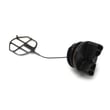
| Fuel cap won’t seal or vents poorly | Replace cap | Fuel tank cap 580940901 |
Fuel and oil issues are the fastest way to turn a small problem into major wear. The manual specifically calls out correct 40:1 fuel mixing, continuous bar and chain lubrication, and a non-moving chain at idle to prevent damage and improve safety.
Last updated: January 2026