Owner’s manual
 Error Codes


What's the lifespan of a bottom freezer fridge?
A bottom-freezer refrigerator typically lasts 15 to 20 years with normal household use and basic maintenance. For your Samsung RF267AEWP, keeping airflow clear, doors sealing tightly, and temperatures set correctly helps you reach the high end of that range (see the RF267AEWP owner’s manual).
What affects lifespan the most
- Condenser cleanliness and airflow: dust buildup and blocked vents make the system run hotter and longer.
- Door seal condition: air leaks force longer run times and can cause moisture issues.
- Ice maker and water system use: heavy ice production and water quality can increase wear.
- Temperature settings: stable, recommended temps reduce compressor cycling.
- How full it is: overpacking can restrict air circulation.
Recommended settings and habits (RF267AEWP)
The manual lists recommended compartment temperatures of -19°C (freezer) and 3°C (refrigerator). Keeping close to these targets supports food safety and reduces strain on the cooling system.
| Item | Best practice | Why it helps lifespan |
|---|---|---|
| Freezer temp | About -19°C | Reduces thaw-refreeze and long run times |
| Fridge temp | About 3°C | Prevents warm spots and overcooling |
| Door use | Close doors fully; avoid long door-open time | Limits condensation and compressor workload |
| Airflow | Leave space around vents and between items | Keeps cooling efficient |
Quick checks when performance drops
- Confirm doors are closing fully and not held open by bins or packages.
- Make sure vents are not blocked by food containers.
- Verify the freezer is cold enough for ice production.
- If you see moisture or frost, inspect the door seal and alignment.
- If ice production is inconsistent, follow the ice maker troubleshooting steps in the RF267AEWP owner’s manual.
Why it matters
A refrigerator that runs efficiently cycles less often, stays at safer temperatures, and puts less stress on major components like the compressor and fans. That is the difference between replacing a fridge at 12 to 15 years versus getting 18 to 20 years.
Last updated: February 2026
What are the disadvantages of a bottom freezer?
Bottom-freezer refrigerators like the Samsung RF267AEWP make fresh food easy to reach, but the tradeoff is that frozen items sit lower and are typically stored in deep drawers, so you bend more, stack more, and can lose sight of what’s underneath. For model-specific features and storage tips, use the RF267AEWP owner's manual.
Common disadvantages you’ll notice day to day
- You bend or squat more to reach frozen foods in the lower drawer.
- Items can get buried in a deep freezer basket, so it takes longer to find what you need.
- Large or heavy frozen items (roasts, bulk bags) are harder to lift up and out.
- Freezer drawers can feel “tight” when overpacked, and they may not close smoothly.
- Kids can access the freezer more easily, which can lead to frequent opening and temperature swings.
Bottom freezer vs. top freezer: quick comparison
| Feature | Bottom freezer | Top freezer |
|---|---|---|
| Fresh food access | Easier (eye level) | More bending |
| Frozen food access | More bending | Easier |
| Organization | Deep drawers, stacking | Shelves, more visibility |
| Large item handling | Harder to lift out | Often easier |
Tips to reduce the downsides (works well on RF267AEWP)
- Put “daily use” frozen foods in the upper area of the drawer so they’re easiest to grab.
- Use bins or freezer-safe containers to prevent small items from sliding underneath larger packages.
- Avoid overfilling; drawers close better and airflow stays more consistent.
- Keep the freezer drawer fully closed; leaving it ajar can cause performance issues and moisture problems.
- Wrap foods well to prevent freezer burn and odors.
Why it matters
A bottom freezer design can be very efficient for fresh-food use, but the drawer-style freezer rewards good organization. When the drawer is overpacked or left slightly open, you spend more time searching, the door may not seal as well, and temperature stability can suffer.
Last updated: February 2026
What is the most common problem with Samsung refrigerators?
The most common problem we see with Samsung refrigerators like model RF267AEWP is a cooling issue caused by frost or ice buildup around the evaporator area. That buildup restricts airflow, so the freezer may seem OK while the fresh food section warms up.
What it usually looks like
- Fresh food section is warm but the freezer still freezes
- Temperature swings, food spoils faster, or drinks do not stay cold
- Fan noise changes (rubbing, buzzing) as ice builds up
- Water leaks or puddles from a defrost drain issue
- Ice maker slows down or stops if water pressure is low or airflow is restricted
Most common causes (and what to check first)
Start with the basics, then move to the defrost and airflow system.
| Symptom | Most likely area | Quick check |
|---|---|---|
| Fridge warm, freezer OK | Frost blocking airflow | Look for heavy frost on the rear interior panel |
| Puddles under crisper or inside | Defrost drain restriction | Check drain area for ice and debris |
| Ice maker not making ice | Water supply or ice maker | Confirm 20 to 125 psi water pressure and steady fill |
| Door not sealing well | Door gasket or alignment | Paper test around gasket, check for gaps |
Model-specific notes for RF267AEWP
- This Samsung French door design uses separate cooling (Twin Cooling System), so airflow problems in one compartment can show up as “fridge warm, freezer cold.”
- The ice maker needs adequate water pressure (20 to 125 psi) to operate properly; low pressure can mimic an ice maker failure.
- For exact control locations, temperature settings, and door adjustment guidance, follow the RF267AEWP owner's manual.
Parts that commonly come up in these repairs
When troubleshooting points to a failed component, these are examples of parts often involved on this model family:
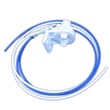
- Refrigerator cabinet drain tube assembly da97-04049d (helps route defrost water; restrictions can lead to leaks and icing)
- Samsung refrigerator door gasket DA63-06542A (poor sealing can drive frost buildup and temperature instability)
Why it matters
Cooling and airflow problems can quickly lead to unsafe food temperatures and extra strain on the compressor and fans. Catching frost buildup, drain issues, or a poor door seal early usually prevents bigger, more expensive repairs.
Last updated: February 2026