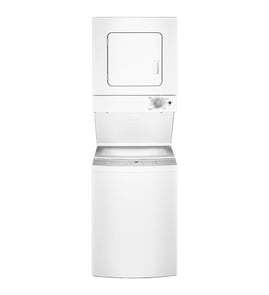



How do I reset a Frigidaire washer?
To reset the washer in your Frigidaire laundry center model MLCE52RCS1, unplug it (or switch off the breaker) for 5 minutes, then restore power and start a new cycle. This clears many control glitches and is the safest reset method for this model.
Quick reset steps (recommended)
- Press Power/Cancel to stop the cycle.
- Unplug the laundry center (or turn OFF the dedicated breaker).
- Wait 5 minutes.
- Restore power.
- Select a cycle and press Start.
If the washer still will not respond
These checks fix the most common “won’t start” and “stuck controls” symptoms after a reset:
- Confirm the outlet has power (test with a lamp).
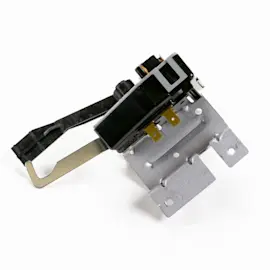
- Make sure the lid is fully closed; a lid switch issue can prevent starting.
- Verify both water supply valves are fully open.
- Check for a slow fill or no fill condition caused by a leaking or missing hose washer; replace the laundry appliance fill hose washer 5303161296 if the hose connection drips or draws air.
- If you suspect a wiring issue (intermittent power, dead panel), inspect harness connections; the electronic harness 5303307982 is the model-matched wiring assembly used to route power and signals.
What a reset does (and does not do)
A power reset is meant to clear temporary electronic faults. It does not correct a mechanical failure or a hard electrical problem.
| Symptom after reset | Most likely area to check | Typical next step |
|---|---|---|
| No lights, no response | Power supply, wiring | Verify outlet and cord, inspect connections |
| Fills slowly or not at all | Water supply, inlet screens, hose seals | Open valves, clean screens, check hose washers |
| Starts then stops | Lid switch, control, wiring | Confirm lid closure, inspect switch and harness |
| Loud buzzing or beeping | Control alert, stuck key | Power reset, then check control panel buttons |
Why it matters
Resetting correctly prevents unnecessary part replacement and helps you separate a simple control glitch from issues like water supply problems, a lid switch fault, or a wiring connection problem.
Last updated: February 2026
How many cubic feet are in a Frigidaire washing machine?
For a Frigidaire washing machine, capacity is typically measured in cubic feet; most full-size top-load washers are about 3.5 to 4.8 cu. ft. For the Frigidaire laundry center model MLCE52RCS1, the exact washer tub capacity depends on the specific configuration, so we use that typical range when comparing loads.
Typical washer capacities (quick guide)
Washer capacity varies by washer type more than by brand. Use this as a practical reference when sizing loads:
- Compact washers: about 1.5 to 2.6 cu. ft.
- Apartment size or small top-load: about 2.7 to 3.4 cu. ft.
- Full-size top-load: about 3.5 to 4.8 cu. ft.
- Front-load: about 4.0 to 5.5 cu. ft.
| Washer type | Typical capacity (cu. ft.) | Best for |
|---|---|---|
| Compact | 1.5 to 2.6 | 1 to 2 people, tight spaces |
| Small top-load | 2.7 to 3.4 | Light weekly laundry |
| Full-size top-load | 3.5 to 4.8 | Family loads, bulky items |
| Front-load | 4.0 to 5.5 | Large loads, high efficiency |
How to estimate your washer’s capacity by what it handles
If you do not have the capacity spec handy, these real-world checks help you avoid overloading:
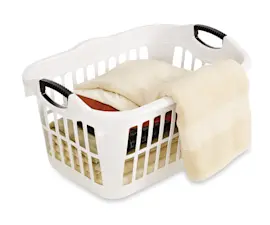
- A “full” load should fill the basket loosely to about 3/4 full, not packed down.
- You should still be able to fit your hand vertically between the top of the load and the drum.
- Bulky items (comforters, blankets) need extra space to tumble and rinse.
- If clothes come out with detergent residue, the load is usually too large.
- If the unit shakes or bangs during spin, the load is often too heavy or unbalanced.
Why it matters
Capacity affects cleaning and wear. Overloading a laundry center like MLCE52RCS1 can reduce agitation, limit rinsing, increase vibration, and shorten the life of drive and suspension components.
Related part that helps prevent leaks during hookups
If you are installing or reconnecting water lines, replacing worn hose washers helps prevent drips at the faucet and inlet connections: laundry appliance fill hose washer 5303161296
Last updated: February 2026
Where to find model number on a Frigidaire washer?
On a Frigidaire laundry center like model MLCE52RCS1, the model number is printed on the appliance’s model and serial tag. On many Frigidaire washers, you can find this tag by opening the washer door or lid area and checking the frame or rim near the opening.
Common places to check on MLCE52RCS1
We recommend checking these spots in order:
- Around the washer door opening or lid opening (on the cabinet frame)
- Along the inside edge of the washer front panel near the opening
- Behind the control panel area (visible from the top or rear access area)
- On the back panel of the laundry center cabinet
- Inside the dryer door opening area (some stacked units place the tag there)
What the tag looks like (and what to write down)
The tag typically includes several identifiers. Record these exactly:
- Model number (example format: MLCE52RCS1)
- Serial number
- Electrical ratings (volts/amps) and sometimes a type or production code
Quick ID guide
| Item on tag | What it’s used for | Why it matters |
|---|---|---|
| Model number | Parts lookup | Ensures diagrams and parts match your exact unit |
| Serial number | Date/series info | Helps confirm version changes within the same model |
| Electrical ratings | Service checks | Helps verify correct power and compatible components |
Why it matters
Frigidaire laundry centers often have multiple versions that look similar. Using the exact MLCE52RCS1 model number helps us match the correct parts (like a switch, control panel, or harness) and avoid ordering a part that will not fit.
If you are ordering parts after you find the model number
Once you confirm the model number, match parts by description and ID. For example, if you are troubleshooting a no-start or intermittent operation issue, you may end up checking wiring connections and related components like the electronic harness 5303307982.
Last updated: February 2026
What is the code E52 on a Frigidaire dryer?
On the Frigidaire MLCE52RCS1 laundry center, the E52 error code points to a drive motor problem. In most cases, the motor is not turning freely (locked rotor) or it is overheating due to mechanical drag or an electrical issue, so the control stops the cycle.
What to check first (quick, high-value steps)
- Unplug the laundry center and let the motor cool for 10 to 15 minutes, then retry.
- Reduce the load size; overloading can increase drum drag and trigger motor overheating.
- Check drum movement by hand (with power off); it should turn smoothly without grinding.
- Inspect for airflow restrictions (lint buildup, crushed vent, blocked outlet); poor airflow raises heat and stress on the motor.
- Listen for symptoms: humming with no rotation often indicates a stuck motor or seized drum support.
Mechanical vs. electrical causes
E52 is usually triggered by one of these categories:
| What you notice | Most likely cause | What to do next |
|---|---|---|
| Drum is hard to turn by hand | Mechanical drag (bearing, seal, drum support issue) | Inspect rotating parts for binding and rubbing |
| Motor hums but drum does not start | Locked rotor or start issue | Check for binding first; then test motor circuit |
| Runs briefly then stops with E52 | Overheating from drag or restricted airflow | Clear venting, reduce load, recheck drum spin |
Parts that can contribute to drag or overheating
If the drum does not spin freely, friction-related parts are common suspects. For this model, a worn or binding bearing can create enough resistance to overheat the motor.
- Consider inspecting the bearing 5303308121 for wear, noise, or rough rotation.
- Also check seals and rubbing points around the drum path.
Electrical testing (when the drum spins freely)
If the drum turns smoothly by hand, focus on electrical checks:
- Verify the unit has correct power at the outlet (a weak supply can cause hard starts).
- Inspect wiring connections for heat damage or looseness.
- Use a meter to check motor and harness continuity.
- Reference a step-by-step meter approach like how to use a multimeter to test electrical parts video.
Why it matters
Continuing to run a dryer that repeatedly throws E52 can overheat the motor and increase wear on rotating components. Fixing airflow restrictions and mechanical drag early prevents repeat shutdowns and protects the drive system.
Last updated: February 2026