Installation guide
 Owner’s manual
 Error Codes

Why is water collecting in the bottom of my KitchenAid refrigerator?
Water collecting in the bottom of your KitchenAid KBLC36FMS02 bottom-mount built-in refrigerator is usually caused by a clogged or frozen defrost drain, which forces defrost water to overflow into the fresh food section instead of draining to the pan underneath.
Most common causes (and what to check first)
- Frozen or clogged defrost drain: Ice, food debris, or sludge blocks the drain opening.
- Drain trough iced over: Defrost water cannot reach the drain hole.
- Door not sealing well: Extra humidity creates heavier frost, which can overwhelm the drain.
- Water filter area leak: A loose filter or damaged cap can drip and run to the bottom.
- Ice maker or water line connection seepage: Small leaks can track along tubing and pool.
Quick fix steps we recommend
- Unplug the refrigerator (or shut off power at the breaker).
- Remove items from the bottom of the fresh food compartment.
- Locate the drain area at the back/bottom of the compartment (behind the interior rear panel on many built-in bottom-mount designs).
- Melt any ice with warm water (a turkey baster works well) and clear debris with a flexible plastic tube or pipe cleaner.
- Confirm water flows freely down the drain to the pan below.
If you need panel removal guidance and access points specific to this model, use the owner's manual.
When to suspect a part issue
If the drain keeps freezing or you see heavy frost patterns, airflow and defrost performance matter.
| Symptom | What it points to | Related part to consider |
|---|---|---|
| Water returns after clearing drain | Drain refreezing from poor airflow | Refrigerator evaporator fan motor W11671461 |
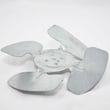
| Warm fridge, frost buildup | Air not circulating across evaporator | Refrigerator evaporator fan blade WP2169142 |
| Drips near filter housing | Filter not seated or cap damaged | Refrigerator water filter cap (black) WP2186494B |
Why it matters
Standing water can damage shelves and drawers, create odors, and lead to recurring ice buildup. Clearing the drain and correcting airflow or sealing issues prevents repeat leaks and helps the refrigerator maintain stable temperatures.
Last updated: February 2026
Why did my bottom freezer stop working?
If your KitchenAid KBLC36FMS02 bottom-mount freezer stopped working, the most common causes are blocked airflow vents, controls set incorrectly, or the refrigerator being in a defrost cycle. Start by checking vent blockage and temperature settings, then confirm the unit has power and is running.
Quick checks we recommend first
- Make sure freezer and refrigerator air vents are not blocked by food packages (blocked vents prevent proper circulation).
- Verify the freezer set point is not set too warm; factory recommended is 0°F (-18°C).
- Give the refrigerator 24 hours after turning it on or changing settings to stabilize.
- Check for a tripped breaker or blown fuse; restore power if needed.
- If the unit is defrosting, wait about 30 minutes and recheck operation.
Temperature settings that matter
The manual lists these typical ranges and targets:
| Item | Normal target | Typical adjustable range |
|---|---|---|
| Freezer temperature | 0°F (-18°C) | -5°F to 6°F |
| Refrigerator temperature | 37°F (3°C) | 34°F to 46°F |
If the freezer is warm, check vents first; then adjust the FREEZER control 1 degree colder and allow time to respond (changing to a colder setting will not cool faster).
When it points to a part problem
If vents are clear, settings are correct, and the refrigerator runs but the freezer still will not hold temperature, these part areas commonly cause “not freezing” symptoms:
- Evaporator fan not moving air (fan motor or fan blade issue)
- Temperature sensing problem (sensor out of range)
- Defrost system issue causing frost buildup and restricted airflow
Model-matched parts on this page that relate to those symptoms include the refrigerator evaporator fan motor W11671461, refrigerator evaporator fan blade WP2169142, and refrigerator temperature sensor WP2188820.
Why it matters
This refrigerator circulates cold air between the freezer and fresh-food sections. When airflow is blocked or the fan/sensing system is not working correctly, the freezer can warm up even though the refrigerator seems to be running.
For control locations and operating details specific to KBLC36FMS02, use the owner's manual.
Last updated: February 2026
How to put shelves in a KitchenAid refrigerator?
On your KitchenAid KBLC36FMS02 bottom-mount built-in refrigerator, we reinstall shelves by seating the rear hooks in the shelf supports first, then lowering the front until the shelf locks in place. This keeps the shelf level, stable, and properly supported.
How to reinstall a standard shelf (glass shelf and frame)
- Remove the shelf (if needed) by tilting the front up, then lifting it out of the supports.
- To reinstall, guide the rear shelf hooks into the shelf supports.
- Tilt the front of the shelf up until the rear hooks drop fully into the supports.
- Lower the front of the shelf.
- Tug gently on the shelf to confirm it is secure and does not rock.
For the exact shelf style and support locations used in this model, follow the steps in the owner's manual.
How to reinstall the crisper drawers and crisper cover
Crisper drawers
- Set the drawer on the slide rails.
- Push the drawer in until it stops.
- Lift the front slightly while supporting the bottom, then slide it fully in.
- Push again until it sits squarely and moves smoothly.
Crisper cover (glass cover over crispers)
- Pull the crisper drawer out about 4 inches.
- Reach under the glass with both hands and lift gently until the back is free.
- Tilt the cover and remove or position it above the side support rails.
- Lower it gently onto the support rails on the side walls.
Important safety and handling tips for glass shelves
Glass shelves and covers are heavy and can break if handled roughly.
- Do not wash cold glass with warm water.
- Avoid bumping the glass on door bins, side walls, or supports.
- Use two hands and keep the shelf level when lifting.
- Set the shelf down on a flat, padded surface if you remove it.
Quick checklist: shelf not sitting right
| What you notice | Most likely cause | What to do |
|---|---|---|
| Shelf rocks or tilts | Rear hooks not fully seated | Lift front, reseat rear hooks, then lower front |
| Shelf will not slide in | Shelf/frame not aligned with supports | Pull out, align both sides, reinstall evenly |
| Drawer binds | Drawer not on both slide rails | Remove drawer, set evenly on rails, push in straight |
Why it matters
Correctly seated shelves and crisper assemblies keep airflow consistent, prevent rattles, and reduce the chance of glass breakage or drawer damage. Proper placement also helps the refrigerator maintain stable temperatures with less door-open time.
Last updated: February 2026
What is the most common problem with KitchenAid refrigerators?
The most common KitchenAid refrigerator problems are cooling issues (fresh food too warm or freezer not cold enough), ice maker problems, and water leaks or frost buildup. On the KBLC36FMS02, these symptoms most often trace back to airflow, fan operation, filtration, or installation details.
Most common symptoms and what they usually point to
- Fridge warm, freezer OK (or vice versa): restricted airflow, fan issue, or a temperature sensing problem
- Noisy operation: evaporator fan blade rubbing ice, worn fan motor, or condenser fan noise
- Ice maker not making ice: ice maker module issue, thermostat issue, or temperature not cold enough
- Water leaking inside: clogged/iced drain path or water filter seating/cap issues
- Frost buildup: door not sealing, frequent door openings, or airflow/defrost-related issues
Quick checks we recommend first (KBLC36FMS02)
- Confirm doors close and seal fully; check for gaps and obstructions.
- Set temperatures and give the unit 24 hours to stabilize.
- Replace the water filter on schedule and make sure it seats correctly.
- Listen for fan operation (evaporator fan in the freezer area; condenser fan near the machine compartment).
- Verify installation basics: water line not kinked and the refrigerator is properly leveled so it is stable.
For model-specific setup and panel/leveling guidance, follow the steps in the installation guide.
Parts that commonly solve these problems
| Symptom | Common part to check/replace | Example part for KBLC36FMS02 |
|---|---|---|
| Warm temps, poor airflow, noise from freezer | Evaporator fan motor or blade | Refrigerator evaporator fan motor W11671461, refrigerator evaporator fan blade WP2169142 |
| Ice maker not producing | Ice maker or thermostat | Refrigerator ice maker WPW10277450, refrigerator ice maker thermostat WP627985 |
| Water taste/flow issues, leaks at filter area | Water filter and cap | Refrigerator filter EDR5RXD1, refrigerator water filter cap (black) WP2186494B |
| Temperature swings | Temperature sensor | Refrigerator temperature sensor WP2188820 |
Why it matters
Cooling, ice production, and leak complaints are usually connected: if airflow is weak or temperatures drift, the ice maker slows down and frost or water can show up where it should not. Fixing the root cause (airflow, fan, filter seating, leveling) prevents repeat failures.
Last updated: February 2026