Owner’s manual
 Error Codes

How to hard reset kenmore washer?
For the Kenmore 11022722101 washer, a “hard reset” is simply removing power long enough to clear a stuck timer or pause; unplug the washer (or switch off the breaker) for 1 minute, then restore power and restart the cycle using the Cycle Control knob as shown in the owner's manual.
Quick hard reset steps (timer-control models)
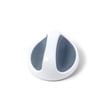
- Push in the Cycle Control knob to stop the washer.
- Turn the knob to OFF.
- Unplug the washer (or turn OFF the breaker).
- Wait 60 seconds.
- Restore power.
- Close the lid, select a cycle, then pull out the Cycle Control knob to start.
If it still will not start, agitate, or spin
These checks fix the most common “looks dead” situations on this model.
- Make sure the lid is fully closed; it will not agitate or spin with the lid open.
- Do not use an extension cord.
- Allow for a normal cycle pause (about 2 minutes) on some cycles.
- Reduce the load size; overloading can cause stopping.
- If it will not drain or spin, confirm the drain hose is not kinked or too high (typical max is 96 in. above the floor).
What “reset” can and cannot fix
| Symptom | Reset helps? | What usually fixes it |
|---|---|---|
| Stuck in a pause or won’t advance | Yes | Power reset; restart cycle |
| Won’t drain | Sometimes | Clear drain path; check pump |
| Won’t spin but motor runs | Sometimes | Drive system inspection |
| No fill at all | Sometimes | Check water supply and inlet screens |
Why it matters
Resetting power clears a stalled mechanical timer state and lets you restart correctly (push knob in to stop, pull out to run). If the washer repeatedly stops, the issue is usually load balance, lid position, draining, or a worn drive component.
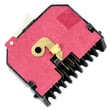
If you suspect a drain problem, the washer drain pump WP3363394 is a common replacement part for this model.
Last updated: February 2026
What is the average lifespan of a Kenmore washer?
A Kenmore washer typically lasts 10 to 15 years with normal household use. For your Kenmore model 11022722101, regular preventive maintenance, correct loading, and addressing small problems early are the biggest factors that help you reach (or exceed) that range; see the owner's manual for care and use guidance.
Typical lifespan and what changes it
Most washers land in the 10 to 15 year range, but real-world life depends on how hard the machine works and how well it is maintained.
Common factors that shorten lifespan
- Frequent overloading (loads should move freely during washing)
- Chronic out-of-balance spinning and vibration
- Poor draining (standing water strains the drain system)
- Using too much detergent or the wrong type for your washer
- Ignoring early symptoms like burning smells, grinding, or slow spin
Habits that extend lifespan
- Use the right cycle and water level for the load size
- Keep loads balanced; mix items and avoid washing single heavy pieces alone
- Clean the tub and wipe down the lid and top after use
- Check fill hoses periodically for bulges or leaks
- Fix small issues early (for example, a minor leak or a new noise)
Signs it may be time to repair vs. replace
If the washer is within the typical lifespan, repairs often make sense when the issue is isolated to a common wear part.
| Symptom | Often points to | Example part for this model |
|---|---|---|
| Won’t drain or drains slowly | Drain pump or drain path restriction | Washer drain pump WP3363394 |
| Agitates poorly or intermittently | Agitator dogs or drive components | Agitator dog 80040 |
| Won’t spin, loud during spin | Clutch, drive block, gearcase wear | Clutch 285785 |
Why it matters
Knowing the typical lifespan helps you decide whether to invest in a repair (like a drain pump, clutch, or motor coupling) or plan for replacement. It also helps prevent secondary damage; for example, poor draining can lead to repeated strain on the pump and drive system.
Last updated: February 2026
How to read Kenmore washer model numbers?
Kenmore washer model numbers are grouped so the first three digits identify the manufacturer, the next set identifies the base design, and the remaining digits show feature or production variations. For model 11022722101, the 110 prefix is the key manufacturer identifier; confirm the full model and serial label under the lid using the owner's manual.
Where to find the model number on this washer
On Kenmore model 11022722101, the model and serial number label is located under the washer lid.
- Lift the lid and look around the rim of the opening
- Write down the full model number and serial number
- Record the purchase date for your records
- Use the full model number when ordering parts like a drain pump or inlet valve
How the number is typically structured
Kenmore model numbers are usually read in three chunks.
| Section | Example from 11022722101 | What it tells you |
|---|---|---|
| Manufacturer prefix | 110 | Who built the washer for Kenmore |
| Base model digits | 22722 | Core platform and major design |
| Variation digits | 101 | Feature set, revision, or production run |
Why it matters for parts and troubleshooting
Using the complete model number prevents mismatches when you are selecting parts and diagrams for your exact washer.
- Ensures the correct fit for mechanical parts (gearcase, clutch, drive block)
- Helps match electrical parts (timer, motor)
- Improves accuracy when diagnosing symptoms like no drain or no fill
Quick tips when ordering parts
- Match the model number exactly: 11022722101
- Compare the part name and part ID before ordering
- Common repairs on this style of Kenmore top-load washer include the washer drain pump WP3363394 and washer inlet valve 285805
Last updated: February 2026
What is the cubic feet capacity of a Kenmore washer model 11022722101?
The exact cubic feet capacity for Kenmore washer model 11022722101 is not listed in the manual excerpts we have for this model. Based on common Kenmore 110-series top-load “super capacity” designs, most units in this family run about 3.2 to 3.5 cu. ft. Use the tub measurement method below to confirm your washer’s true capacity.
How to confirm capacity (most accurate)
We recommend calculating capacity from the wash basket (tub) size.
- Unplug the washer for safety.
- Open the lid and measure the inside diameter of the basket (in inches).
- Measure the depth from the bottom of the basket to the top rim (in inches).
- Convert inches to feet (divide by 12).
- Use the formula below.
Capacity formula
| What to measure | What to do |
|---|---|
| Radius (ft) | (Diameter ÷ 2) ÷ 12 |
| Depth (ft) | Depth ÷ 12 |
| Capacity (cu. ft.) | 3.1416 × radius² × depth |
Why the manual still helps
Even when capacity is not stated, the load examples in the owner's manual help you match load size to the washer’s intended “full-sized load” limits (for example, towels, mixed loads, and heavy work clothes). That prevents overloading, improves cleaning, and reduces out-of-balance spinning.
What capacity affects in real use
- Load size choices: too large can reduce agitation and rinsing.
- Spin performance: overloaded baskets often leave clothes wetter.
- Wear on drive parts: chronic overloading stresses the clutch and drive system.
- Water usage: larger tubs typically need more water for proper turnover.
If your washer struggles with large loads
If you notice weak agitation or poor turnover, common wear items on this model include the agitator dog 80040, which can cause the agitator to slip instead of grabbing and moving clothes.
Last updated: February 2026
How to unclog drain hose on Kenmore washer?
To unclog the drain hose on your Kenmore washer model 11022722101, we recommend disconnecting the hose and clearing the blockage, then reinstalling it with the correct height and an air gap so the washer can drain and spin normally. Use the owner's manual for the correct drain-hose setup details.
Safety first
- Unplug the washer or disconnect power.
- Turn off both water faucets.
- Keep a shallow pan and towels ready for water in the hose.
- If the washer was just running, let the water cool before handling hoses.
Step-by-step: clear the clog
- Pull the washer forward enough to access the back.
- Remove the drain hose from the standpipe or laundry tub.
- If accessible, remove the hose from the washer outlet and drain it into a pan.
- Check for a kink, crushed section, or a sock or lint plug near either end.
- Flush the hose with hot water; for greasy buildup, a hot water and vinegar soak helps loosen residue.
- Reinstall the hose and secure it so it will not slip out during drain and spin.
Reinstall it correctly (prevents repeat clogs)
The drain hose installation matters as much as the cleaning.
- Keep the hose end loose but secure in the standpipe (do not tape or seal it).
- Maintain an air gap around the hose.
- Make sure the standpipe or drain can handle about 17 gal (64 L) per minute.
- Confirm the drain hose is not routed higher than the allowed maximum; many setups must stay at or below 96 in. (244 cm) above the floor.
Quick checks table
| What we check | What “good” looks like | What it prevents |
|---|---|---|
| Standpipe fit | Snug, not sealed | Siphoning, slow drain |
| Hose height | Not above 96 in. | No-drain, no-spin |
| Hose routing | No kinks or crush points | Repeated clogs |
If it still will not drain
- Check for excessive suds (too much detergent can slow draining).
- Make sure the lid is closed; many cycles will not spin with the lid open.
- If the hose is clear but draining is still weak, the drain pump is a common next suspect; see washer drain pump WP3363394.
Why it matters
A partially clogged or incorrectly installed drain hose can stop the washer from draining and spinning, cause the cycle to seem stuck, and increase the chance of leaks or overflow.
Last updated: February 2026