Owner’s manual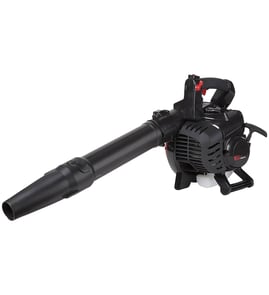






What is the oil mix for a 2 stroke leaf blower?
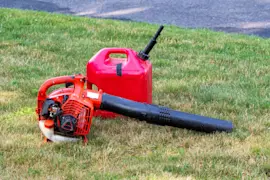
For the Craftsman 316794611 handheld blower, you do not mix oil with gasoline because it uses a 4-cycle engine. Add SAE 30 oil to the crankcase (oil fill plug area) and use fresh, clean unleaded gas in the fuel tank; follow the 316794611 owner's manual for the exact fill procedure.
What to use on this model (316794611)
- Engine type: 4-cycle (separate oil and fuel)
- Oil type: SAE 30 oil
- Crankcase oil capacity: 2.37 fl oz (70 ml)
- Fuel: fresh, clean unleaded gasoline (no oil mixed in)
Quick steps: oil and fuel setup
- Set the blower on a flat, level surface.
- Remove the oil fill plug and add oil to the crankcase (do not overfill).
- Reinstall the oil fill plug and make sure the O-ring is seated.
- Fill the fuel tank with fresh unleaded gasoline.
- If performance is poor, drain old fuel (fuel older than about 30 days is a common cause of issues).
2-stroke mix vs. 4-stroke (why the question comes up)
| Engine type | Do you mix oil in gas? | Where does oil go? |
|---|---|---|
| 2-stroke | Yes (common ratios: 50:1 or 40:1) | Mixed into the fuel tank |
| 4-stroke (this model) | No | Added to the crankcase via oil fill plug |
Why it matters
Mixing oil into the gas on a 4-cycle blower can cause hard starting, heavy smoke, plug fouling, and poor running. Keeping oil and fuel separate helps the engine lubricate correctly and run cleanly.
Last updated: January 2026
How to find Craftsman leaf blower model number?
Your Craftsman leaf blower’s model number is printed on the unit’s model label; for this blower, the operator’s manual identifies it as 316.794611. We use that model number to match the correct parts list, diagrams, and maintenance information for your exact blower. See the 316794611 owner's manual for label location and identification details.
Where to look on the blower
Model labels are typically placed where they stay readable but protected from heat and debris. Check these common spots first:
- On the side of the engine or motor housing
- Near the starter area or recoil cover
- On the rear of the unit near the handle
- Around the blower outlet area (near where the tube locks in)
- Under dirt or residue; wipe the area clean and recheck
What to write down (so parts match)
When you find the label, record the full identifier exactly as shown.
| What to capture | Example | Why it matters |
|---|---|---|
| Model number | 316.794611 | Matches the correct parts breakdown |
| Serial number | Varies | Helps identify production run details |
| Brand | Craftsman | Confirms the correct product family |
If the label is missing or unreadable
We still recommend confirming the model before ordering parts like a spark plug, fuel tank assembly, or nozzle.
- Check your original paperwork or receipt
- Look for a stamped/printed number on the housing near the engine
- Compare your unit’s tube and nozzle style to the diagrams in the 316794611 owner's manual
- If you are replacing ignition-related parts, inspect the spark plug lead wire routing and connectors for a match
Why it matters
Leaf blowers often look similar across model families, but small differences (tube locks, fuel system parts, ignition wiring) can change which parts fit. Using the exact model number helps prevent wrong-part returns and downtime.
Last updated: January 2026
Why does my leaf blower stop when I give it gas?
When your Craftsman 316794611 gas leaf blower dies as you squeeze the throttle, it is usually running too lean under load because fuel flow or airflow is restricted (most often stale fuel, a dirty carburetor circuit, or a plugged air filter). Use the starting and fuel guidance in the 316794611 owner's manual as you work through the checks below.
Quick checks that fix most stalling-on-throttle problems
- Drain old fuel and refill with clean, fresh unleaded fuel (avoid E85; fuel over 10% ethanol can damage small engines).
- Make sure the choke is fully in the RUN position once the engine warms up.
- Press the primer bulb fully and slowly 10 times before starting (a weak prime can act like a fuel restriction).
- Inspect and clean the air intake and filter area; a restricted filter can cause bogging or stalling.
- Check the fuel cap venting; if loosening the cap briefly improves running, the cap may be restricting fuel flow.
Parts that commonly cause stalling when you rev the engine
If the basics above do not help, these model-matched parts are common next steps:
| Symptom when you squeeze throttle | Most likely area | What to do next |
|---|---|---|
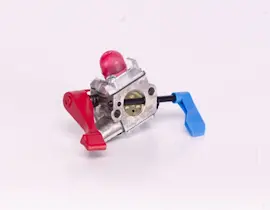
| Starts and idles, then dies on acceleration | Carburetor metering circuits | Inspect for varnish, replace gaskets if disturbed, clean passages |
| Runs better with choke partly on | Lean condition (fuel restriction or air leak) | Check fuel lines/tank, carb gasket surfaces |
| Surges, then stalls | Air leak or inconsistent fuel delivery | Inspect gaskets, tank pickup, cap vent |
Helpful part options for this model:
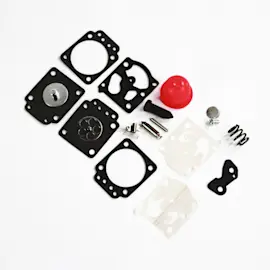
- Leaf blower carburetor gasket 753-05905 (replace if the carburetor has been removed or the gasket is damaged)
- Leaf blower air filter assembly 753-04223 (replace if dirty, oil-soaked, or deteriorated)
- Mtd leaf blower fuel tank assembly 753-05933 (inspect if you suspect a cracked tank, bad pickup, or fuel delivery issue)
Why it matters
Stalling when you give it gas is a warning that the engine is not getting the right fuel-to-air mix at higher RPM. Fixing it early helps prevent hard starting, overheating, and repeated pull-start wear.
Last updated: January 2026