Owner’s manual
 Error Codes


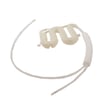
Where is the defrost drain on a GE side-by-side refrigerator?
On the GE GSS23HSHECSS side-by-side refrigerator, the defrost drain is in the freezer compartment on the back interior wall, typically near the bottom center just above where the freezer floor slopes up into the rear wall. Meltwater from defrost flows through this drain to the drain pan underneath.
- Empty the lower freezer area so you can see the back wall clearly.
- Look at the rear wall near the bottom, centered left-to-right.
- Find the small drain opening or trough just above the floor-to-back-wall slope.
- If there is a thin sheet of ice on the freezer floor, the drain is often directly above that area.
- Use a flashlight; the opening can be partially hidden by frost.
A clogged defrost drain can cause water to pool or refreeze on the freezer floor and can lead to dripping into the fresh food section.
- Unplug the refrigerator before working inside the freezer.
- Melt visible ice around the drain area with warm (not boiling) water.
- Flush the drain with small amounts of warm water using a turkey baster or squeeze bottle.
- Clear the drain tube gently with a flexible plastic tube or zip tie (avoid sharp tools that can puncture the drain).
- Confirm the fix by flushing again and listening for water dripping into the drain pan.
| What you notice | What it usually means | What to do |
|---|---|---|
| Water dripping sound during defrost | Normal meltwater reaching the drain pan | No action needed |
| Ice sheet on freezer floor | Drain partially or fully blocked | Clear the drain and flush |
| Water under crisper drawers | Drain backed up and overflowing | Clear drain; check for refreezing |
| Musty odor near freezer | Standing water in drain path | Clean and flush drain |
The defrost drain is the exit path for water created during the automatic defrost cycle. When it blocks, water has nowhere to go, so it refreezes, leaks, or causes odors. Keeping it clear helps protect flooring and prevents recurring ice buildup.
For model-specific diagrams and access notes, use the owner's manual.
Last updated: February 2026
What is the most common problem with a GE refrigerator?
The most common issue we see with GE refrigerators like model GSS23HSHECSS is not cooling correctly (fresh food warm, freezer warming, or temperatures swinging). Many “problem” reports also turn out to be normal operation sounds during defrost or pressure equalization, as described in the owner's manual.
- Not cooling or weak cooling: airflow blockage, dirty condenser area, evaporator fan issue, defrost problem
- Strange noises: sizzling, popping, buzzing, dripping, or gurgling can be normal during defrost and pressure equalization
- Ice maker or dispenser not working: water supply, frozen fill tube, clogged filter, dispenser mechanism issue
- Water leaking or puddles: defrost drain issue, dispenser leaks, ice chute jams
- Door not closing or beeping: door left open, gasket sticking, door alignment
- Confirm controls are not set to OFF and allow 24 hours after changes or after plugging in.
- Make sure doors fully close; a door left open can cause beeping and temperature problems.
- Listen for “defrost cycle” sounds; dripping and sizzling can be normal.
- Check for ice jammed in the chute; clear it with a wooden spoon (not metal).
- If cooling is weak, make sure vents inside are not blocked by food packages.
| Symptom | Common suspect | Example part for GSS23HSHECSS |
|---|---|---|
| Warm temps, erratic temps | Temperature sensing/control feedback | Refrigerator temperature sensor WR55X10025 |
| No water to dispenser/ice maker | Water inlet valve not opening | Refrigerator water valve WR57X33326 |
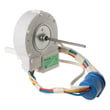
| Poor airflow, warm fresh food section | Evaporator fan not running | Refrigerator evaporator fan motor WR60X10307 |
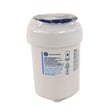
| Slow water flow, bad taste/odor | Clogged water filter | GE refrigerator water filter MWFP |
Cooling complaints often come from airflow and defrost behavior, not just the compressor. Starting with the basic checks above helps you avoid replacing good parts and gets temperatures stable faster.
Last updated: February 2026
Why is my GE side-by-side refrigerator not making ice?
If your GE GSS23HSHECSS side-by-side refrigerator isn’t making ice, the most common causes are the icemaker being switched OFF, the water supply being turned off or restricted, or the freezer not being cold enough. After restoring water and proper temperature, allow 12 to 24 hours for ice production to start. See the owner's manual for icemaker switch location and model-specific checks.
- Confirm the icemaker power switch is set to ON.
- Make sure the household water supply to the refrigerator is on and the supply line is not kinked.
- Verify the freezer is cold enough; the icemaker typically starts filling once it cools to about 15°F.
- Check the ice bin and feeler arm; cubes piled up can shut the icemaker off.
- If cubes are stuck in the icemaker, turn the icemaker off, remove the cubes, then turn it back on.
- Discard the first few batches after restoring water to clear the line.
A newly installed or recently reconnected refrigerator can take 12 to 24 hours to begin making ice. Once running normally, the icemaker can produce about 100 to 130 cubes in 24 hours, depending on freezer temperature, room temperature, and door openings.
| Situation | What you’ll notice | What to do |
|---|---|---|
| New install or water just turned on | No ice yet | Wait 12 to 24 hours |
| Water not connected but icemaker ON | Frequent buzzing | Turn icemaker OFF until water is connected |
| Bin overfilled or cubes jammed | Stops making ice | Level cubes, clear jam, restart |
If the basic checks above look good, these parts are common culprits on side-by-side refrigerators:
- Clogged filter restricting water flow: replace the GE refrigerator water filter MWFP.
- Weak or failed inlet valve not filling the icemaker: test/replace the refrigerator water valve WR57X33326.
Running the icemaker with the water supply turned off can lead to repeated fill attempts and noise; keeping water flow steady and the freezer cold enough prevents valve strain, reduces clogs, and restores consistent ice production.
Last updated: February 2026
Are GE side-by-side refrigerators good?
Yes. GE side-by-side refrigerators like model GSS23HSHECSS are a solid, long-lasting design with strong day-to-day usability: easy access to both fresh food and freezer sections, consistent temperatures, and convenient ice and water dispensing when maintained properly. For feature and care details, use the owner's manual.
A side-by-side is a great fit when you want narrow door swing, frequent freezer access, and built-in dispensing.
Common strengths
- Good organization with adjustable shelves and door bins
- Fast access to frozen foods at eye level
- Ice and water dispenser convenience
- Typically steady cooling when airflow paths stay clear
- Straightforward maintenance (filters, coils, door seals)
Common tradeoffs
- Narrower shelf width for large platters or pizza boxes
- Ice makers can sound louder during harvest cycles
- Performance depends heavily on clean condenser coils and good door sealing
Most “not cooling,” “slow ice,” and “weak water flow” complaints trace back to basic upkeep.
- Replace the water filter on schedule; a clogged filter reduces dispenser flow and can affect ice fill
- Keep doors closing tightly; warm air leaks cause frost and temperature swings
- Avoid blocking vents with food packages
- Clean condenser area periodically to help the compressor run efficiently
- If the dispenser stops after a filter change, purge air from the water line
| Symptom | Likely area | Example part for GSS23HSHECSS |
|---|---|---|
| Slow water flow or bad taste | Water filtration | GE refrigerator water filter MWFP |
| Warm temps or erratic readings | Temperature sensing | GE profile refrigerator temperature sensor WR55X10025 |
| No water to dispenser/ice maker | Water inlet control | Refrigerator water valve WR57X33326 |
A “good” refrigerator is one that holds safe food temperatures, makes ice reliably, and runs efficiently. With routine filter changes and airflow maintenance, GE side-by-side units like GSS23HSHECSS deliver dependable everyday performance.
Last updated: February 2026