Owner’s manual
 Error Codes


Is GE PFCS1NJXCSS considered high end?
Yes. The GE PFCS1NJXCSS is generally considered an upper-tier (premium) GE bottom-mount refrigerator; it typically sits above basic GE models due to its feature set and design, but it is not positioned as GE’s top luxury tier.
How we think about “high end” for this model
“High end” usually means a mix of stronger features, better fit and finish, and higher replacement-part costs (compressor, inverter, sensors). For PFCS1NJXCSS, the parts and systems used align with a premium, feature-forward refrigerator.
Quick ways to tell if your PFCS1NJXCSS is in the premium tier
- It uses multiple electronic controls and sensors to manage temperatures.
- It has a filtration system designed for taste and odor reduction.
- It has higher-cost sealed-system and control components compared with entry-level models.
- It supports add-ons and serviceable assemblies (fans, valves, dampers) typical of premium designs.
- It benefits from precise setup and maintenance steps outlined in the owner's manual.
Parts on this model that commonly signal a “premium” build
These are examples of higher-feature components found on PFCS1NJXCSS:
| System area | Example part on this model | What it does |
|---|---|---|
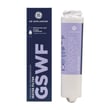
| Water filtration | GE smartwater refrigerator water filter GSWF | Improves water quality for dispensing and ice |
| Water delivery | Refrigerator water valve WR57X33326 | Controls water flow to dispenser and ice maker |
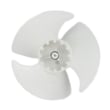
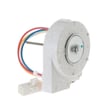
| Cooling airflow | Rca refrigerator evaporator fan motor WR60X10185 | Circulates cold air through compartments |
| Temperature feedback | Temperature sensor WR55X10025 | Helps regulate temperatures accurately |
Why it matters
If you treat PFCS1NJXCSS as a premium refrigerator, you will get better results by keeping airflow paths clear, maintaining the water system (filter changes, proper water pressure), and using model-correct replacement parts when troubleshooting cooling, ice maker, or dispenser issues.
Last updated: February 2026
How to remove bottom grille on GE refrigerator?
On the GE PFCS1NJXCSS bottom-mount refrigerator, we remove the bottom (base) grille by taking out the two Phillips-head screws, then pulling the grille off. Reinstall it by positioning the grille and reinstalling the same two screws (do not overtighten). See the owner's manual for the exact steps and illustrations.
Steps to remove the bottom grille (base grille)
- Unplug the refrigerator (recommended anytime you are working near wiring or moving parts).
- Open the freezer drawer for better access to the front lower area.
- Locate the two Phillips-head screws securing the base grille.
- Remove both screws and set them aside.
- Pull the base grille forward and off.
Reinstalling the grille
- Align the grille with the front opening and tabs.
- Push it into place so it sits flush.
- Reinstall the two Phillips-head screws.
What you can do while the grille is off
Removing the grille is commonly done to access leveling legs and clean the front lower area.
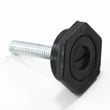
- Adjust leveling legs (clockwise raises, counterclockwise lowers)
- Vacuum dust from the front kick area for better airflow
- Check for water drips or debris near the floor
Quick reference table
| Task | Tool | Fasteners to remove |
|---|---|---|
| Remove base grille | Phillips screwdriver | 2 Phillips-head screws |
| Level refrigerator | Adjustable wrench or pliers (varies) | None (use leveling legs) |
Why it matters
A properly installed base grille helps protect components at the bottom front of the refrigerator and makes it easier to keep airflow areas clean. It also gives you access to the leveling legs so the refrigerator does not wobble.
Last updated: February 2026
What is the most common problem with GE PFCS1NJXCSS refrigerators?
The most common issues we see with the GE PFCS1NJXCSS bottom-mount refrigerator involve the ice maker and water system (no ice, slow dispensing, leaks) and temperature complaints (too warm or inconsistent cooling). These problems are often tied to airflow, sensors, or water-supply components and are usually diagnosable with basic checks.
Most common symptoms and what they usually point to
- Ice maker not making ice or small/hollow cubes: restricted water supply, filter restriction, or air in the line
- Water dispenser slow or stops: clogged filter, trapped air, frozen reservoir, or supply issue
- Refrigerator too warm: door left open, heavy loading, controls set too warm, or airflow restriction
- Long run times: normal after first plug-in, hot weather, frequent door openings, or TurboCool use
- Intermittent cooling: temperature sensing or fan-related issues
Quick checks we recommend first (no parts yet)
- Confirm doors fully close and nothing is holding them open.
- Verify temperature controls are set correctly; adjust one step at a time.
- If the unit was just installed or recently unplugged, allow 24 hours to stabilize.
- If water tastes stale or flow is weak after sitting, dispense water until the system refreshes.
- If the dispenser sputters, press and hold the dispenser for at least 2 minutes to purge air.
Parts that commonly solve these problems on this model
If the quick checks do not fix it, these model-matched parts are common culprits:
| Symptom | Likely part to check | What it affects |
|---|---|---|
| Warm temps, erratic temps | Temperature sensor WR55X10025 | Temperature feedback to controls |
| No water or weak water, no ice fill | Refrigerator water valve WR57X33326 | Water flow to dispenser and ice maker |
| Warm fridge but freezer seems closer to normal, noisy | Rca refrigerator evaporator fan motor WR60X10185 | Cold air circulation |
| Frost buildup, warming over time | Refrigerator defrost bi-metal thermostat WR50X10069 | Defrost system operation |
| Bad taste/odor, slow flow | GE smartwater refrigerator water filter GSWF | Filtration and flow restriction |
Why it matters
Ice maker and water issues can look like “major” failures, but they often come from a simple restriction (filter, air in the line) or a single component (water valve). Cooling complaints are frequently caused by airflow or sensing problems, which can prevent the refrigerator from holding steady temperatures.
Use the manual for model-specific steps
For PFCS1NJXCSS, we follow the water-line connection and dispenser troubleshooting steps in the owner's manual, including guidance on purging air, filter/bypass use, and water-line setup.
Last updated: February 2026