Owner’s manual
 Error Codes



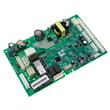
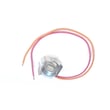
How do I tell which water filter my fridge needs?
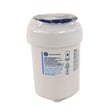
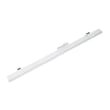
Your GE GFE24JSKFFSS bottom-mount refrigerator uses an MWF-style water filter cartridge; the compatible replacement listed for this model is refrigerator water filter MWFP. You can confirm by checking the label on the installed cartridge and the filter housing location shown in the GFE24JSKFFSS owner’s manual.
Fast ways to confirm the correct filter
- Read the part ID printed on the current filter (often visible after you remove it).
- Check the filter housing in the fresh food section; on this model it is in the back upper right corner.
- Match your model number (GFE24JSKFFSS) to the filter listing to avoid look-alike cartridges.
- If dispenser flow slows or ice production drops, the filter is due even if the light has not turned red.
- If your refrigerator includes a bypass plug, install it briefly to compare water flow; normal flow with the bypass points to a restricted filter.
What to buy for GFE24JSKFFSS
| Item | What it fits | Part to use |
|---|---|---|
| Water filter cartridge | GE MWF-style system used in this model | MWFP |
When to replace the filter
GE’s standard replacement interval for this style is every 6 months or about 300 gallons, whichever comes first. Replace sooner if performance drops.
- Replace at 6 months for typical use
- Replace earlier for heavy water dispensing, poor water quality, or slow flow
- Replace when the indicator turns red (if equipped), even if you have not tracked gallons
Why it matters
The right filter keeps water tasting clean and helps maintain normal dispenser flow and ice maker fill. An overdue or restricted filter commonly causes slow dispensing and smaller or hollow ice cubes.
Last updated: February 2026
How much does it cost to replace a GE refrigerator fan?
For the GE GFE24JSKFFSS refrigerator, replacing a fan typically runs about $125 to $300 for the part, and about $250 to $550 total with labor, depending on whether it is the evaporator fan (inside) or condenser fan (near the compressor). Use the GFE24JSKFFSS owner’s manual to confirm fan locations and access steps.
What changes the price the most
- Which fan failed: evaporator fan vs. condenser fan
- Service type: DIY vs. professional repair
- Access difficulty: ice maker compartment, rear cover, or tight cabinetry
- Related parts needed: fan blade, harness, or control issue causing the symptom
- Noise vs. no-cool symptoms: no-cool diagnostics often add time
Typical cost ranges (parts and total repair)
| Fan type | Common symptoms | Typical part cost | Typical total cost (parts + labor) |
|---|---|---|---|
| Evaporator fan (fresh food/freezer airflow) | Warm fridge, weak airflow, loud buzzing inside | $125 to $250 | $250 to $550 |
| Condenser fan (compressor area cooling) | Hot cabinet sides, compressor runs a lot, noise from back | $125 to $300 | $300 to $600 |
Model-relevant parts we commonly see involved
If your issue is airflow or a loud fan noise inside the cabinet, these model-matched parts are often part of the fix:
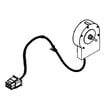
- Refrigerator evaporator fan motor WR60X32614 (motor that drives airflow across the evaporator)
- Refrigerator evaporator fan blade WR60X30922 (damaged blades can cause vibration and noise)
- GE profile refrigerator temperature sensor WR55X10025 (a bad sensor can cause incorrect fan operation)
Quick checks before you buy a fan
- Listen for where the noise comes from: inside the freezer/fresh food area (evaporator) vs. behind the unit (condenser).
- Check for ice buildup: heavy frost can hit the fan and mimic a bad motor.
- Inspect the blade: cracks or rubbing marks point to a blade or mounting issue.
- Confirm the refrigerator is level and doors seal: poor sealing can create frost and fan noise.
Why it matters
A failing refrigerator fan can cause temperature swings, food spoilage, and compressor overwork. Catching it early often prevents secondary problems like frost blockage or extended run times.
Last updated: February 2026
How often should a GE refrigerator water filter be replaced?
For the GE GFE24JSKFFSS refrigerator, we replace the water filter every 6 months, or sooner if water flow to the dispenser or ice maker slows. If your model has a filter indicator light, replace the filter when the light turns red.
Recommended replacement schedule
- Replace the filter every 6 months for consistent taste and flow.
- Replace sooner if you notice:
- Slower water dispensing
- Smaller or hollow ice cubes
- Reduced ice production
- A blinking or red filter indicator (if equipped)
- After installing a new filter, reset the filter reminder (if your dispenser has a reset pad).
Which filter fits this model?
This model uses the GE MWF-style cartridge; the matching replacement on this page is the refrigerator water filter MWFP. For location, removal, and reset steps, follow the GFE24JSKFFSS owner’s manual.
| What you see | What it usually means | What we do |
|---|---|---|
| Indicator turns red | Time-based reminder reached | Replace filter now |
| Water flow slows | Filter is restricted or water supply issue | Replace filter first, then check supply |
| Ice production drops | Often reduced water flow through filter | Replace filter and purge air |
Why it matters
A clogged filter can reduce water pressure to the dispenser and ice maker, which affects ice output and can make dispensing sputter after changes. Replacing on schedule keeps filtration performance steady and helps prevent nuisance dispenser issues.
Quick tips after you replace the filter
- Dispense water for a few minutes to clear air and carbon fines.
- Expect brief spurting right after installation; it clears as air purges.
- If you do not have a replacement filter immediately, use the filter bypass plug so the dispenser and ice maker can operate (if your unit includes one).
Last updated: February 2026
How to remove bottom grille on GE refrigerator?
On the GE GFE24JSKFFSS bottom-mount refrigerator, the bottom grille (base grille) typically comes off by removing any retaining screws (if present) and then pulling the grille straight out to release the locking tabs. Reinstall by lining it up and sliding it back into place.
Steps to remove the bottom grille
- Unplug the refrigerator or switch it off at the control (recommended before working near wiring and fans); see the safety and access notes in the GFE24JSKFFSS owner’s manual.
- Look along the top edge or ends of the grille for Phillips-head screws.
- If screws are present, remove them and set them aside.
- Grip the grille at both ends and pull straight outward (not upward) to pop the tabs free.
- If it feels stuck, wiggle gently side-to-side while pulling; avoid bending the grille.
What to check if it will not come off
- Confirm all screws are removed (some models use 2 screws).
- Check for hidden clips near the corners; pull from the ends first.
- Make sure the refrigerator is not sitting too low; slightly raising the front leveling legs can create clearance.
- If the grille is catching on the floor, pull the refrigerator straight out a few inches (do not roll over the power cord or water line).
- If the grille is cracked or warped, replace it rather than forcing it.
Reinstall tips
- Align the grille tabs with the slots in the cabinet frame.
- Push or slide the grille in until it sits flush.
- Reinstall the screws (if used) and snug them; do not overtighten.
Quick reference
| Task | What you do | Tool |
|---|---|---|
| Remove grille screws (if equipped) | Back out retaining screws | Phillips screwdriver |
| Release grille tabs | Pull straight out from both ends | Hands |
| Reinstall | Align tabs, slide/push in, reinstall screws | Phillips screwdriver |
Why it matters
Removing the bottom grille gives access for basic cleaning and inspection around the lower front of the refrigerator, which helps airflow and can prevent avoidable cooling and noise issues.
Last updated: February 2026
What is the lifespan of a GE XWFE filter?
For a GE refrigerator like model GFE24JSKFFSS, the water filter replacement interval is every 6 months, or sooner if water flow to the dispenser or ice maker drops or the filter light turns red. Use the steps and reset instructions in the GFE24JSKFFSS owner's manual.
How to know it is time to replace
Replace the cartridge on schedule and also watch for performance changes:
- 6 months of normal use (standard interval)
- Dispenser flow slows or starts sputtering
- Ice maker fills slowly or makes smaller cubes
- Filter indicator starts blinking or turns red (if equipped)
- Water taste or odor changes
Which filter fits this refrigerator
On our parts list for GFE24JSKFFSS, the listed replacement water filter is:
- GE refrigerator water filter MWFP (part number MWFP)
If you are shopping by “XWFE”, match by fit and compatibility for your exact model; the correct fit for this refrigerator is the MWFP cartridge.
Quick guide: replacement triggers
| Trigger | What you notice | Action |
|---|---|---|
| Time | 6 months since last change | Replace the filter cartridge |
| Indicator | Light blinking or red | Replace, then reset the indicator |
| Flow | Weak dispensing or slow ice | Replace and flush water lines |
Why it matters
A clogged refrigerator water filter restricts water flow, which reduces dispenser performance and can affect ice production. Replacing the cartridge on time keeps filtration and flow consistent.
Last updated: February 2026
What is the most common problem with a GE refrigerator?
The most common problem we see with GE refrigerators like model GFE24JSKFFSS is inadequate cooling (fresh food too warm, freezer not holding temperature). The most frequent causes are restricted airflow from dirty condenser coils, a failing evaporator fan motor, or a defrost system issue that lets frost choke off airflow.
Quick checks we recommend first
- Confirm the temperature settings and give the unit 24 hours to stabilize after any change.
- Make sure air vents inside the refrigerator and freezer are not blocked by food packages.
- Clean the condenser coils and the area around the condenser fan (dust buildup is a top cause of warm temps).
- Listen for the evaporator fan; it should run when the compressor is running (door switch closed).
- Check for heavy frost on the freezer back wall (points to a defrost problem).
- Verify the doors seal tightly all the way around.
Common causes and what they look like
| Symptom | Most likely area | What to check next |
|---|---|---|
| Fresh food warm, freezer OK | Airflow issue | Blocked vents, evaporator fan noise, frost buildup |
| Both sections warm | Heat removal or compressor start | Dirty coils, condenser fan, start components |
| Freezer cold, ice clumps, weak airflow | Defrost system | Frost pattern, defrost heater/thermostat |
| Temps swing up and down | Sensor/control issue | Temperature sensor readings, control behavior |
Parts that often solve cooling complaints
If your troubleshooting points to a failed component, these model-compatible parts are common fixes:
- Refrigerator evaporator fan motor WR60X32614
- Refrigerator defrost heater WR51X10108
- Refrigerator defrost bi-metal thermostat WR50X10069
- GE profile refrigerator temperature sensor WR55X10025
Why it matters
Poor cooling is more than an inconvenience; it shortens food life and can lead to ice buildup that strains the sealed system. Catching airflow and defrost problems early usually prevents bigger, more expensive repairs.
Model-specific tip
For operating and care guidance specific to GFE24JSKFFSS, including door alignment and other adjustments, follow the steps in the GFE24JSKFFSS owner’s manual.
Last updated: February 2026
Why is my GE fridge leaking water from the bottom?
Water leaking from the bottom of your GE GFE24JSKFFSS refrigerator is usually caused by a defrost drain problem (water misses the drain pan and ends up on the floor) or a water supply leak to the ice maker or dispenser. We use the troubleshooting steps in the GFE24JSKFFSS owner’s manual to narrow it down fast.
Quick checks (5 to 10 minutes)
- Look for water under the front center: often points to a defrost drain or drain pan overflow.
- Look for water under the left or right front corner: often points to the water line, filter, or inlet valve.
- Check if the leak happens only after dispensing water or making ice.
- Inspect the water filter seating and housing for drips; a loose filter can leak.
- Pull the refrigerator out slightly and look for wet tubing or fittings behind the unit.
Most common causes and what to do
| What you notice | Most likely cause | What to do next |
|---|---|---|
| Water appears even when you do not use the dispenser | Defrost drain restricted or misrouted into the pan | Clear the drain path and confirm the drain tube aims into the pan |
| Drips after using the dispenser | Air in the water line | Dispense water continuously for at least 5 minutes to purge air (per manual guidance) |
| Water near the back, tubing, or fittings | Supply line or connection leak | Tighten fittings, replace damaged tubing, verify cold-water connection |
| Slow ice or no water plus leaking | Clogged filter or valve issue | Replace the filter and check the inlet valve for seepage |
Parts that commonly fix bottom leaks on this model
- If you see dripping at the filter area, replace the GE refrigerator water filter MWFP.
- If you see leaking at the rear water connection or valve body, suspect the refrigerator water inlet valve WR57X25054.
Why it matters
Bottom leaks can damage flooring and can also lead to ice buildup or cooling problems if the defrost water cannot drain correctly. Fixing the source early prevents repeat puddles and protects the sealed system area.
Last updated: February 2026