Owner’s manual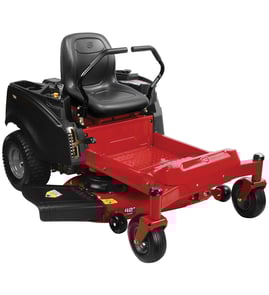



What is the advantage of a rear engine mower?
A rear-engine riding mower like Husqvarna model 966659301 puts the engine weight over the drive wheels, which improves traction on flat lawns and gentle slopes while keeping the front end lighter for easier steering. It also typically gives you a tighter turning feel and a more compact mower layout.
Key advantages you’ll notice
- Better traction: More weight on the rear tires helps reduce wheel slip when starting or climbing mild grades.
- Easier steering: A lighter front end can feel more responsive around trees and landscaping.
- Compact footprint: Rear-engine designs are often shorter overall, which helps with storage in many garages or sheds.
- Good visibility: With the engine behind you, it’s usually easier to see the cutting path in front.
- Simpler drivetrain layout: Many rear-engine riders use straightforward belt and pulley drive systems.
Rear-engine vs. front-engine riders (quick comparison)
| Feature | Rear-engine riding mower | Front-engine lawn tractor |
|---|---|---|
| Traction | Strong on flat lawns and mild slopes | Often strong, depends on tire/weighting |
| Steering feel | Light, nimble | More planted front end |
| Storage | Typically more compact | Often longer overall |
| Best use | Smaller to mid-size yards with obstacles | Larger yards, more attachments (varies) |
Why it matters
If your yard has lots of obstacles (trees, beds, playsets) and you want a rider that feels easy to maneuver, a rear-engine mower is a practical choice. The traction benefit also helps reduce frustration when the grass is slightly damp or the ground is a bit soft.
Maintenance tip that supports those advantages
Traction and smooth drive depend on the condition and tension of the ground drive belt. If the mower hesitates, slips, or surges, inspect the belt for glazing, cracking, or stretching and replace it if needed. For this model, the lawn tractor ground drive belt, 1/2 x 56-5/16-in 539110411 is a common wear item.
For operating guidance and routine maintenance intervals (belt checks, deck inspection, safety steps), follow the owner's manual.
Last updated: February 2026
Why does my Husqvarna mower leave a strip of grass?
Your Husqvarna 966659301 riding mower usually leaves a strip of uncut grass when the deck is not level side-to-side, the blades are dull or bent, or your mowing pattern has too little overlap. Correcting deck setup and blade condition typically eliminates the strip.
Quick checks that fix most striping
- Set tire pressures evenly (unequal pressure makes the deck cut unevenly).
- Level the mower deck side-to-side, then verify front-to-back pitch.
- Inspect blades for dull edges, bends, or heavy nicks; sharpen or replace as needed.
- Slow down in thick or wet grass so the blades can lift and cut cleanly.
- Increase overlap between passes (aim for 2 to 4 inches of overlap).
Deck and blade causes (what to look for)
| Symptom | Most likely cause | What to do |
|---|---|---|
| Strip always in the same spot | Deck out of level | Level the deck and re-test |
| Ragged strip, torn tips | Dull blade edge | Sharpen or replace blades |
| Strip appears after hitting debris | Bent blade or spindle issue | Inspect blades and check for wobble |
| Strip only in tall grass | Ground speed too fast | Reduce speed, mow twice if needed |
When the problem is belt or pulley related
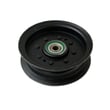
If the blades slow down under load, the deck belt drive system can be slipping. Check for glazing, cracking, or looseness, and inspect idler pulleys for rough bearings or wobble. On this model, common wear points include the Husqvarna lawn tractor deck idler pulley 532196106 and the Husqvarna lawn mower idler pulley, left-hand stationary 532196104.
Why it matters
Strips are more than cosmetic; they signal uneven cut quality that can stress the grass and force extra passes, which increases mowing time and wear on the deck, belt, and spindle components.
Model-specific tip
Use the deck leveling and adjustment procedure in the owner's manual for the 966659301 so your measurements and adjustment points match your exact deck configuration.
Last updated: February 2026
Is 500 hours a lot for a Husqvarna riding mower?
Yes. For a residential Husqvarna riding mower like model 966659301, 500 hours is a lot; it usually means the mower is entering the stage where wear items and deck-drive components commonly need attention, even if the engine still runs strong. For maintenance intervals and checks, use the owner's manual.
What 500 hours typically means
At around 500 hours, we expect more frequent service needs in these areas:
- Belts: glazing, cracking, stretching, or slipping under load
- Deck idlers and pulleys: noisy bearings, wobble, or poor belt tracking
- Spindles and blade drive: vibration, uneven cut, or rumbling
- Steering and chassis hardware: looseness, play, or squeaks
- Electrical: intermittent no-starts from worn switches, connections, or harness issues
Quick inspection checklist (15 minutes)
Before you buy, or before you plan a season of mowing, we recommend:
- Check for belt dust around pulleys and under the deck
- Spin idler pulleys by hand; listen for grinding or feel for roughness
- Inspect the deck for cracks, bends, and rust-through
- Verify the blade engagement feels consistent (no squeal, no delayed engagement)
- Look for oil seepage and excessive engine vibration at idle
Parts that often come up at this hour range
If you are refreshing the deck drive on the 966659301, these are common wear-type parts we see replaced:
| Symptom | Commonly involved part | Example from this model’s parts list |
|---|---|---|
| Squealing, belt jumping, uneven cut | Idler pulley | Husqvarna lawn tractor deck idler pulley 532196106 |
| Belt won’t maintain tension | Idler spring | Husqvarna lawn tractor blade idler spring 532196105 |
| Mower won’t move well, slipping drive | Ground drive belt | Lawn tractor ground drive belt, 1/2 x 56-5/16-in 539110411 |
Why it matters
Hour count is a better “wear gauge” than model year. At 500 hours, the mower’s value depends heavily on maintenance history because replacing belts, pulleys, and bearings restores cut quality and reliability.
Last updated: February 2026
Which lawn tractor has the tightest turn radius?
We match parts and manuals by model, so for your Husqvarna 966659301 rear-engine riding mower we focus on what your specific machine is designed to do. Turn radius varies widely by steering geometry and front-axle design; in general, zero-turn mowers have the tightest turning capability, while rear-engine riders and lawn tractors typically need a wider arc. For model-specific turning specs, use the owner's manual.
What to look for when comparing turn radius
When you compare “tightest turn,” make sure you are comparing the same mower type and measurement method.
- Mower type: zero-turn vs lawn tractor vs rear-engine rider
- Steering system: standard steering vs tight-turn steering linkages
- Tire size and front axle design: affects how far the wheels can pivot
- Deck size: wider decks can limit how close you can cut around obstacles
- Terrain: slopes and soft ground can force wider turns to avoid turf damage
Typical turning capability by mower type
These ranges help set expectations when shopping or comparing models.
| Mower type | Typical turning behavior | Best use case |
|---|---|---|
| Zero-turn riding mower | Tightest turns; can pivot very sharply | Trees, landscaping, tight yards |
| Lawn tractor | Moderate turn radius | Mixed mowing and towing |
| Rear-engine riding mower | Wider turns than zero-turn; varies by model | Smaller lawns, lighter duty |
Why it matters
A tighter turn radius reduces trimming time around trees, beds, and fences, but it can also increase the chance of scuffing turf if you turn sharply on delicate grass. Matching the mower type to your yard layout saves time and wear on tires, belts, and steering components.
If your mower feels like it turns poorly
If your Husqvarna 966659301 suddenly needs more space to turn than it used to, check these common causes:
- Low tire pressure or mismatched tire pressures
- Loose steering hardware (nuts, bolts, washers)
- Worn steering damper or linkage wear
- Binding in front wheel bearings
- Deck interference after a repair or adjustment
Last updated: February 2026