Installation guide
 Owner’s manual
 Error Codes


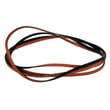

What is the life expectancy of a Whirlpool dryer?
Most Whirlpool dryers, including the Whirlpool WGD87HEDW0 gas dryer, last 10 to 13 years with normal household use. With consistent airflow and lint maintenance, many reach the upper end of that range; heavy use and restricted venting shorten lifespan.
What affects dryer lifespan the most
- Vent restriction (long runs, crushed duct, clogged hood) that makes the dryer run hotter and longer
- Lint buildup in the lint screen housing, blower area, and exhaust duct
- Overloading that strains the drum support system and drive components
- Heat system wear (igniter, radiant sensor, gas valve coils) from frequent cycling
- Moisture sensor issues that cause overdrying and extra run time
Maintenance that adds years (WGD87HEDW0)
We recommend following the care steps in the WGD87HEDW0 owner's manual. Key habits:
- Clean the lint screen before or after each load
- Keep the area around the exhaust outlet free of lint and dust
- Have the interior cabinet and venting cleaned periodically by qualified service personnel
- Use cycles appropriately (avoid unnecessary high heat)
- Confirm strong airflow at the outside vent while the dryer is running
Common “wear” parts vs. what they usually cause
| Symptom | Often related to | Example part for this model |
|---|---|---|
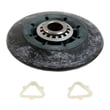
| Squealing, rumbling, thumping | Drum support wear | Dryer drum support roller WPW10314173 |
| Long dry times, weak airflow | Venting or blower issues | Dryer blower wheel (inspect for lint and damage) |
| No heat or intermittent heat | Gas ignition components | Igniter, radiant sensor, gas valve coil kit |
Why it matters
A dryer that takes longer to dry runs hotter and longer per load; that accelerates wear on the motor, drum support rollers, and gas heat components. Good airflow and lint control are the fastest way to protect performance and extend service life.
Last updated: February 2026
Where is my dryer part number?
Your Whirlpool gas dryer model WGD87HEDW0 does not have one single “dryer part number.” Each replacement part has its own part number, and the fastest way to match the right one is to start with the model/serial rating plate (typically in the door opening) and then use the parts diagram for your model.
Where to look on the dryer
Check these common locations first (power off and dryer cool):
- Door opening/door well: look for the model/serial rating plate (often on the frame just inside the door)
- Behind the door edge or inner front panel area
- Rear panel area (less common for the main rating plate)
- Installation paperwork: model number is often printed there
For model-specific identification details and safety notes, use the WGD87HEDW0 installation guide.
How to use the number you find
Once you have the model number and (if needed) the serial number, use them to confirm the exact part that fits your dryer.
- Use WGD87HEDW0 to pull the correct parts list and diagrams
- Match the part name and part ID/part number to what you are replacing
- If multiple versions appear, use the serial number break (when shown) to pick the correct one
- Compare your old part visually (mounting holes, connectors, shape)
Example: what a “part number” looks like
Here is an example of a real replacement part listing format for this model:
| What you see | Example for this model | What it means |
|---|---|---|
| Part name | Dryer drum support roller | The component description |
| Part ID | WPW10314173 | Sears PartsDirect identifier |
| Manufacturer part number | W10314171 | Whirlpool part number |
If you are replacing a worn roller (squealing, thumping, drum drag), the dryer drum support roller WPW10314173 is one common wear item for WGD87HEDW0.
Why it matters
Using the correct model number and the correct part number prevents ordering a look-alike part that does not fit, reduces repeat repairs, and helps your dryer tumble and heat properly.
Last updated: February 2026
What are the common problems with Whirlpool dryers?
Common Whirlpool gas dryer problems (including model WGD87HEDW0) are: the dryer will not run, the dryer will not heat, long dry times, unusual noises, and sensor or control issues. Many of these trace back to airflow restrictions, power supply problems, or normal wear parts.
Most common symptoms and what usually causes them
- Dryer will not run: door not fully closed, START/PAUSE not pressed long enough, blown fuse or tripped breaker
- Dryer will not heat: gas supply valve closed, power supply issue, failed ignition or flame-sensing components
- Drying takes too long: lint screen clogged, vent or outside hood clogged, vent too long or too many elbows, wrong vent diameter
- Rattling, thumping, squealing: small item in drum area, dryer sat unused, worn rollers or idler components
- Automatic cycles not drying well: dryer not level so clothes do not contact moisture sensors consistently
Quick checks we recommend first (WGD87HEDW0)
- Clean the lint screen before every load.
- Check airflow at the outside exhaust hood; you should feel a strong, steady flow.
- Confirm you are using 4-inch venting and that the run is not excessively long or full of sharp turns.
- Verify the dryer is level (important for moisture-sensing cycles).
- For “won’t run” complaints, check the door closure and the home fuse/breaker.
Parts that commonly fix these problems
| Symptom | Common wear part | Example part for WGD87HEDW0 |
|---|---|---|
| Squealing, rumbling, thumping | Drum support rollers and related hardware | Dryer drum support roller WPW10314173 |
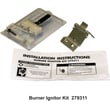
| No heat or heat cuts out | Ignition and burner sensing parts | Igniter 279311 or dryer radiant sensor WP338906 |
| Long dry times, weak airflow noise | Blower wheel or seal issues | Dryer blower wheel WP697772 |
Why it matters
Most “dryer problems” are really airflow and heat control problems. Good venting helps the WGD87HEDW0 dry faster, prevents overheating shutdowns, and reduces wear on components like the thermistor and thermal cut-off.
Helpful reference
For model-specific operating tips, cycle guidance, and troubleshooting steps, use the WGD87HEDW0 owner's manual.
Last updated: February 2026
How much to replace a Whirlpool dryer motor?
For a Whirlpool WGD87HEDW0 gas dryer, replacing the drive motor typically runs about $250 to $650 total (parts plus labor). If you do it yourself, the motor is usually about $150 to $300, and the rest of the cost is labor, diagnostics, and any related wear parts.
What you’re paying for
Motor replacement cost usually breaks down like this:
- Motor part (the biggest cost)
- Labor time (disassembly, belt removal, blower housing access, reassembly)
- Service call/diagnostic fee (often applied toward the repair)
- Related wear parts (belt, idler, rollers) if they’re noisy or worn
Typical cost ranges (parts vs. labor)
| Scenario | Typical cost | Notes |
|---|---|---|
| DIY motor only | $150 to $300 | Best value if you’re comfortable with teardown and wiring |
| Pro install (motor + labor) | $250 to $650 | Includes labor and usually a diagnostic fee |
| Motor plus “while you’re in there” kit | $300 to $750 | Adds common wear items to prevent repeat teardown |
Smart “while you’re in there” parts to consider
If the dryer is already apart, we often recommend addressing common noise and drag issues at the same time:
- Dryer motor assembly W11511154 (the drive motor for this model)
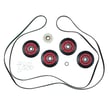
- Dryer repair kit 4392067 (commonly includes belt, rollers, and idler components)
- Dryer drum support roller WPW10314173 (a frequent squeal/thump source)
- Dryer blower wheel WP697772 (helps if you have rumbling or airflow-related noise)
Why it matters
A weak or failing motor can cause no-start, intermittent stopping, slow drum rotation, or overheating from poor airflow. The manual also emphasizes routine lint and vent maintenance because restricted airflow can increase heat stress on components and lead to more service issues over time; see the WGD87HEDW0 owner’s manual.
Last updated: February 2026