


What is the difference between a front engine and rear engine riding mower?
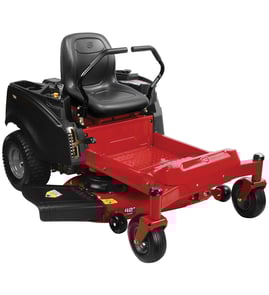
A front-engine riding mower puts the engine under the hood in front of the driver, while a rear-engine riding mower (like Craftsman model 1318051) places the engine behind the seat. Rear-engine designs are typically more compact and maneuverable; front-engine designs typically handle heavier work and attachments better.
Key differences that affect how you mow
- Weight and traction: Front-engine mowers carry more weight over the front axle; rear-engine mowers carry more weight over the drive wheels for steady traction on flat lawns.
- Turning and maneuvering: Rear-engine mowers usually have a tighter feel around trees and landscaping.
- Deck size and capacity: Front-engine tractors commonly support wider decks and more robust frames.
- Attachments: Front-engine tractors are more likely to support baggers, carts, and seasonal attachments.
- Service access: Front-engine layouts often make engine service more straightforward; rear-engine layouts can make belt and transaxle access more central.
Quick comparison
| Feature | Front-engine riding mower (lawn tractor) | Rear-engine riding mower (RER) |
|---|---|---|
| Best for | Larger yards, heavier towing, more attachments | Smaller to mid-size yards, tighter spaces |
| Typical deck range | Often wider | Often narrower and compact |
| Handling | Stable at higher mowing speeds | Nimble, easy to steer around obstacles |
| Storage footprint | Larger | Smaller |
What we recommend for Craftsman 1318051 owners
- Use a rear-engine mower when your priority is maneuverability and compact storage.
- Choose a front-engine tractor when you need more towing, more attachment options, or a wider cutting path.
- If you are comparing parts or doing maintenance, match parts by the exact model number and hardware style; small fasteners matter on mower linkages and deck assemblies.
Why it matters
Engine placement changes the mower’s balance, turning behavior, and what the chassis can support. That directly affects cut consistency, traction on your lawn, and whether the mower is built for simple mowing or for multi-season yard work.
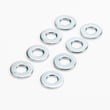
For common hardware used across mower assemblies, see parts like the washer 532121749 when you are replacing worn fasteners during deck or linkage service.
Last updated: January 2026
What is the flap on the back of a lawn mower for?
The rear flap on a lawn mower is a safety and control shield: it helps keep grass, sticks, and small debris from being thrown toward the operator, and it helps guide clippings downward for cleaner discharge. On Craftsman model 1318051, it also helps reduce blowback when mowing.
What the rear flap does (and what it does not do)
- Helps block flying debris from the discharge area
- Directs clippings down toward the ground to reduce mess
- Helps limit dust and grass blowback toward your legs
- Provides a safer opening when you are not using a bagger or chute
- Does not replace eye protection or safe mowing practices
Common flap styles you may see
| Setup | Where clippings go | What the flap is doing |
|---|---|---|
| Rear discharge (no bag) | Down and behind | Acts like a curtain to control the stream |
| Rear bagger installed | Into the bag | Helps seal and guide airflow/clippings |
| Side discharge chute | Out the side | Rear flap may be less involved, depending on deck design |
When the flap needs attention
A damaged or missing flap can increase debris throw and leave clumps.
- Flap is torn, stiff, or missing sections
- Hinge area is cracked or won’t swing freely
- Clippings blow back heavily even with a sharp blade
- You see excessive debris being thrown behind the mower
Quick checks we recommend before replacing parts
- Shut off the engine, remove the key, and wait for all moving parts to stop
- Inspect the flap for free movement and full coverage of the opening
- Clean packed grass from the deck edge and flap hinge area
- Confirm all fasteners are present and tight (a missing retainer can let the flap sag)
Helpful small hardware that often gets lost
If the flap is loose because hardware is missing, these common retainers may apply on this model depending on location:
Why it matters
A properly working rear flap improves safety, reduces cleanup, and helps your mower discharge clippings more consistently, especially in thicker grass.
Last updated: January 2026
What causes a riding mower to backfire when starting?
Backfiring when starting a Craftsman riding mower model 1318051 almost always comes from a fuel or ignition problem: stale gasoline, a partially clogged carburetor, or a spark issue that lets unburned fuel ignite in the muffler. Start with fresh fuel and a basic ignition check before adjusting anything.
Most common causes (and what to check first)
- Old or contaminated fuel: Drain the tank and refill with fresh gasoline; old fuel lights off poorly and can pop in the exhaust.
- Carburetor varnish or clogged jets: A restricted main jet or idle circuit makes the mixture unstable during cranking.
- Spark plug problems: A fouled plug, wrong gap, or weak spark can cause misfire and afterfire.
- Choke not working correctly: A choke stuck closed can flood the engine; stuck open can make it too lean to start cleanly.
- Air leak at intake: Cracked intake boot or loose carb mounting can lean out the mixture and trigger popping.
- Valve issues (less common): Tight valve clearance can cause poor sealing and backfire during start.
Quick troubleshooting sequence (safe, no special tools)
- Turn the key off, set parking brake, and remove the spark plug wire.
- Replace old fuel with fresh fuel.
- Inspect the spark plug; replace if black, wet, or damaged.
- Check the air filter; a severely dirty filter can cause rich running and backfire.
- If it still backfires, clean the carburetor (especially jets and passages).
Hardware that can contribute (fastener checks)
Loose or missing small hardware can let linkages shift or allow air leaks around mounted components. These are common “small but important” items to inspect on a mower like the 1318051:
| What to inspect | What a problem looks like | What it can cause |
|---|---|---|
| Retaining clips | Clip missing or not seated | Linkage movement, unstable choke/throttle |
| Nuts | Loose carb/air box fasteners | Intake air leak, lean backfire |
| Washers/spacers | Missing or crushed | Misalignment, vibration loosening |
If you find damaged or missing hardware, match it to the correct replacement such as the washer 532121749, e-ring 812000029, or nut 532050675.
Why it matters
Repeated backfiring is more than noise; it usually means the engine is misfiring or running too lean/rich during cranking. Fixing the root cause improves starting, reduces plug fouling, and helps protect the muffler and engine from heat stress.
Last updated: January 2026