Installation guide
 Owner’s manual
 Error Codes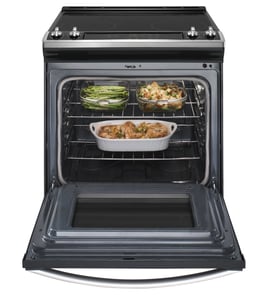





What is the life expectancy of a KitchenAid oven?
A KitchenAid oven typically lasts 15 years. For your KitchenAid KERC608LSS0 electric range, consistent cleaning, avoiding overheating, and fixing small issues early (like a weak bake element or failing control) are the biggest factors in reaching that lifespan; many units run longer with good care.
Most household ovens and electric ranges fall into a predictable lifespan range.
- Typical: 15 years
- Common range: 10 to 20 years
- Shorter life is often caused by: heavy daily use, power surges, overheating, or neglected maintenance
- Longer life is often supported by: keeping vents clear, gentle cleaning, and replacing wear parts promptly
| Appliance type | Typical life expectancy | Notes |
|---|---|---|
| Electric range (like KERC608LSS0) | 15 years | Surface elements and electronic controls are common wear points |
| Built-in electric oven | 15 years | Similar heating and control components |
| Gas range | 15 years | Burners and igniters are common wear points |
These are the most common items that affect how long an electric range lasts.
- Keep the oven cavity and door area clean so heat and airflow stay normal
- Avoid slamming the oven door; it stresses hinges and door alignment
- Replace failed small parts quickly (for example, a burned-out oven light bulb 8009)
- Watch for uneven baking or long preheat times (often tied to heating circuit issues)
- Use cookware that matches burner size to reduce radiant element stress
A range can “work” while slowly losing performance. Catching early symptoms (slow preheat, uneven temperatures, intermittent display issues) helps prevent secondary damage to wiring, switches, and controls, which is often what shortens overall service life.
- Use the KERC608LSS0 owner’s manual for care, cleaning, and operating practices that reduce wear.
Last updated: January 2026
Is KitchenAid a good electric range?
KitchenAid electric ranges, including model KERC608LSS0, are a strong choice for most home cooks because they’re built for consistent baking performance, durable radiant cooktop heating, and long-term serviceability with widely available replacement parts. For the features and operating details that apply to your exact range, use the KERC608LSS0 owner’s manual.
We judge an electric range on everyday results, reliability, and how easy it is to maintain.
- Even oven heating for baking and roasting
- Responsive surface elements for simmering and boiling
- Clear controls and predictable temperatures
- Parts availability (elements, switches, hinges, light parts)
- Service access (standard wiring, terminal block, common wear parts)
KitchenAid ranges are generally known for solid build quality and cooking performance.
| What you care about | What you’ll typically get | What to check on KERC608LSS0 |
|---|---|---|
| Baking results | Stable temperatures and good heat distribution | Use recommended rack positions and preheat guidance in the manual |
| Cooktop performance | Strong radiant heat output | Match pan size to element size |
| Long-term upkeep | Common parts are replaceable | Keep a record of model and serial number |
A “good” range is one you can keep running. These are common wear items we see customers replace over time:
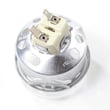
- Oven light: oven light bulb 8009
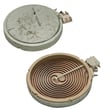
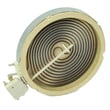
- Cooktop heating: range radiant surface element, 7-in W10823698 (element size must match your position)
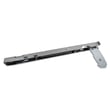
- Door closing and alignment: range oven door hinge WP9782033
- Electrical connection point: terminal block WP8203546
If you cook often, consistent oven temperatures and dependable surface elements save time and reduce ruined meals. If you plan to keep the range for years, choosing a brand with replaceable parts and clear documentation makes ownership easier.
- For display messages and fault conditions, use KitchenAid slide-in electric range error codes.
Last updated: January 2026
How do I reset my KitchenAid range?
To reset your KitchenAid electric range model KERC608LSS0, turn the range off and restore it by cycling power at the home breaker (or unplugging the cord if accessible). When power returns, the display typically goes blank briefly and then comes back on.
- Press Cancel/Off to stop a cooking cycle and clear many temporary control issues.
- Power reset at the breaker: switch the range circuit breaker OFF for about 1 minute, then switch it ON.
- Unplug reset (only if the plug is safely reachable): unplug for about 1 minute, then plug back in.
- If the range still will not operate after a reset, check for a tripped breaker or blown house fuse.
- If the display returns but heating does not, use the troubleshooting section in the KERC608LSS0 owner's manual.
- Make sure all surface elements and the oven are OFF.
- Locate the range breaker in your electrical panel.
- Flip the breaker OFF.
- Wait about 60 seconds.
- Flip the breaker ON.
- Confirm the control panel powers up; set the clock if needed.
| Symptom | Reset often helps | Likely needs troubleshooting/repair |
|---|---|---|
| Control panel frozen or unresponsive | Yes | Sometimes |
| Error code that clears after power loss | Yes | Sometimes |
| Oven will not heat at all | Sometimes | Often |
| No power to display | No | Yes |
A power reset clears minor electronic glitches in the touch control system and restores normal operation after a brief power interruption. If the range has no power afterward, the issue is usually in the home power supply (breaker, fuse, outlet) rather than the control.
Last updated: January 2026
What are the electrical requirements for a KitchenAid cooktop?
For KitchenAid model KERC608LSS0 (electric range with radiant cooktop), the installation requirements call for a single-phase 120/240-volt, 60-Hz AC-only supply using a 3-wire or 4-wire connection (as allowed by local code) and proper grounding through a grounded metal, permanent wiring system. Use the KERC608LSS0 installation guide for the exact wiring method.
These are the key requirements called out for this model’s installation:
- Single-phase, 120/240-volt, 60-Hz, AC-only power
- 3-wire or 4-wire connection method (depends on local code)
- Connect to a grounded metal, permanent wiring system
- No fuse in the neutral or ground circuit
- Never ground the range to a gas pipe
- Have a qualified electrician confirm the ground path and wire gauge meet local code
The installation instructions direct you to verify the required voltage and frequency on the model/serial rating plate.
- Check the model/serial rating plate before wiring
- Typical locations are on the oven frame behind a top corner of the door or on either side of the storage drawer area
| Connection type | What’s different | When it’s used |
|---|---|---|
| 4-wire | Neutral and ground are separate | Standard for most modern installations |
| 3-wire | Neutral and ground are combined | Only where permitted by electrical code |
Correct voltage, grounding, and the right 3-wire or 4-wire hookup prevent nuisance breaker trips, weak heating performance, and electrical shock risk. Following the manufacturer wiring method also protects sensitive controls and surface element circuits.
Last updated: January 2026