 Owner’s manual
 Error Codes




How do I reset the lid lock on my whirlpool washer?
Your Whirlpool WFW9450WL00 is a front-load washer with a door lock (not a lid lock). To “reset” a door lock issue, we recommend canceling the cycle correctly and doing a power reset; if the lock stays engaged, drain the washer and check for a drain restriction that is keeping the door locked. See the owner's manual for the exact cancel and drain steps for this model.
Quick reset steps (WFW9450WL00)
- Press PAUSE/CANCEL twice to cancel the cycle; the washer powers down and the door unlocks (it may drain first if water is hot or high).
- If the door still will not unlock, unplug the washer (or switch off the breaker) for 5 minutes, then restore power.
- If water is in the drum, run a manual drain: PAUSE/CANCEL twice, POWER, select DRAIN/SPIN, then press START (hold about 1 second).
- If Controls Lock is on, press and hold CONTROLS LOCK/UNLOCK for 3 seconds to toggle it off.
- After the door unlocks, close the door firmly and press START (hold about 1 second) to resume or restart a cycle.
Why the door stays locked
A locked door is usually the washer protecting you from water spill or unsafe conditions.
| What you notice | Most common cause | What to do next |
|---|---|---|
| Door won’t unlock right after cancel | Water level or temperature is too high | Let it drain automatically, or run DRAIN/SPIN |
| Buttons don’t respond (except Start/Pause) | Controls Lock enabled | Hold CONTROLS LOCK/UNLOCK 3 seconds |
| Door lock clicks but won’t release | Drain restriction or slow drain | Check drain path; clean the pump filter |
Parts that commonly relate to door lock and draining
If the washer will not drain well, the door can stay locked until draining completes. These model-matched parts are commonly involved:
- Filter WPW10730972 (pump filter; helps prevent drain clogs)
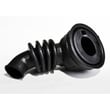
- Hose WPW10467168 (tub-to-pump hose; can trap debris)
- Washer water-level pressure switch hose WPW10004260 (pressure sensing; issues can affect fill and drain behavior)
Why it matters
Forcing the door open can damage the door boot and clamps, and it can create leaks. Canceling the cycle and draining first protects the door lock, bellow, and your floor.
For error-code driven lock problems, use our Whirlpool duet he front load washer error codes guide to match the code to the next repair step.
Last updated: February 2026
Is 3.8 cu ft a big washer?
Yes. A 3.8 cu. ft. washer is a medium-to-large capacity size for most households; it handles everyday loads and many bulky items without feeling cramped. For exact capacity and cycle guidance for your Whirlpool WFW9450WL00, check the owner's manual.
What 3.8 cu. ft. means in real laundry terms
A 3.8 cu. ft. front-load washer is sized for regular weekly laundry and many bedding loads.
- Works well for 1 to 4 people with typical laundry volume
- Handles towels, jeans, and mixed loads comfortably
- Often fits a queen comforter; some king items fit depending on fill level and fabric
- Leaves less room for very bulky, high-loft items than 4.5 to 5.0+ cu. ft. machines
- Helps reduce the number of loads compared with smaller capacity washers
Quick capacity comparison
| Washer capacity | Typical fit | Best for |
|---|---|---|
| 2.0 to 3.4 cu. ft. | Smaller loads, limited bedding | Singles, couples, tight spaces |
| 3.5 to 4.2 cu. ft. | Most household laundry, many bedding items | Most families and everyday use |
| 4.5 to 5.5+ cu. ft. | Large bedding, oversized loads | Big families, frequent bulky loads |
Why your WFW9450WL00 can feel “bigger” than the number
Your Whirlpool WFW9450WL00 is a front-load, high-efficiency design with no agitator, which increases usable space. The manual also notes it can wash larger, bulkier items (such as a king-sized bedspread) and automatically adjusts water level for the load.
Tips to get the best results with a 3.8 cu. ft. washer
- Do not pack items tightly; leave space for tumbling
- For comforters, use the bedding cycle (if equipped) and balance the load
- Use HE detergent and avoid oversudsing (extra suds can slow draining/spinning)
- If the washer vibrates, level the feet and keep the load evenly distributed
Last updated: February 2026
What is diagnosis code 945?
Diagnosis code 945 is not a Whirlpool washer fault code for the Whirlpool WFW9450WL00. For this washer, diagnostic and display codes typically look like F## (for example, F20 for a water inlet problem or F21 for a drain problem). Use the owner's manual to match the exact code shown on your display.
How to identify what “945” refers to
“945” usually comes from one of these situations:
- A medical/insurance diagnosis code (common outside appliance repair)
- A service ticket or internal technician note, not a washer display code
- A misread display (for example, an F may be missed, or digits may be incomplete)
- A different appliance or model than WFW9450WL00
What to do if your washer is showing an error
Start with the code format and the symptom:
- If the display shows F20: check both water faucets are fully open and inlet hose screens are not clogged.
- If the display shows F21: check the drain hose for kinks/clogs and confirm the drain height is not above 96 in. (2.4 m).
- If the washer is not draining and you suspect a blockage: inspect the drain path and consider the filter WPW10730972 if your symptom points to restricted flow.
Quick code check (common examples)
| What you see | What it usually means | First checks |
|---|---|---|
| F20 | Water inlet problem | Faucets on, screens clear, hoses not kinked/frozen |
| F21 | Drain problem | Drain hose clear, not kinked/frozen, drain height OK |
| “945” | Not a standard display code | Re-check display, confirm model, use manual code list |
Why it matters
Using the wrong “code system” can send you to the wrong fix. Whirlpool washer error codes are designed to point you to a specific system (fill, drain, door lock, etc.), which helps you choose the right troubleshooting steps and parts.
Last updated: February 2026
What is the most common problem with whirlpool washers?
For Whirlpool washers like model WFW9450WL00, the most common issues we see are drain and spin problems (clothes staying wet) and water leaks. Many of these start with simple causes such as a kinked drain hose, excess suds from non-HE detergent, or a worn door seal; our WFW9450WL00 owner's manual troubleshooting steps help you narrow it down fast.
Most common problems (and what usually causes them)
- Won’t drain or spin: kinked/clogged drain hose, drain height too high (over 96 in.), or excess suds
- Leaks: loose inlet hose connections, household plumbing leaks, or a worn door boot
- Won’t fill: closed water faucets, kinked inlet hoses, clogged inlet screens
- Stops mid-cycle: power supply issue, tripped breaker, using an extension cord
- Noise/vibration: unbalanced load, washer not level, normal pump air sounds during drain
Quick checks we recommend first
- Cancel and reset: press PAUSE/CANCEL twice, then restart the cycle.
- Confirm water supply: hot and cold faucets fully open; hoses not kinked.
- Check inlet screens: turn off water, remove hoses, clean any debris from the valve screens.
- Verify draining setup: drain hose not kinked/clogged and not higher than 96 in. (2.4 m).
- Reduce suds: use HE detergent only; too many suds can prevent proper draining/spinning.
Common symptoms and the most likely fix
| Symptom | Most likely cause | What to do next |
|---|---|---|
| Clothes too wet | Unbalanced load or wrong cycle/spin speed | Redistribute load; choose higher spin; run DRAIN/SPIN |
| “F21” drain problem | Drain hose kinked/clogged or too high | Correct hose routing; clear blockage |
| “F20” water inlet problem | No/low water supply or clogged screens | Open faucets; clean screens; straighten hoses |
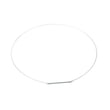
| Water at the door | Door boot not sealing | Inspect/replace bellow WP8182119 and clamp seating |
Why it matters
Drain, fill, and leak issues can look like major failures, but on the WFW9450WL00 they are often caused by installation conditions (hoses, drain height), detergent choice (HE vs non-HE), or wear items like the door bellow. Fixing the root cause prevents repeat errors and protects the motor and control system.
Last updated: February 2026





