Owner’s manual
 Error Codes


How many cubic feet is my Kenmore refrigerator by model number?
Your Kenmore Elite refrigerator model 25374920701 has a specific factory-rated capacity (cubic feet) listed on the refrigerator’s serial/rating plate inside the fresh food compartment; we use that plate and the model’s specifications in the owner's manual as the most accurate way to confirm capacity.
Fast ways to find the cubic feet for model 25374920701
- Check the serial/rating plate inside the refrigerator compartment (most accurate).
- Look in the specifications section of the owner's manual.
- If the label is hard to read, clean it gently with soap and water (the manual notes this approach for the serial plate).
- Measure interior space only if you need a rough estimate (not the same as the published capacity).
Where to look inside the refrigerator
On Kenmore top-mount models like 25374920701, the rating plate is typically located:
- Inside the fresh food compartment
- On a side wall or near the upper interior area
Published capacity vs. measured space (what’s the difference?)
Factory capacity is a standardized spec; measuring the inside yourself often gives a different number because shelves, ducts, and liners reduce usable space.
| Method | What you get | Best for |
|---|---|---|
| Rating plate | Official cubic feet | Confirming the exact spec |
| Manual specs | Official cubic feet (model-specific) | Verifying details before buying parts |
| Tape-measure estimate | Approximate usable volume | Planning storage, bins, and organizers |
Why it matters
Knowing the correct cubic feet helps when you are comparing refrigerators, choosing storage accessories, and matching certain replacement items (for example, filter style or ice maker configuration) to the correct Kenmore Elite 253-series platform.
Last updated: February 2026
What model is my Kenmore Elite refrigerator?
Your Kenmore Elite refrigerator’s model number is printed on the serial plate inside the refrigerator compartment. On Kenmore Elite model 25374920701, the Owner’s Guide notes you should record the model and serial numbers from that serial plate for future reference; use the same label to identify your exact model.
Where to look for the model number label
Check these common locations on Kenmore top-mount refrigerators:
- Inside the fresh food (refrigerator) compartment on a serial plate (most common)
- On an inside side wall near the top shelf area
- On the inside wall behind or near the crisper drawer area
- On the door frame when the refrigerator door is open
- Near the lower front area behind the kick plate (on some builds)
What the model number looks like
Kenmore model numbers are typically a 3-digit prefix plus additional digits. For this page, the model is:
| Item | Example for this refrigerator |
|---|---|
| Brand | Kenmore Elite |
| Model number format | 3-digit prefix + more digits |
| Model number | 25374920701 |
Tips to make sure you read it correctly
Small character mix-ups are common. Before ordering parts or using troubleshooting steps, we recommend:
- Write the model number exactly as shown (no spaces)
- Double-check similar characters (0 vs O, 1 vs I)
- Record the serial number too; it helps match production variations
- Use only mild soap and water to wipe the serial plate if it is dirty (avoid harsh cleaners)
Why it matters
The correct model number ensures you get the right Kenmore Elite refrigerator parts (like a door gasket, evaporator fan blade, or water filter) and the right procedures for your exact configuration.
For model-specific details and label location guidance, use the owner's manual.
Last updated: February 2026
What is the life expectancy of a Kenmore refrigerator freezer?
Most Kenmore top-mount refrigerators like model 25374920701 typically last 12 to 15 years. Consistent cleaning, good airflow around the cabinet, and fixing small issues early (like a weak door seal or noisy fan) helps you reach the full lifespan.
Typical lifespan and what affects it
A refrigerator’s life is mostly driven by compressor run time, heat removal, and how well the doors seal.
- Average service life: 12 to 15 years
- Heavy use factors: frequent door openings, warm room temperatures, overpacking
- Maintenance factors: dirty condenser area, blocked vents, worn gaskets
- Water and ice factors: hard water scale, old water filter, low water pressure
Maintenance checklist that extends life
Use these steps as a simple routine for your Kenmore Elite refrigerator.
- Keep food from blocking air vents in the fresh food and freezer sections
- Clean spills quickly to prevent odors and corrosion
- Replace the water filter on schedule (reduced flow can strain the ice maker fill system)
- Make sure doors close fully and the gasket seals all the way around
- Keep the refrigerator level so doors self-close and seal properly
Quick “replace vs. repair” guide
| What you notice | Common cause | What we recommend |
|---|---|---|
| Warm fridge, freezer OK | Airflow or evaporator fan issue | Check vents; inspect fan and frost buildup |
| Frost buildup on back wall | Defrost system problem | Check defrost components and airflow |
| Water leaks or puddles | Drain or water supply issue | Clear drain; inspect water line connections |
| Door won’t seal | Worn or warped gasket | Clean and reshape gasket; replace if torn |
Why it matters
A refrigerator that runs longer to hold temperature wears the sealed refrigeration system faster. Simple items like a good door seal and steady airflow reduce compressor cycling and help the unit reach the normal 12 to 15 year lifespan.
For model-specific use and care details (including operating and safety notes), follow the owner's manual.
Last updated: February 2026
How to tell if a Kenmore refrigerator compressor is bad?
If your Kenmore Elite refrigerator model 25374920701 is warm and you hear repeated clicking, constant running with poor cooling, or no compressor sound at all, the compressor or its start components are likely failing. We also check for power issues because low voltage can damage the compressor.
Quick checks we do first (before blaming the compressor)
- Confirm the temperature control is not set to “0” (that setting turns the compressor off).
- Verify the outlet is a properly grounded 3-prong receptacle; avoid extension cords and adapters.
- Make sure the refrigerator is not on a wall switch or pull-cord controlled outlet.
- If your home has voltage drops or flickering lights, address that first; performance can be affected if voltage varies by about 10% or more.
- Listen for normal sounds: a modern compressor can hum or pulse; a defrost timer/control can click.
For model-specific operating and electrical safety guidance, use the 25374920701 owner's manual.
Symptoms that point to a bad compressor (or sealed system problem)
A compressor issue usually shows up as a cooling failure plus one or more of these signs:
- Runs a lot but doesn’t cool (fresh food and freezer both warming)
- Clicking every few minutes (trying to start, then shutting off)
- Very hot compressor shell after repeated start attempts
- No compressor sound or vibration even though the unit has power
What the sounds can mean
| What you notice | Often indicates | What we check next |
|---|---|---|
| Click, then silence, repeats | Start device/capacitor overload or compressor locked | Start components, wiring, amperage draw |
| Steady hum/pulse but warm temps | Compressor running but not pumping well or sealed system issue | Frost pattern, airflow, condenser condition |
| No sound at all | Control setting, power supply, or control issue | Temperature control, outlet power, wiring |
Why it matters
A compressor is the heart of the cooling system. Misdiagnosing it can lead to unnecessary cost because poor cooling is often caused by airflow problems (fans, frost buildup) or power/controls, not the compressor itself.
When replacement is the right next step
If testing confirms the compressor is failing, the correct repair is typically a compressor replacement. For this model, we use the matching compressor kit 5304507765 when a compressor replacement is required.
Last updated: February 2026
What are the common problems with Kenmore Elite refrigerators?
Common problems we see on the Kenmore Elite refrigerator model 25374920701 include weak or no cooling, ice maker or water filter complaints, water leaks, and door sealing issues. These usually trace back to airflow restrictions, defrost system trouble, water supply problems, or worn sealing surfaces; our owner's manual troubleshooting section covers several of these basics.
Most common symptoms and what typically causes them
- Not cooling or warm temperatures: blocked air vents, dirty condenser coils, evaporator fan issues, or a defrost problem (frost buildup on the evaporator)
- Ice maker not making ice: water supply valve closed, new plumbing causing odd-tasting first ice (discard first 24 hours), or ice maker shutoff arm in the OFF position
- Water leaking or puddles: clogged/iced defrost drain, loose water line connections, or a cracked drain pan
- Door not sealing well: gasket not fully seated, torn gasket, or door alignment/hinge wear
- Lights not working: bulb failure (note: turning the temperature control to “0” stops cooling but does not cut power to the light)
Quick checks we recommend before replacing parts
- Confirm the refrigerator and freezer controls are not set to “0” (compressor off).
- Make sure the plug is fully seated; check the breaker or a 15-amp time-delay fuse.
- Allow 24 hours after a control change for temperatures to stabilize.
- For ice maker issues, verify the wire signal arm is down (ON) and the water supply valve is open.
- If you just connected new plumbing, discard ice made during the first 24 hours.
Parts that commonly solve these problems (when symptoms match)
| Symptom | Commonly involved part | Example part for this model |
|---|---|---|
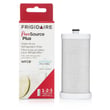
| Bad taste, slow water flow, low ice production | Water filter | Genuine Kenmore refrigerator water filter WFCB |
| Frost buildup, warm fridge section | Defrost control components | Refrigerator defrost bi-metal thermostat 5303918202 |
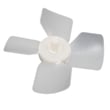
| Warm temps, noisy airflow area | Evaporator fan airflow | Refrigerator evaporator fan blade 5308000010 |
| Door sweating, warm spots, poor closing | Door seal | Refrigerator gasket 242193213 |
Why it matters
Catching airflow, defrost, and water-supply issues early helps protect food temperatures and reduces strain on the sealed refrigeration system. Simple steps like correct control settings, proper ice maker setup, and routine cleaning prevent many repeat failures.
Last updated: February 2026