


Is it okay to sleep with an air purifier on all night?
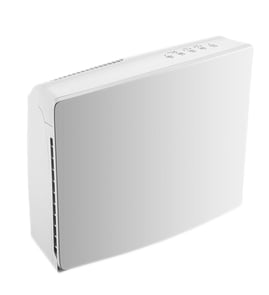
Yes. For the Kenmore 83250 air cleaner, it’s normal to run the unit all night because steady airflow helps keep bedroom air cleaner while you sleep. For best results, use a lower fan or sleep setting (if equipped) and keep up with filter cleaning or replacement.
Best practices for overnight use
- Place the air cleaner a few feet from the bed so airflow is not blowing directly at your face.
- Keep the intake and exhaust clear; avoid curtains, bedding, or walls blocking vents.
- Use the lowest effective fan speed to reduce noise while maintaining circulation.
- Replace or clean filters on schedule; a loaded filter reduces airflow and performance.
- If you notice odors, rattling, or reduced airflow, inspect the filter and fan area for buildup.
Safety and comfort checks
Running overnight is typically safe, but these checks help prevent nuisance issues:
| What you notice | Likely cause | What to do |
|---|---|---|
| Dry throat or drafty feeling | Unit too close or fan too high | Move it farther away; lower fan speed |
| Louder than usual | Dirty filter or loose panel | Clean/replace filter; re-seat covers |
| Musty smell | Filter saturated or dirty interior | Replace filter; wipe interior surfaces |
| Unit shuts off | Overheat protection or power issue | Unplug, let it cool, check outlet and cord |
Why it matters
Air quality changes continuously overnight from dust, pet dander, and normal room activity. Keeping your Kenmore 83250 running maintains more consistent filtration, which is especially helpful for allergies, asthma triggers, and odor control.
Finding the right replacement filter
For the Kenmore 83250, match the replacement filter to the exact model number on the rating label. If you’re shopping by model, start with the parts list for this model or search by model number on Sears PartsDirect.
Last updated: February 2026
What is the 2 3 rule for air purifiers?
The 2/3 rule is a quick way to size an air purifier to a room: the purifier’s smoke CADR should be at least two-thirds of the room’s square footage (for an 8-foot ceiling). For a Kenmore 83250 air cleaner, we use this rule to confirm the unit is powerful enough for the room you want to clean.
How to calculate the 2/3 rule (step-by-step)
- Measure the room: length x width = square feet.
- Multiply the room size by 0.67 (two-thirds).
- Choose an air purifier with a smoke CADR at or above that number.
- 150 sq ft room: 150 x 0.67 = 100 smoke CADR (minimum)
- 300 sq ft room: 300 x 0.67 = 200 smoke CADR (minimum)
- 450 sq ft room: 450 x 0.67 = 300 smoke CADR (minimum)
Quick reference table
| Room size (sq ft) | Minimum smoke CADR (2/3 rule) |
|---|---|
| 100 | 67 |
| 200 | 134 |
| 300 | 200 |
| 400 | 267 |
When you should size up beyond the 2/3 rule
The 2/3 rule targets roughly one air change per hour in a typical room. We recommend going bigger (higher CADR) when any of these apply:
- Ceilings higher than 8 ft (more air volume to clean)
- Wildfire smoke or heavy outdoor pollution
- Allergies/asthma where faster particle removal helps
- Open floor plans where air mixes across multiple spaces
- You run the purifier on lower fan speeds for noise reasons
Why it matters
If the CADR is too low for the room, the purifier can run constantly and still leave lingering smoke, dust, and pollen. If it’s appropriately sized, you get noticeably faster odor and particle reduction with more consistent indoor air quality.
Helpful related reading
Last updated: February 2026
Is there a downside to air purifiers?
Yes. With a Kenmore 83250 air cleaner, the main downsides are ongoing filter costs, fan noise, and the fact that most room air purifiers mainly reduce particles (dust, pollen, smoke) but do less for gases and strong odors unless they use activated carbon.
Common downsides (and what to watch for)
- Filter replacement cost and availability: performance drops when filters load up.
- Noise: higher fan speeds clean faster but can be loud in bedrooms.
- Limited odor and VOC control: HEPA-type filtration targets particles; odors and VOCs need activated carbon or other gas media.
- Maintenance needs: dirty pre-filters and clogged filters restrict airflow and reduce CADR.
- Placement matters: a purifier in the wrong spot can short-cycle clean air and miss the rest of the room.
- Some features can irritate sensitive users: units with ionizers can be a poor fit for people with respiratory sensitivity.
Quick reality check: what an air purifier can and cannot do
| Air quality issue | What most purifiers do well | What usually needs more than a purifier |
|---|---|---|
| Dust, pollen, pet dander | Capture particles with HEPA-type media | Source control (cleaning, sealing leaks) |
| Smoke particles | Reduce airborne particles over time | Removing the smoke source, ventilation |
| Odors, VOCs | Only helps if it has enough carbon/media | Ventilation, source removal, carbon-heavy filtration |
| Mold | Can capture airborne spores | Fixing moisture and cleaning growth |
How we recommend minimizing the downsides
- Run the purifier on low for everyday use; use high for short “boost” cycles.
- Replace filters on schedule, or sooner if you notice reduced airflow or more dust.
- Keep doors closed in the room you are treating; one unit is typically for one room, not a whole home.
- Place it with clearance around the intake and outlet (avoid corners and behind furniture).
- If odors are the main issue, choose a purifier setup that includes substantial activated carbon.
Why it matters
Air purifiers are most effective when you match the technology to the problem. If your main issue is particles, a HEPA-type filter helps; if your main issue is odors or VOCs, you need carbon or better ventilation, otherwise you pay for filters without getting the result you want.
Related DIY reading: are diy appliance repairs safe
Last updated: February 2026
What is the most effective air purifier on the market?
The most effective air purifier is the one that matches your room size and runs consistently; for most homes, that means a True HEPA unit with enough CADR to deliver about 4 to 5 air changes per hour (ACH). For a Kenmore 83250 air cleaner, performance depends most on clean filters and unobstructed airflow.
What to compare (the metrics that matter)
- CADR (smoke/dust/pollen): higher CADR clears particles faster
- Room size rating: match to your square footage and ceiling height
- Filter system: True HEPA for particles; activated carbon for odors
- Noise at usable speeds: you need a speed you can run daily
- Filter cost and schedule: maintenance drives long-term effectiveness
Quick sizing guide (practical targets)
Aim for 4 to 5 ACH in the room you care about most.
| Room type | Typical size | What “effective” looks like |
|---|---|---|
| Bedroom | 100 to 250 sq ft | Quiet operation at a medium setting |
| Living room | 250 to 450 sq ft | Higher CADR for faster cleanup |
| Open concept | 500+ sq ft | Very high CADR or multiple units |
Getting the best results from a Kenmore 83250
- Replace filters on schedule (so airflow stays strong)
- Keep the intake and outlet clear (several inches of clearance)
- Run a higher fan speed during smoke, cooking, or heavy allergy days
- Vacuum exterior grilles to reduce restriction
Why it matters
A “top-rated” purifier performs poorly if it is undersized, too loud to run, or has a clogged filter. Correct sizing and consistent run time usually beat brand name alone.
To confirm you have the right model number before shopping for filters or parts, use how to find your appliance model number (and what it means for parts).
Last updated: February 2026