Installation guide
 Owner’s manual
 Error Codes




How big is the Kenmore refrigerator model 25370602410?
The Kenmore refrigerator model 25370602410 is a top-mount (top freezer) refrigerator; its exact overall dimensions and total cubic-foot capacity are listed in the specifications section of the 25370602410 owner's manual. For installation planning, we use the model’s required clearances to estimate the space you need around the cabinet.
Space you need around the refrigerator (installation clearances)
The installation guide for this Kenmore 253 series platform calls for these minimum clearances for airflow and hookups:
- Sides and top: 3/8 inch
- Back: 1 inch
- Extra hinge-side space: add room if the door hinge side is against a wall so the door can open wider
| Location | Minimum clearance |
|---|---|
| Sides and top | 3/8 in |
| Back | 1 in |
| Hinge side near a wall | Additional space as needed |
How to measure “how big” your 25370602410 is (quick checklist)
If you are fitting the refrigerator into a cutout, measure the cabinet and the door swing area:
- Measure width, height, and depth of the refrigerator cabinet (front edge to back panel).
- Add the rear clearance (1 inch) so the condenser area can breathe.
- Add 3/8 inch on each side and at the top for airflow.
- Confirm the refrigerator can be leveled so doors close and seal properly.
- If it sits next to a wall, confirm the door can open far enough to remove shelves and drawers.
Why it matters
A refrigerator that is “the right size” is not just about fitting the opening; proper clearance and leveling help the compressor cool efficiently, prevent warm spots, and help the door gasket seal so you avoid frost buildup and temperature swings.
Last updated: January 2026
What are the most common issues with 25370602410?
The most common issues we see on the Kenmore 25370602410 top-mount refrigerator involve cooling performance, frost buildup, water or ice maker problems, and door sealing or alignment. These symptoms usually trace back to airflow (fans), defrost components, or worn gaskets; use the owner's manual for model-specific checks and settings.
Common problems and what they usually point to
- Refrigerator warm, freezer cold (or uneven temps): restricted airflow, evaporator fan issue, or frost-packed evaporator
- Frost buildup on the back wall of the freezer: defrost system problem (heater, control, or airflow)
- No ice or small/hollow cubes: ice maker fill issue, temperature too warm, or ice maker fault
- Water leaking or puddles: clogged/iced defrost drain, door left ajar, or poor door seal
- Loud humming, rattling, or clicking: fan blade interference, condenser fan motor noise, or start relay/capacitor symptoms
- Doors not sealing, moisture around gasket: gasket not seating, hinge wear, or cabinet not level
Parts that commonly solve these symptoms
If troubleshooting points to a failed component, these model-matched parts are common fixes:
| Symptom | Likely system | Example part for this model |
|---|---|---|
| Frost buildup, warm fridge | Defrost | Refrigerator defrost heater 242044008 |
| Warm temps, noisy airflow | Evaporator airflow | Refrigerator evaporator fan blade 242219302 |
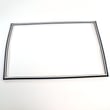
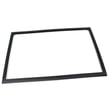
| Door not sealing, sweating | Door seal | Frigidaire refrigerator door gasket (white) 242193206 or frigidaire refrigerator door gasket (black) 242193212 |
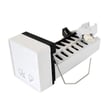
| No ice | Ice maker | Refrigerator ice maker 241798231 |
Quick checks we recommend before replacing parts
- Set controls to the recommended mid-range setting and allow 24 hours to stabilize.
- Confirm vents are not blocked by food packages in the freezer or fresh-food section.
- Listen for the evaporator fan when the freezer door switch is pressed (fan should run during cooling).
- Inspect door gaskets for gaps, tears, or areas not contacting the cabinet.
- Clean condenser coils and verify the condenser fan runs when the compressor runs.
Why it matters
Cooling, defrost, and door-seal issues can cascade: a small air leak or weak airflow leads to frost, longer run times, temperature swings, and ice maker complaints. Catching the root cause early helps protect the compressor and keeps food at safe temperatures.
Last updated: March 2026
What is the upper part of a fridge called?
On the Kenmore 25370602410 top-mount refrigerator, the upper section is the freezer compartment. It is the insulated space designed to keep foods frozen, and it often houses the ice maker (if your model is equipped with one). For layout and feature details, use the 25370602410 owner's manual.
What you will typically find in the upper (freezer) compartment
- Freezer shelves or a wire rack for frozen food storage
- Cold-air vents that circulate air through the freezer and into the fresh food section
- An ice maker area (on models with an automatic ice maker)
- A freezer door gasket that seals the door to prevent warm air leaks
- A temperature control setting that affects freezer performance (and often overall cooling)
Freezer vs. refrigerator compartment: quick comparison
| Compartment | Typical temperature | Main purpose | Common issues when not sealing well |
|---|---|---|---|
| Freezer (upper on this model) | 0°F (-18°C) | Long-term frozen storage, ice production | Frost buildup, soft ice cream, warm freezer |
| Fresh food (lower) | 37°F (3°C) | Short-term refrigerated storage | Food freezing near vents, warm spots, moisture |
Why the name matters when ordering parts
Using the correct compartment name helps you match the right parts to the right door and section on Kenmore 25370602410.
Common examples:
- If the freezer door is not sealing, you may need a freezer-side door gasket (symptoms include frost and sweating).
- If you are adding or troubleshooting ice production, the freezer is where the ice maker mounts.
Related part for ice production
If your freezer has an automatic ice maker and it is not making ice, the replacement assembly commonly used on this model is the refrigerator ice maker 241798231.
Helpful tip from the installation guidance
Proper leveling helps doors close and seal correctly. The installation instructions call out that the cabinet should be level and typically tilted about 1/4-inch (6 mm) front-to-back so the doors close and seal.
Last updated: January 2026