Installation guide
 Owner’s manual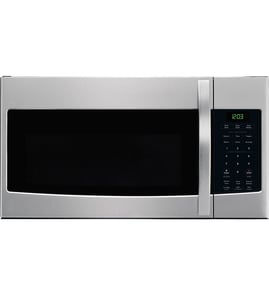



Are Kenmore microwaves good?
Kenmore microwaves are a solid choice for everyday reheating, defrosting, and basic cooking; they’re generally known for straightforward controls and dependable performance when they’re installed and maintained correctly. For your Kenmore 72180603500 microwave vent hood combination, following the care and operating guidance in the owner's manual helps keep performance consistent over time.
What “good” means for a microwave/hood combo
A microwave vent hood combination has to do two jobs: cook food evenly and move air through the exhaust fan and filters. In real-world use, “good” usually comes down to:
- Consistent heating and defrosting for common foods
- Door and latch operation that feels solid and closes fully
- A vent fan that actually captures steam and smoke (with clean filters)
- Reasonable noise levels from the fan and turntable
- Easy-to-clean interior and grease filter maintenance
What to do to keep yours working well
Good performance is strongly tied to upkeep and safe operation. For the 72180603500, we recommend:
- Clean interior surfaces regularly with mild soap and water; keep the door and frame contact areas clean
- Use steam cleaning for stubborn splatter (heat a cup of water for a few minutes, then wipe)
- Keep the grease filter clean so airflow stays strong
- Avoid extension cords; use a properly grounded outlet and correct electrical connection
- Stop using the microwave if the door won’t close properly or the latch feels loose
Common “good vs. not good” symptoms
| What you notice | What it usually points to | What to check first |
|---|---|---|
| Runs but doesn’t heat | High-voltage system issue | Professional service recommended (high-voltage hazard) |
| Turntable not rotating | Drive issue | Coupler and motor condition |
| Loud buzzing or burning smell | Electrical or component failure | Unplug immediately; service recommended |
| Poor venting | Airflow restriction | Grease filter and damper path |
Why it matters
A microwave can seem “fine” until heating becomes uneven or airflow drops. Regular cleaning and filter care protect cooking results, reduce odors, and help the vent hood do its job.
Last updated: February 2026
How do I reset my Kenmore microwave?
To reset your Kenmore microwave/hood combo model 72180603500, unplug it (or turn off the breaker) for about 1 minute, then restore power. This clears most control glitches and returns the clock and settings to their default state.
Quick reset options (start here)
- Power reset (most common): Unplug for 60 seconds, then plug back in.
- Breaker reset: Turn the microwave circuit breaker off for 60 seconds, then back on.
- Control lock check: If the keypad seems “dead,” check the lock feature in your owner's manual and unlock it.
- Stuck key check: Press STOP/CLEAR once; if a key is physically stuck, the control may not respond normally.
What a reset fixes (and what it does not)
A reset is best for temporary control issues, not heating or hardware failures.
| Symptom | Reset likely helps? | What to check next |
|---|---|---|
| Display frozen or acting odd | Yes | Power reset, then set clock |
| Buttons not responding | Sometimes | Control lock, stuck key, door closing fully |
| Microwave runs but does not heat | No | Heating circuit components (service recommended) |
| Turntable not turning | No | Turntable drive parts and motor |
Why it matters
Microwave controls can “hang” after a power surge or interrupted cook cycle. A simple power reset restores normal operation without replacing parts, and it is the safest first step before deeper troubleshooting.
Safety notes before you troubleshoot further
- If you need to access internal components, disconnect power first.
- Avoid DIY work on high-voltage microwave components; they can retain a dangerous charge even when unplugged.
Last updated: February 2026
How long can a microwave vent be?
For the Kenmore 72180603500 microwave vent hood combination, keep the total vent system length at 140 equivalent feet or less. That total includes straight duct, elbows, transitions, and the wall or roof cap; longer runs reduce airflow and can make the vent noisy or ineffective. See the installation guide for the approved venting layouts.
What “140 equivalent feet” means
Equivalent feet accounts for airflow resistance, not just measured duct length. Every elbow and transition “uses up” part of your 140-foot allowance.
Common items that add equivalent length:
- 90-degree elbows (often the biggest penalty)
- 45-degree elbows
- Rectangular-to-round transitions
- Wall caps and roof caps
- Long flexible duct sections (avoid when possible)
Recommended duct sizes
Use one of these duct types for best performance:
- 3-1/4 in. x 10 in. rectangular duct
- 6 in. round duct
Quick planning checklist (best practices)
To stay under the limit and keep airflow strong, we recommend:
- Use the shortest, straightest route to the outside
- Minimize the number of elbows (especially 90-degree turns)
- Use smooth metal ducting; seal joints with foil HVAC tape
- Avoid plastic duct and avoid long runs of flex duct
- Confirm the damper opens freely and is not blocked
Equivalent length planning table
Use this as a simple way to plan your run before you cut duct:
| Vent item | Counts toward the 140 equivalent ft limit? | Tip |
|---|---|---|
| Straight duct | Yes | Keep it as short as possible |
| Elbows (90/45) | Yes | Fewer turns = better airflow |
| Transitions | Yes | Use only when needed |
| Wall/roof cap | Yes | Choose a low-restriction style |
Why it matters
Staying within the equivalent-length limit helps your Kenmore 72180603500 move smoke, steam, and odors effectively; it also reduces grease buildup and prevents the blower from working harder than necessary.
Last updated: February 2026
How many cubic feet is a Kenmore Model 72180603500 microwave?
The exact cubic-foot capacity for the Kenmore 72180603500 is listed in the specifications section of the product documentation. Use the 72180603500 owner's manual to confirm the official capacity for your specific unit before comparing sizes or planning a cabinet fit.
Where to find the capacity (fastest checks)
Use these spots first because they typically show the interior volume in cubic feet.
- Look in the Specifications or Product information section of the 72180603500 owner's manual
- Check the model and serial label (often inside the door opening or on the oven frame)
- If you are planning an over-the-range replacement, verify mounting and clearance details in the 72180603500 installation guide
- Match the model number exactly: 72180603500
Typical capacity range for this appliance type
Most Kenmore over-the-range microwave/hood combinations are commonly in this range; use it only as a sizing reference until you confirm the exact spec in the manual.
| Item | Typical range | Why it matters |
|---|---|---|
| Oven capacity | 1.6 to 2.0 cu. ft. | Helps you judge dish size and batch cooking |
| Installation width | 30-inch class | Affects cabinet fit and vent alignment |
| Turntable clearance | Varies by model | Impacts whether plates rotate freely |
Why it matters
Capacity affects what cookware fits, whether food can rotate on the turntable without hitting the walls, and how well the microwave suits your everyday cooking needs. It also helps when comparing replacement models and vent hood layouts.
Last updated: February 2026