Owner’s manual
 Error Codes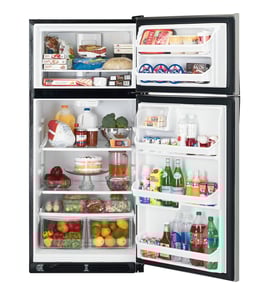



How many years should a Maytag refrigerator last?
A Maytag refrigerator like model MRT311FFFH00 typically lasts 10 to 15 years. With good airflow around the cabinet, clean condenser area, and quick repair of cooling issues, many top-mount refrigerators reach 15 to 20 years of service.
What to expect for MRT311FFFH00
Maytag’s warranty for this refrigerator includes 1 year parts and labor, plus a 2nd through 10th year limited warranty on the compressor (part only, labor not included). Details and coverage terms are listed in the MRT311FFFH00 owner's manual.
Typical lifespan ranges
| Scenario | Typical service life | What usually limits life |
|---|---|---|
| Average use, basic maintenance | 10 to 15 years | Wear on sealed system, fan motors, controls |
| Strong maintenance, stable room temps | 15 to 20 years | Door seal wear, airflow restrictions |
| Heavy use, poor ventilation, dirty coils | 7 to 12 years | Compressor stress, overheating, icing issues |
Maintenance that adds years (and prevents expensive failures)
- Keep the condenser area clean and make sure the refrigerator has breathing room for ventilation.
- Keep door gaskets clean so the doors seal tightly and do not leak warm air.
- Set temperatures to normal targets (about 37°F fresh food, 0°F freezer).
- Do not block air vents inside the refrigerator or freezer with food packages.
- Fix unusual noises early; a failing evaporator fan can reduce cooling and overwork the compressor.
Early warning signs it is nearing end of life
- Runs constantly or struggles to hold temperature
- Frost buildup or warm spots from poor airflow
- Loud buzzing/clicking at start-up (often start device or compressor-related)
- Water leaks or recurring ice buildup
- Rising electric bills with no other explanation
Why it matters
Most “short lifespan” complaints come from heat and airflow problems. When airflow is restricted or the condenser area is dirty, the compressor runs hotter and longer, which shortens the life of the refrigerator.
Last updated: February 2026
How do I reset my Maytag refrigerator control board?
On your Maytag MRT311FFFH00 top-mount refrigerator, the most reliable “reset” is a power reset: turn cooling off, disconnect power briefly, then restore power and set the controls back to your preferred settings. This clears many control glitches without replacing parts.
Recommended reset method (power reset)
- Turn cooling off by moving the temperature control to OFF (see the MRT311FFFH00 owner's manual).
- Unplug the refrigerator (or switch off the dedicated breaker).
- Wait 5 minutes.
- Restore power.
- Turn cooling back on and set temperatures to the recommended starting point.
Quick checklist before you reset
- Confirm the outlet has power (test with a lamp).
- Make sure the cord is fully seated in a grounded 3-prong outlet.
- Avoid extension cords.
- Wait 24 hours after any control change for temperatures to stabilize.
If the “reset” is for a no-cool or warm-fridge problem
A reset helps only if the control is confused; it will not fix a failed fan motor, compressor start issue, or sealed-system problem.
Common symptoms and what to check first:
- Fridge warm, freezer cold: check airflow vents and listen for the evaporator fan.
- Clicking, then no run: start device or capacitor issues are common suspects.
- No sound at all: power supply, control set to OFF, or a tripped breaker.
| Symptom | Most likely area | Example part for this model |
|---|---|---|
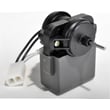
| Freezer cold, fridge warm | Evaporator fan/airflow | Refrigerator evaporator fan motor WP2315539 |
| Clicking from rear, won’t start | Start components | Refrigerator start device WPW10448874 |
| Runs but cools poorly | Frost/airflow/evaporator | Refrigerator evaporator W10836706 |
Why it matters
Resetting the controls the right way prevents unnecessary part replacement and helps you separate a temporary control glitch from a real cooling-system or airflow failure.
Last updated: February 2026
What are signs of a failing refrigerator?
If your Maytag MRT311FFFH00 is struggling to keep steady temperatures, running almost constantly, leaking water, or making new loud noises, those are common signs something is failing. Start with the quick checks in the MRT311FFFH00 owner's manual to rule out normal operation and simple setup issues.
Common warning signs to watch for
- Food spoils faster than normal in the fresh food section
- Freezer frost or ice buildup that keeps coming back
- Motor/compressor seems to run “all the time”
- New or louder noises (buzzing, clicking, rattling, gurgling)
- Water leaking or puddles under the refrigerator
- Excess condensation inside the refrigerator
Quick checks we recommend first (before replacing parts)
- Confirm power and controls: Make sure the unit is plugged into a grounded 3-prong outlet (no extension cord) and the temperature control is turned on.
- Allow proper cool-down time: After installation or a long power outage, allow 24 hours to reach normal temperatures.
- Check door sealing and usage: Frequent door openings, warm room temps, or a door left ajar can make the refrigerator run longer.
- Listen for “normal” sounds: Many sounds are expected during defrost and cooling cycles.
Normal vs. problem symptoms (quick guide)
| What you notice | Often normal | Often a problem |
|---|---|---|
| Clicking/snapping | Valves switching | Repeated rapid clicking with no cooling |
| Gurgling/sizzling | Defrost water and refrigerant flow | Loud grinding or squealing |
| Long run times | Warm room, heavy load, door openings | Runs constantly and temps are still warm |
| Frost in freezer | Light frost after openings | Heavy frost plus weak airflow/cooling |
Parts that commonly relate to these symptoms
If you confirm the basics above and symptoms persist, these model-compatible parts are often involved:
- Refrigerator evaporator fan motor WP2315539 (weak airflow, warm refrigerator section)
- Fan blade WP2163777 (fan noise, vibration, poor airflow)
- Refrigerator start device WPW10448874 (hard starting, clicking, no cooling)
- Refrigerator capacitor WPW10662129 (compressor start/run issues)
Why it matters
Catching early signs helps prevent food loss and can limit secondary damage (for example, heavy frost can restrict airflow and make the compressor run longer than it should).
Last updated: February 2026