 Installation guide
 Owner’s manual


What does speed 60 mean on a Bosch dishwasher?
On Bosch dishwasher model SHE43P05UC, Speed 60 is a faster wash program designed to finish in about an hour (timing varies with water temperature and load). It typically uses hotter water and more intensive spraying than an eco cycle to clean quicker.
What to expect from Speed 60
- Shorter total run time than normal/eco cycles
- Best for lightly to normally soiled dishes (not baked-on pots)
- Often runs with higher wash temperatures to speed cleaning
- Drying can be lighter than longer cycles (especially plastics)
- Cycle time may extend if incoming water is cold
When to use it (and when not to)
Use Speed 60 when you need clean dishes quickly and you are not dealing with heavy soil.
Avoid Speed 60 if:
- You have heavy, dried-on food
- The dishwasher is tightly packed and spray arms may be blocked
- You need maximum drying performance
Quick comparison
| Cycle type | Typical goal | Typical tradeoff |
|---|---|---|
| Speed 60 | Faster wash in about an hour | May dry less thoroughly |
| Normal/Auto | Balanced cleaning | Longer run time |
| Eco | Lowest energy/water use | Longest run time |
Why it matters
Choosing the right cycle helps prevent rewashing and reduces wear on parts like the wash system and filtration. If Speed 60 results are poor, the issue is usually loading, detergent, or restricted filtration rather than the cycle itself.
If cleaning is still weak
Check these common causes first:
- Clean the filter area and confirm water can circulate
- Make sure spray arms spin freely and holes are not clogged
- Use fresh detergent and the correct amount
- Confirm the dishwasher is filling properly
For cycle descriptions and option details specific to your unit, follow the program chart in the SHE43P05UC manual. For troubleshooting related to cycle indicators or faults, use our Bosch dishwasher error codes guide.
Last updated: February 2026
What is the average life expectancy of a Bosch dishwasher?
A Bosch dishwasher typically lasts 10 to 15 years with normal household use and basic maintenance. For your Bosch SHE43P05UC, keeping the filter and spray system clean and fixing small leaks or drain issues early are the biggest factors in reaching that lifespan.
What affects dishwasher lifespan the most
- How often it runs (daily use wears pumps, seals, and racks faster)
- Water quality (hard water speeds up mineral buildup)
- Cleaning and maintenance (especially filters and spray arms)
- Proper installation (leveling, drain routing, and secure mounting)
- Catching problems early (odd noises, poor draining, or leaks)
For model-specific care and maintenance intervals, follow the SHE43P05UC manual.
Maintenance checklist to help it reach 10 to 15 years
- Clean the sump and filters regularly; a clogged filter strains the wash system
- Run a dishwasher cleaner cycle periodically to reduce grease and mineral buildup
- Use the right detergent amount; too much can leave residue and reduce cleaning
- Check the door sealing surfaces and wipe them clean to prevent slow leaks
- Keep the drain path clear (air gap or high loop, disposer inlet, and hose routing)
Common wear items and what they usually cause
| Symptom | Common cause | What to check first |
|---|---|---|
| Not draining | Drain restriction or failing pump | Drain hose routing, then pump |
| Poor cleaning | Restricted filtration or weak circulation | Filters, spray arms, circulation |
| Leaks at the bottom of the door | Worn or dirty seal | Door seal and mating surfaces |
| Won’t fill or fills slowly | Water supply issue or valve problem | Shutoff valve, inlet screen |
If you’re troubleshooting a drain problem, the dishwasher not draining video walks through the most common checks.
Why it matters
A dishwasher that is maintained and repaired early usually avoids secondary damage (like motor strain from clogs or cabinet damage from slow leaks). That is what most often separates a 7 to 9 year dishwasher from a 10 to 15 year dishwasher.
Last updated: February 2026
Can I still use my appliance with an E22 error?
On the Bosch SHE43P05UC dishwasher, we recommend not running cycles with an E22 error because it commonly points to a drain or filter restriction that can leave dirty water in the tub and strain the drain system. Clear the blockage first, then test a short cycle.
What E22 usually means on this dishwasher
E22 is most often tied to restricted water flow through the filter area or a draining problem. Start with the simplest checks first.
- Clean the sump and filters (remove debris, labels, glass)
- Check the drain hose for kinks, clogs, or a blocked air gap (if installed)
- Verify the sink/disposer connection is open and not plugged
- Listen for the drain pump running during drain; a loud hum with no drain points to a blockage
- If the dishwasher recently stopped mid-cycle, cancel and drain, then recheck the filter area
For model-specific reset and error guidance, follow the steps in the SHE43P05UC owner’s manual.
Quick troubleshooting checklist (safe DIY)
- Turn off power at the breaker.
- Remove the lower rack.
- Pull and clean the filter(s) and the sump area.
- Inspect the drain path and hose routing under the sink.
- Restore power and run a rinse cycle to confirm proper draining.
If you need help interpreting the code behavior, use our Bosch dishwasher error codes reference alongside the manual.
Parts that commonly fix E22-related draining issues
If cleaning and hose checks do not restore draining, these parts are common suspects on this model.
| Symptom | Most likely area | Example part for SHE43P05UC |
|---|---|---|
| Won’t drain, pump hums | Drain pump jammed or failed | Drain pump 00642239 |
| Slow drain, standing water | Drain hose restricted | Dishwasher drain hose 00668108 |
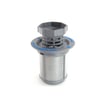
| Poor wash plus drainage complaints | Filter/sump restriction | Sump filter 00441905 |
Why it matters
Running with an active E22 condition can cause poor cleaning, odors from standing water, and extra wear on the drain pump and seals. Fixing the restriction early is usually faster and less expensive than replacing multiple parts later.
Last updated: February 2026
Is it worth repairing a Bosch dishwasher?
Yes, repairing a Bosch dishwasher like model SHE43P05UC is usually worth it when the unit is under about 10 years old and the problem is limited to one failed part or a maintenance issue. If the repair approaches half the cost of a comparable new dishwasher, replacement is typically the better value.
Quick decision checklist
- Age: Under 10 years old usually favors repair.
- Repair cost: Target under 50% of the cost of a new unit.
- Failure type: One clear failure (drain, fill, leak) favors repair; multiple symptoms at once favors replacement.
- Performance history: If it has cleaned and dried well until recently, repair is usually smart.
- Parts access: If the needed part is available and the labor is reasonable, repair wins.
Common repairs that are often worth it on SHE43P05UC
These are typical “single-part” fixes that can restore normal operation:
- Not draining: check the drain path; a failed drain pump 00642239 is a common cause.
- Not filling: verify water supply; a faulty dishwasher water inlet valve 00607335 can stop filling.
- Leaking at the door: inspect for tears or flattening; replace the door seal 00432490 if damaged.
- Poor cleaning: clean filters and spray paths; a restricted sump filter 00441905 can reduce wash performance.
When replacement makes more sense
Replacement is usually the better call when:
- The dishwasher is 10+ years old and needs a major component.
- You have repeated leaks or corrosion issues.
- The unit needs multiple expensive parts (for example, pump plus electrical issues).
- The repair requires extensive teardown and high labor cost.
Cost comparison guide
| Scenario | Typical outcome | Best choice |
|---|---|---|
| One part failure (drain, fill, seal) | Predictable fix | Repair |
| Major hydraulic repair (circulation system) | Higher parts cost | Depends on age/cost |
| Multiple symptoms, intermittent operation | Harder to diagnose | Often replace |
Why it matters
A dishwasher repair is “worth it” when it restores reliability and cleaning performance without sinking too much money into an aging appliance. Using the troubleshooting steps in the SHE43P05UC manual helps you confirm the symptom and avoid replacing the wrong part.
Last updated: February 2026
Can you buy replacement parts for a dishwasher?
Yes. You can buy replacement parts for a dishwasher, including model-specific parts for your Bosch SHE43P05UC, so you can fix common problems like not draining, leaking, or poor cleaning without replacing the entire appliance. Use the SHE43P05UC owner's manual to confirm symptoms and safe access steps before ordering parts.
Common dishwasher parts people replace
For Bosch dishwashers like model SHE43P05UC, these are some of the most frequently replaced items:
- Drain components (pump, drain hose) when the unit will not drain
- Water inlet valve when the dishwasher will not fill or fills slowly
- Filters when cleaning performance drops or debris recirculates
- Door seal when you see water leaking at the bottom of the door
- Wash system parts (recirculation pump, gaskets) when wash pressure is weak or noisy
Popular replacement parts for Bosch SHE43P05UC
These are examples of parts available for this model; match by model number and the part ID to ensure fit.
| Symptom | Likely part category | Example model-matched part |
|---|---|---|
| Not draining, standing water | Drain pump or drain hose | Drain pump 00642239 |
| Not filling or fills slowly | Water inlet valve | Dishwasher water inlet valve 00607335 |
| Leaks at the door | Door seal | Door seal 00432490 |
| Poor cleaning, debris left behind | Filter system | Sump filter 00441905 |
| Loud wash noise or weak spray | Recirculation pump or gasket | Dishwasher recirculation pump assembly 00442548 |
How we recommend choosing the right part
Use this quick checklist to avoid ordering the wrong dishwasher repair part:
- Confirm the full model number: SHE43P05UC
- Compare the symptom to the part function (drain, fill, wash, seal)
- Inspect for simple causes first (clogs, kinked hose, dirty filter)
- Match by part ID (not just a description)
- Review installation notes and safety steps in the SHE43P05UC installation guide
Why it matters
Ordering the correct dishwasher replacement part saves time and prevents repeat failures. For example, a clogged filter can mimic a failing pump, and a kinked drain hose can look like a drain pump problem. A quick inspection plus the manual steps usually points you to the right fix.
Last updated: February 2026
What's the most common problem with a Bosch dishwasher?
For the Bosch SHE43P05UC dishwasher, the most common issues we see are “not draining” and “not cleaning well”, and both are usually caused by restricted water flow from a dirty filter, blocked spray arms, or a drain path clog (hose, air gap, or disposer inlet). See the SHE43P05UC manual for the exact filter and cleaning steps for your model.
Most common symptoms and what they usually mean
- Standing water in the tub: drain restriction, clogged filter, or a failing drain pump
- Grit or food left on dishes: clogged filter, blocked spray arms, or low water fill
- Cloudy glassware: hard water, too much detergent, or poor rinse aid performance
- Bad odor: debris trapped in the filter/sump area
- Door won’t start cycle: door latch not fully engaging or door switch issue
Quick checks we recommend first (fast, no parts)
- Clean the filter and sump area; remove labels, glass, and food debris.
- Spin and rinse spray arms; clear holes with a toothpick if needed.
- Check the drain hose for kinks and confirm a high loop under the counter.
- If you have a garbage disposer, make sure the disposer inlet plug was removed.
- Run hot water at the sink for 30 to 60 seconds before starting the cycle.
When a part is the likely fix
If the basics are good and the problem repeats, these parts are common culprits on dishwashers like the SHE43P05UC:
| Problem you notice | Most likely system | Example part to check |
|---|---|---|
| Won’t drain or drains slowly | Drain system | Drain pump 00642239 or drain hose routing |
| Poor wash action, weak spray | Wash circulation | Dishwasher recirculation pump assembly 00442548 |
| Not filling or fills too slowly | Water supply | Dishwasher water inlet valve 00607335 |
| Leaks at the bottom of the door | Door sealing | Door seal 00432490 |
Error codes can speed up the diagnosis
If your Bosch displays an error code, match it to the symptom before replacing parts. Use our Bosch dishwasher error codes guide to narrow the cause to the drain pump, inlet valve, heater circuit, or sensors.
Why it matters
A restricted filter or drain path forces longer run times, leaves soil on dishes, and can make the dishwasher stop mid-cycle. Catching clogs early also helps protect the drain pump and recirculation pump from damage.
Last updated: February 2026





